A market is more than food.
At Yongle Market in Tainan, food culture is carried by the streets, stalls, work surfaces, and daily movement around them.
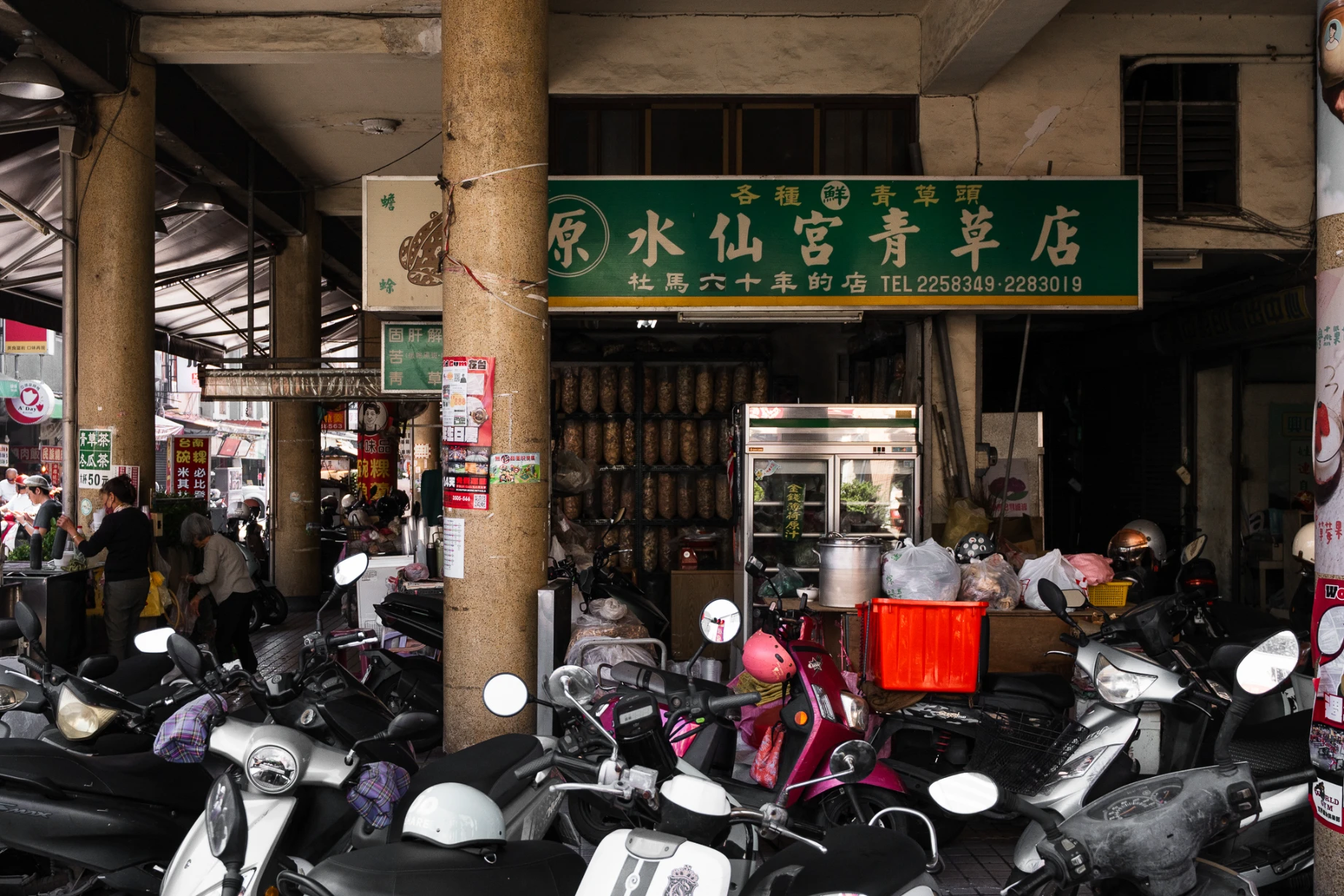
The photograph does not isolate a dish. It shows the environment around food: a covered passage, scooters in the foreground, red lanterns, a lit sign, metal containers, a worker, and the practical surfaces of a market in use.
A market is experienced through movement, proximity, sound, repetition, and the way people share limited space. The food matters, but so do the pathways, the work behind the counter, the objects waiting to be used, and the transition between street and stall.
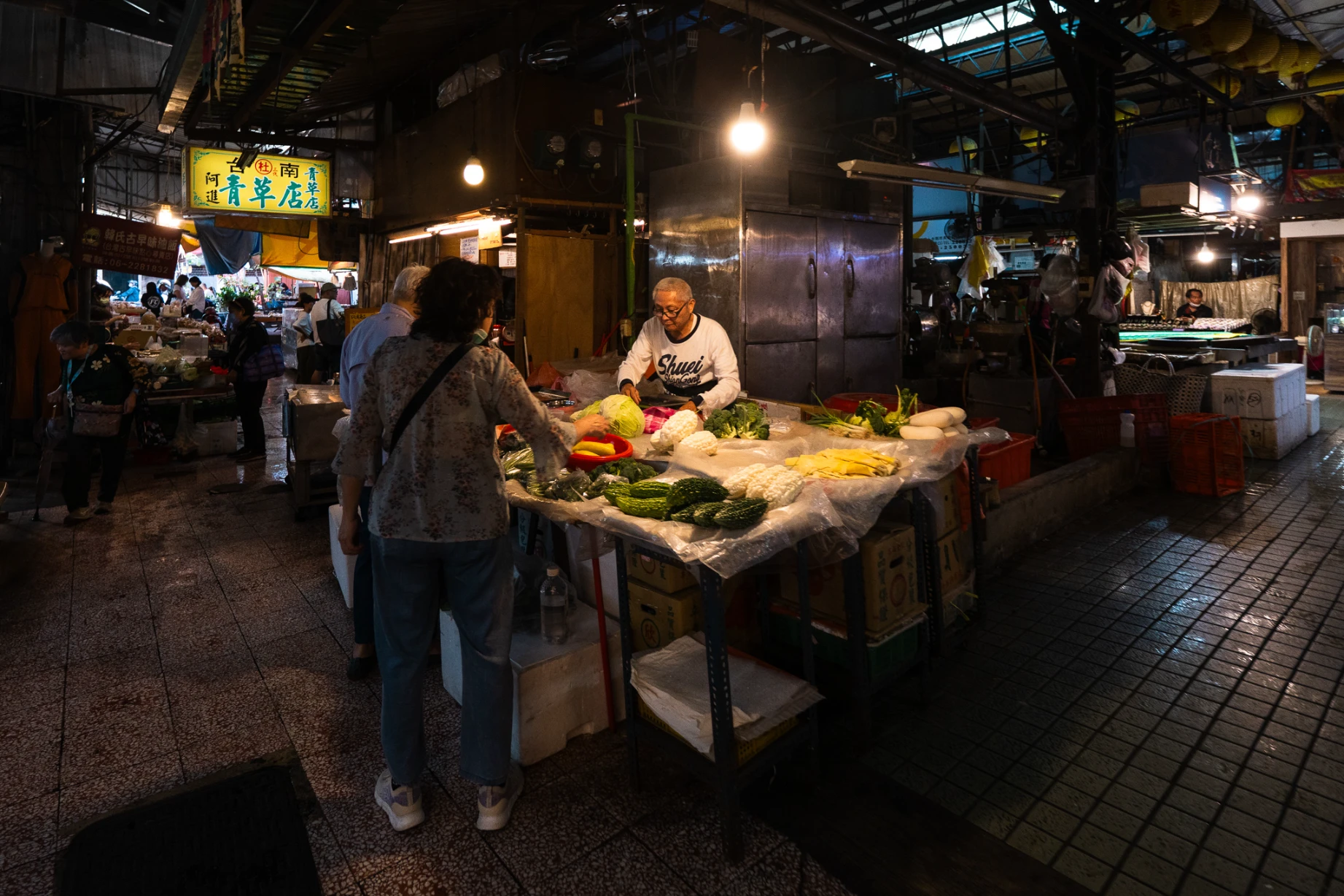
The image makes no attempt to remove these surrounding details. Instead, they give the food its context.
For a city, this kind of context is important. A place is not defined only by its most recognisable landmarks or carefully framed destinations. It is also defined by the spaces where daily life continues without performance.
When hospitality or food brands are photographed only through polished dishes, they can lose the environment that makes the experience distinct. The strongest visual system often includes the preparation, the room, the tools, the hands, the signage, and the people who give the place its rhythm.
A photograph does not need to show everything. It needs to show enough of the surrounding conditions for the audience to understand what they are looking at.