Coffee shop photography can make a café look inviting without showing much about how the place works. In Moss & Grain’s public documentary study of Café de L’Ambre in Ginza, red kettles, a cloth filter and a pale liquid being poured into a stemmed glass give the reader more specific things to notice. They make parts of the preparation visible. The recipe, flavour and fuller history of the café still need evidence beyond the photographs.
Keep the tools within their working space
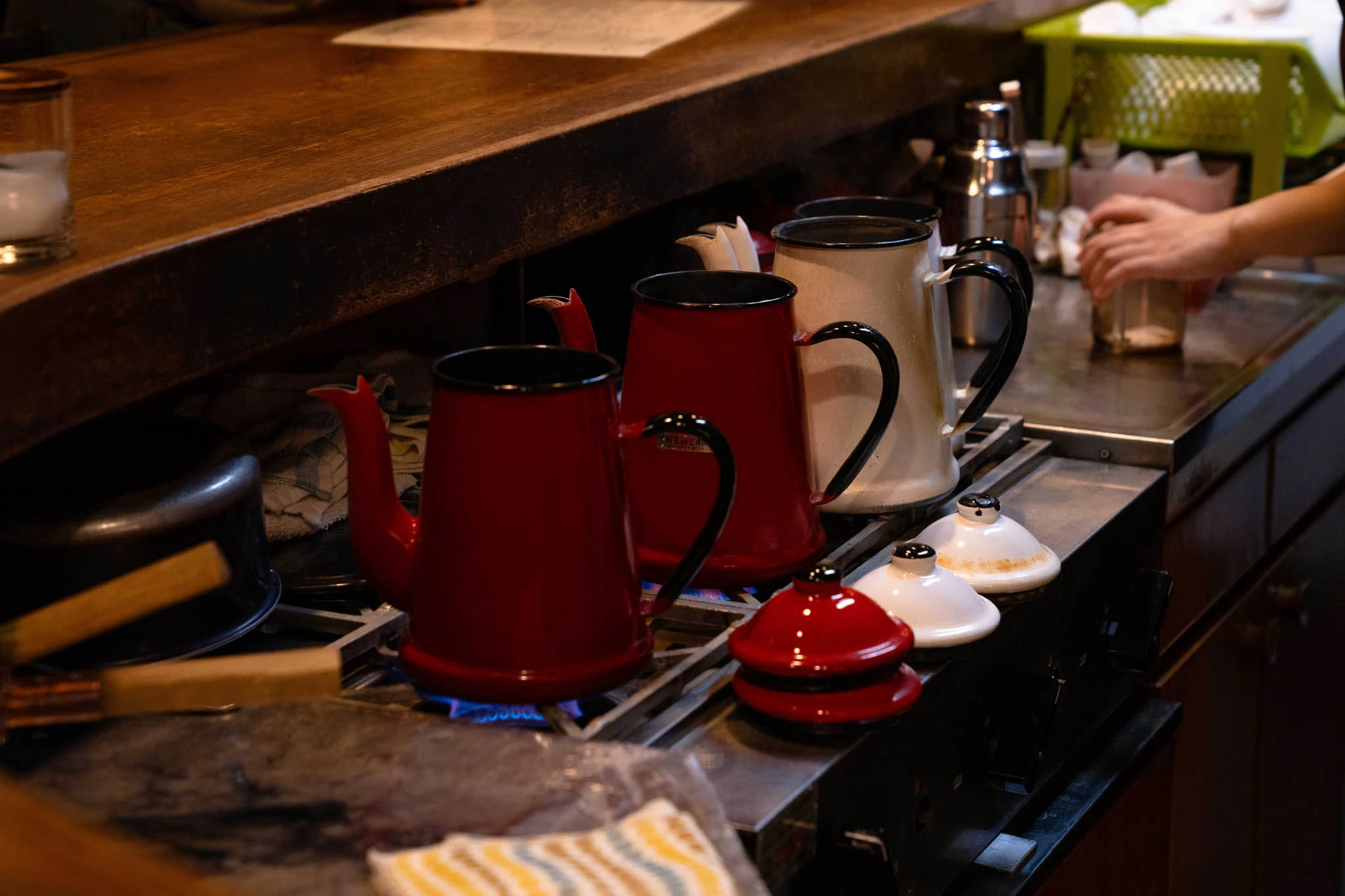
Red kettles stand over burners behind the counter. Their colour catches the eye, but their position matters more: the repetition, equipment and surrounding bar place them within a working area. Cropped into isolated product pictures, the kettles would lose that relationship to the room.
The equipment shows what is present. Its shape alone does not establish a recipe, water temperature or taste. A caption can identify the visible objects and where they sit, while leaving claims about the drink to a source that can support them.
Let a gesture explain part of the method
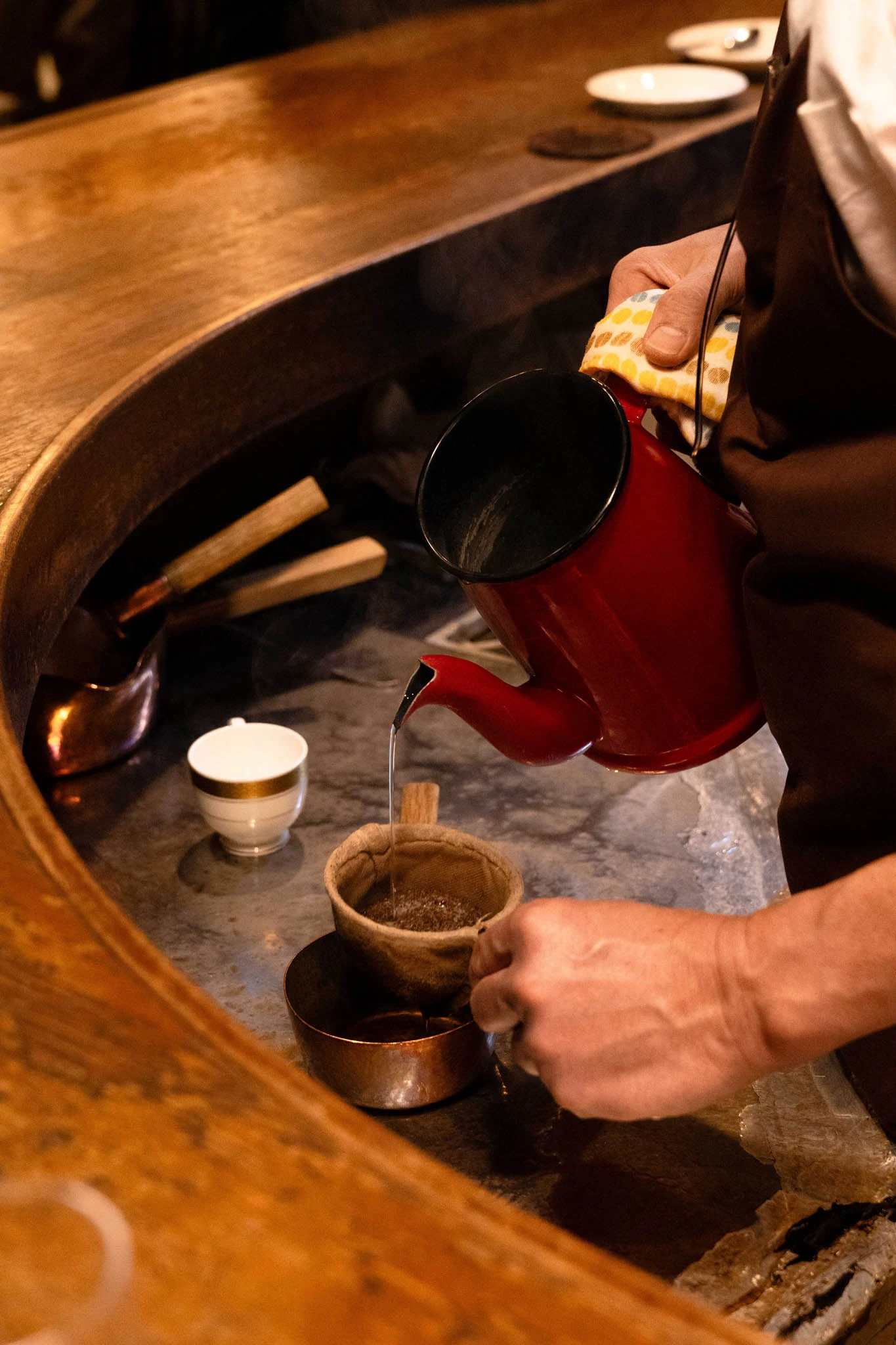
Another frame shows someone pouring water through a cloth filter behind the counter. Hand, kettle, filter and wooden surface remain in view. A reader need not know every step of the brewing method to understand that an action is taking place. The person is more than a figure added for atmosphere; the gesture makes the tools legible.
It is still only a fragment. The image does not specify the quantity of water, timing or every step used at the café. Describing that fragment precisely serves the photograph better than turning it into a complete set of instructions.
Keep movement in the finished-cup image
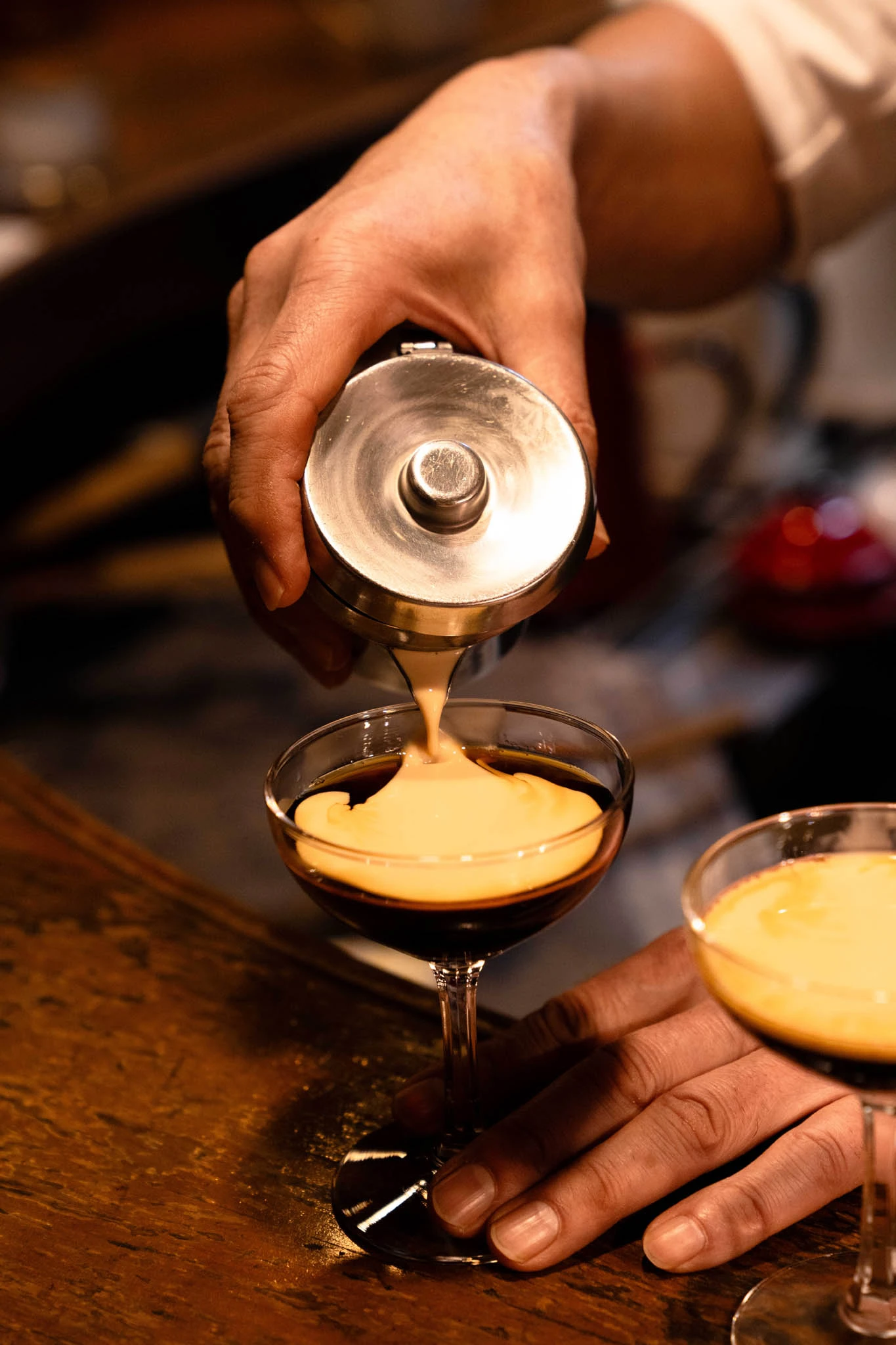
A pale liquid being poured from a metal vessel into a stemmed glass containing a dark drink brings the pour, the rim and a steadying hand into the same picture. Unlike a static close-up of a cup, it retains the work in progress. The finished drink stays connected to the setting without asking the viewer to believe that every frame records the preparation of the same drink. The photograph alone does not identify the ingredients being poured.
Choose visible detail over a broad claim
The public Café de L’Ambre project describes a documentary photography study of a Ginza kissaten, attending to its interior, coffee ritual and character. That gives an editor a sound basis for discussing how the pictures explain a place. It does not turn a photograph into evidence of the café’s age, a unique recipe or what a customer tastes.
Tools, gestures and the moment of pouring each provide different information. Showing and captioning them carefully tells the reader more about this particular place than relying on general praise for its coffee or tradition.