A night portrait can lose its setting when the subject is the only bright thing in the frame. Keep too much of the surroundings, and small accessories may become difficult to notice. An accessory portrait has to hold both distances: the person first, the pieces they wear, and enough of the night to place them.
Moss & Grain’s published Chiba portrait series identifies the work as photography for Liz in 2023. The burgundy styling remains consistent while expression, pose and framing change. These three frames offer a way to assess what the images show; the public project page does not specify the lighting equipment, the makers of the jewellery or directions given on set.
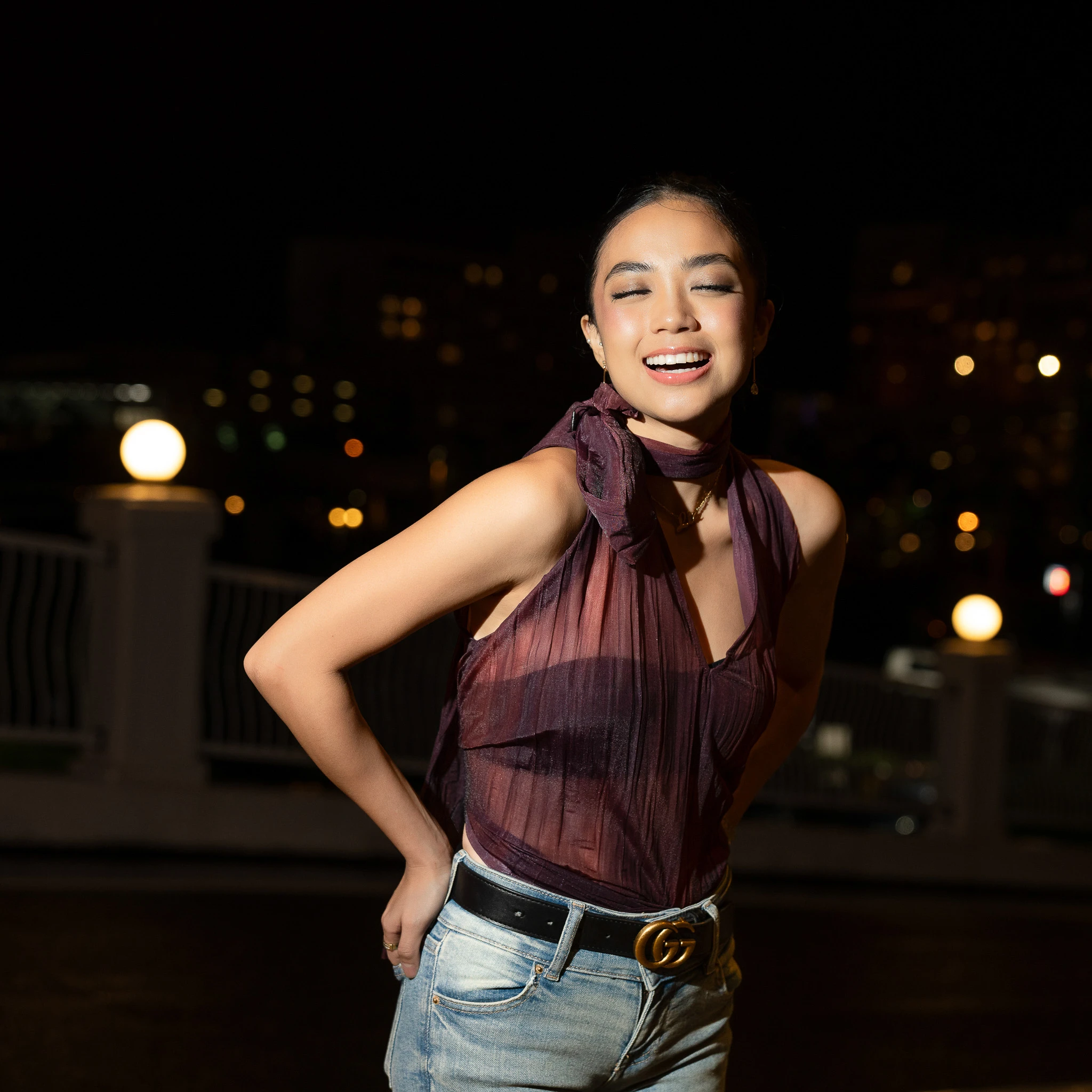
The smile and background lights establish the setting of the portrait series.
Give the subject the clearest light
In the opening portrait, the face, shoulders and burgundy top are brighter than the surroundings. Round lamps and smaller points of light remain behind the subject. The smile holds the first glance, while the night still has a visible presence.
The finished image shows a distribution of light. It does not reveal the number or type of lamps used, nor the exposure settings. A practical edit asks whether the person stays legible at a small website size and whether the background still reads as a night-time place.
Keep the jewellery at a readable scale
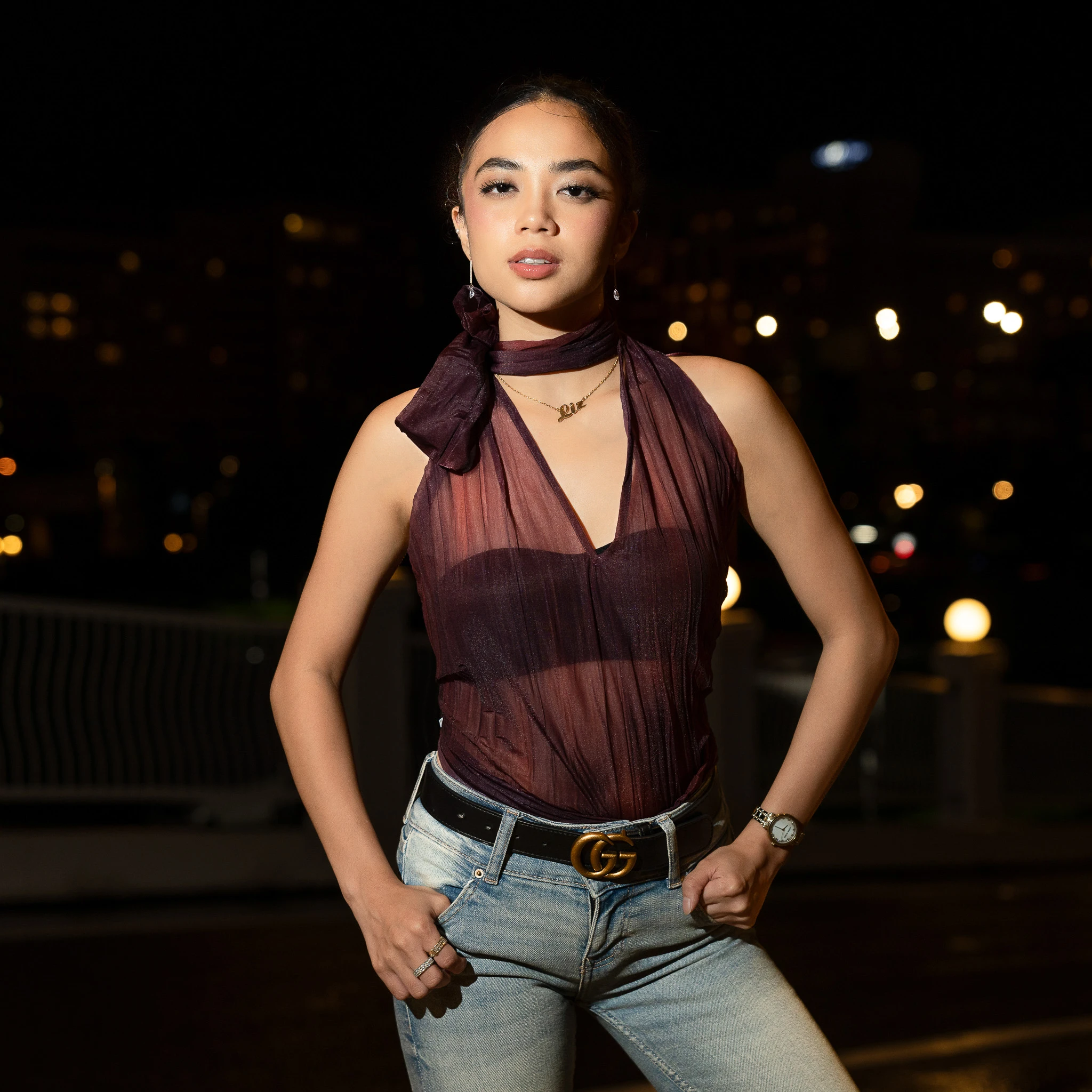
A front-facing frame holds the dangling earrings, necklace and tied neckline within the portrait. The face remains the main subject, but the accessories have not been lost to hair, a tight crop or the dark background.
This is useful for introducing a complete look. It cannot establish the earrings’ dimensions, materials or reverse details. A product page would need dedicated close views and verified specifications. The portrait shows how the pieces sit on a person.
Let background lights carry the setting
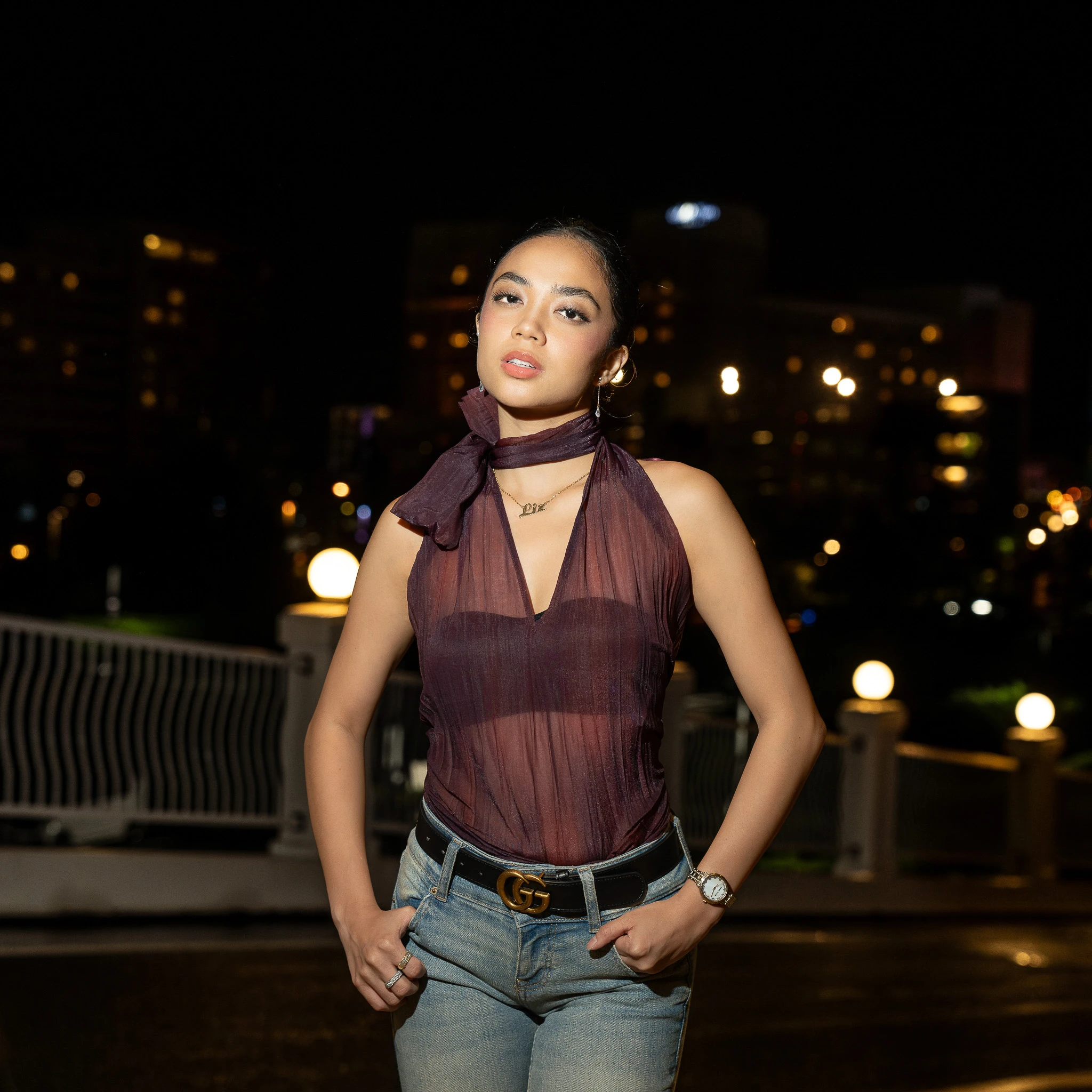
In the third frame, the subject stands before a railing and several round lamps, with smaller lights further away. Those points do not compete with her face, but keep the dark area from becoming featureless. The same burgundy styling belongs to the series without requiring a new outfit to create variation.
The photograph establishes the relationship between person, railing and lights. It does not identify a precise neighbourhood or an event. Here, the background offers a setting rather than a story the image cannot verify.
Choose by use, not brightness alone
The three portraits share their styling but serve slightly different purposes. The smiling frame introduces the person and the night. The frontal view makes the earrings and necklace easier to find. The wider sense of railing and lamps gives the setting more substance. This is an editorial order, not a claim about the order of the shoot.
For an introduction page, begin with a clear portrait that keeps the night in view, then add the angle that helps readers notice the jewellery. For a single-product sales page, confirm the detail photographs and specifications separately. Each picture becomes more useful when it is allowed to answer the question within its frame.