When an unplanned visitor arrives at an event, the clearest portrait can seem like the obvious photograph to keep. Documentary work needs something more: a sense of who else was there, how people occupied the space and where the camera stood. Those details need not all live in one frame, but removing them entirely can make the moment harder to understand.
Moss & Grain's published Ling Jiou Mountain project describes an unexpected visit during the FU Lifestyle Festival and says there was no prepared shot list. These two images are considered as an edit. They do not establish the full sequence of events, what anyone felt, or which photograph came first.
The smile draws the eye while the surrounding gestures remain visible.
Find the person without removing the gathering
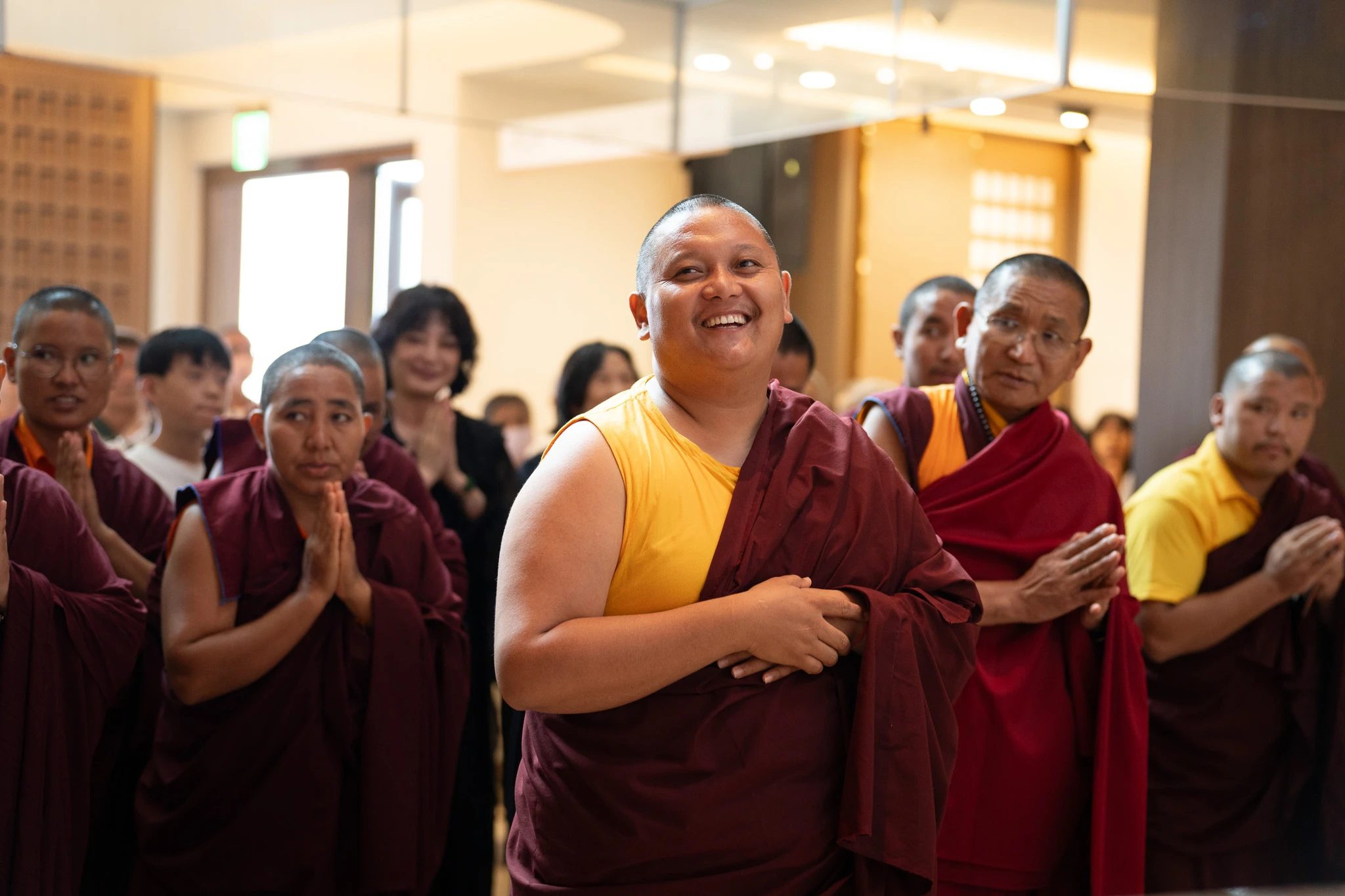
In the first photograph, a smiling figure in yellow and burgundy robes occupies the centre. Others remain at the sides and behind: some hold their hands together, while their gazes lead in different directions. The main figure is easy to find, yet the picture has not become an isolated headshot.
The frame shows a person within a gathering. It does not name everyone present or tell us that each gesture expresses the same feeling. For this use, keeping the surrounding people is more informative than enlarging the smile alone.
Use the foreground to locate the camera
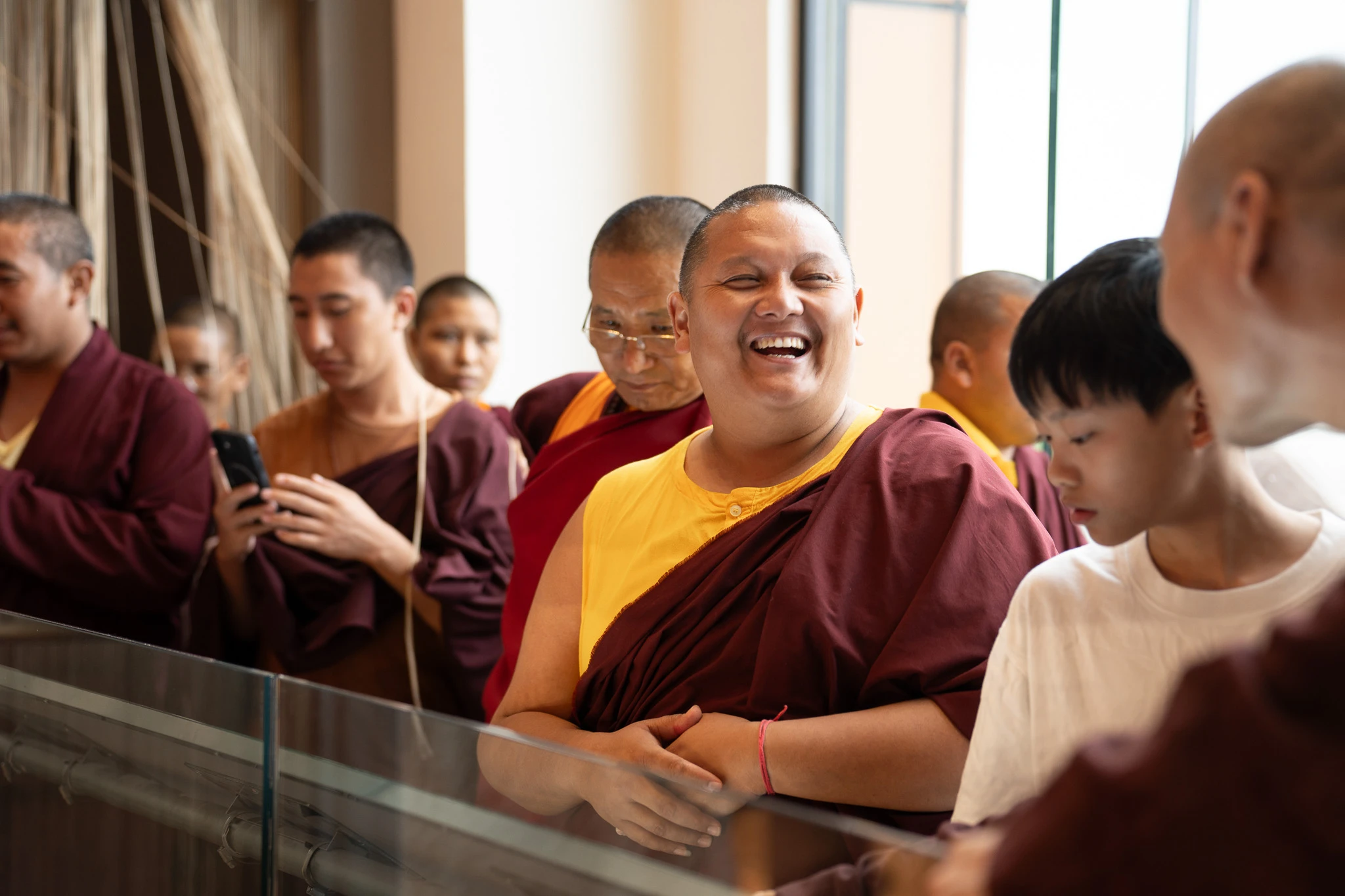
A second view includes a glass railing across the foreground and a figure close to the right edge. The smiling person remains legible, but the people and the boundary of the space stay in view. The railing is more than an obstruction: it tells us something about the photographer's distance from the scene.
Crop away every foreground cue and the photograph may read more like a simple portrait. Keep too much and it may obscure the expression that gives the frame its centre. The decision depends on what the image needs to explain, rather than a general preference for an empty background.
Let the pair differ without inventing a timeline
The first image gives the central figure and responses on either side a direct view. The second adds a railing and someone close to the camera, making the viewing position more apparent. Together, they can answer two editorial questions: whom are we looking towards, and how are we present in the room?
That order is an editorial choice, not a record of when each picture was made. Without timestamps, production notes or confirmation from those involved, the pair should not be written into a sequence of arrival, ritual or changing emotion.
Let captions add context only where it is known
The public project page supports the context of an unexpected visit during the FU Lifestyle Festival and the absence of a prepared shot list. A caption can give that setting, then describe the expressions, gestures and spatial relationships visible in the photograph.
If publication requires the names of everyone pictured, the title of a ceremony or the visitor's formal purpose, those details need separate confirmation from the organiser. Keeping the words within the evidence leaves the photographs free to do what they do best: show a person still connected to the people around them.