

In 2023, Moss & Grain was invited to Kyoto to photograph a machiya townhouse before its conversion into a hospitality space. The published project shows timber, lattice windows, furniture and boxes within the rooms. The photographs hold a record of what was visible at that point.
Images made before a change can invite an easy before-and-after story. Yet a photograph can establish what appeared in front of the camera, not the age of every object, the decisions behind a renovation, or the result that followed. Keeping those limits clear makes the record more useful later.
Name the moment first
“Before conversion” is the essential time marker here. The project page places the assignment in 2023 and describes the intention to document the townhouse before it became a place to stay. That supports an account of the brief. It does not turn these pictures into a record of a particular construction phase, or evidence of the eventual design.
If the images are ever set beside photographs of the changed space, their date, location and viewpoint should travel with them. Without that context, a viewer cannot tell whether a difference comes from the building, the light, the framing or the condition of a room on the day.
Describe the contents without turning them into the building
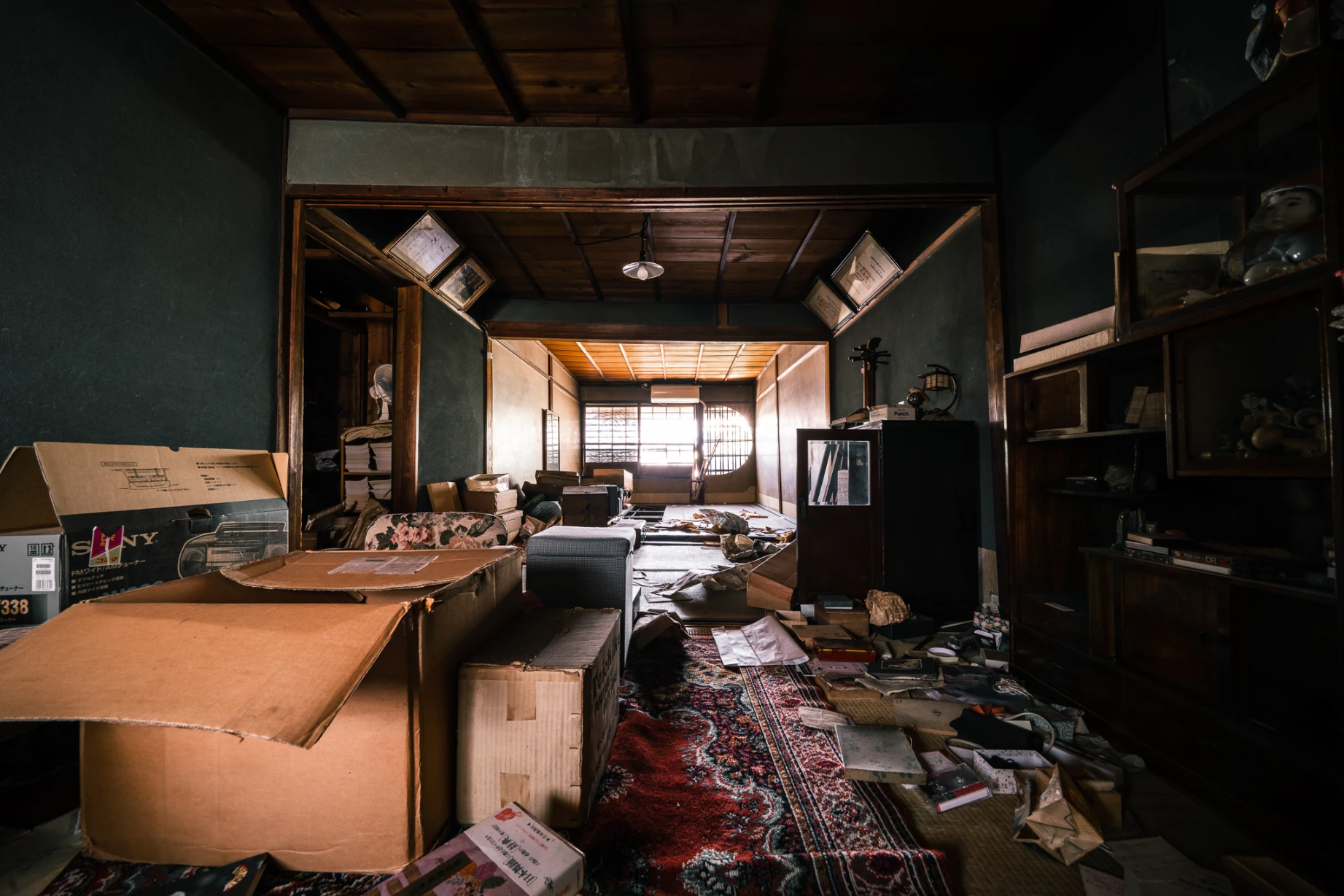
In one wide view, boxes and furniture occupy the foreground. Timber members, ceiling and lattice windows remain visible beyond. It is a room as found at a particular moment, rather than a styled interior ready for use. The contents need neither disappear from the caption nor become part of a claim about the architecture’s original state.
A precise caption can say that boxes and furniture stand in front of the timber structure and windows. The image and project page do not establish who owned those objects or what became of them. Separating observation from interpretation prevents a later reader from mistaking inference for evidence.
A detail is a clue, not a diagnosis

Another frame moves close to a worn wall, two switches and a red cord. It retains surface information that is harder to make out in the wider photograph. This is a different kind of evidence from the shape of a room.
The photograph does not date the switches or establish how they worked. Questions about a building’s history, services or conservation need measurements, records and qualified inspection. Photography can show where a question begins; it cannot settle it on its own.
Give future accounts a dependable starting point
Together, these photographs can say, “this is what was visible then”. An account of change would also need verifiable images of the later space, with dates and comparable context. The pre-conversion set alone cannot substantiate an outcome.
For a brand or spatial team, keeping the source files, dates and restrained captions is more useful than loading an image with adjectives. Marking what is known, and leaving what is not known open, lets the record remain usable as the project moves on.