Give readers a sense of scale first
Large displays can turn a photo series into a set of vivid but interchangeable portraits. Fill the frame and readers may see the form without understanding its relationship to the room. Step back too far and the details disappear. A more useful sequence begins with a view that establishes scale, then moves closer to show how the object is put together.
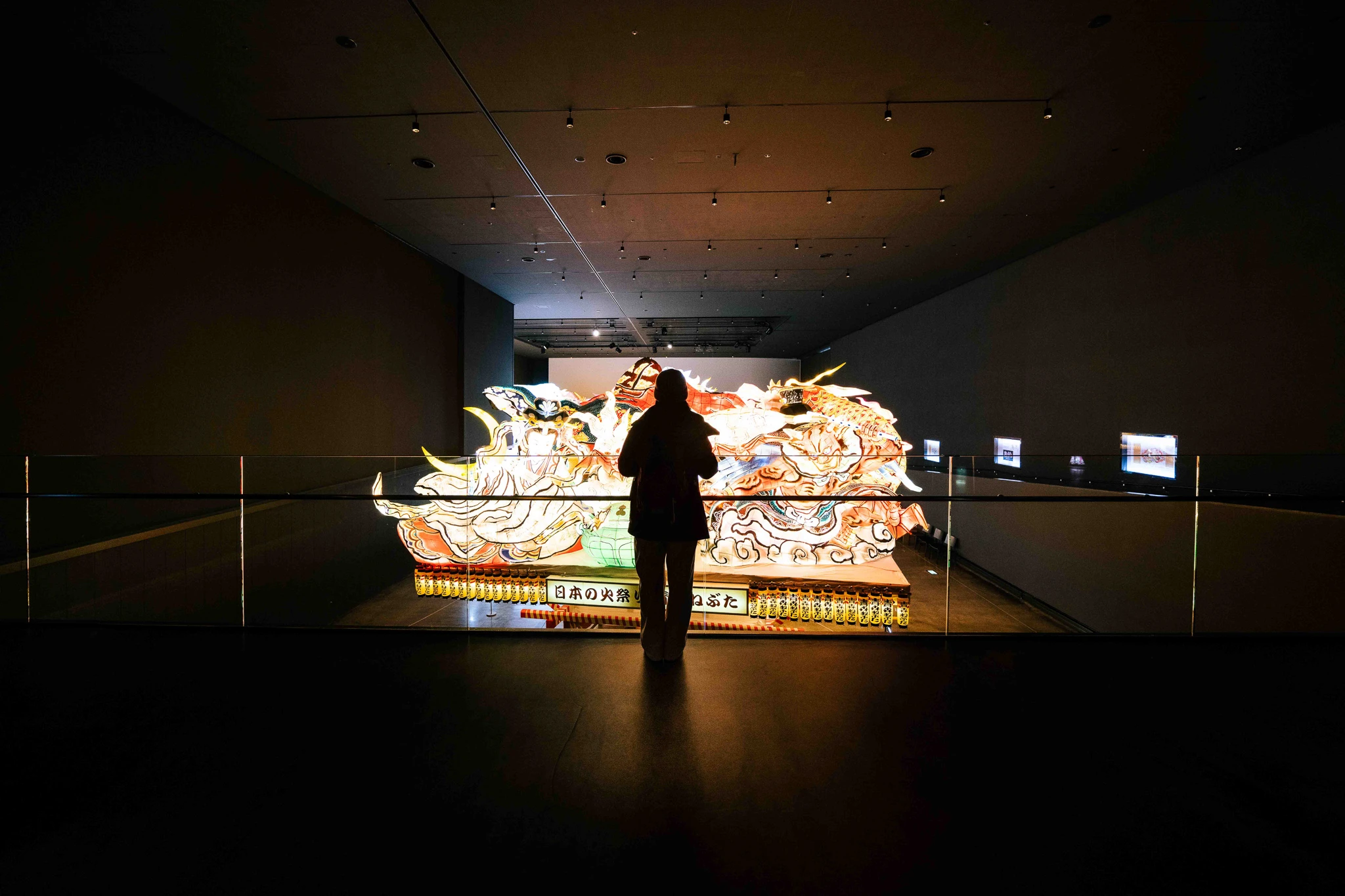
In Moss & Grain’s public photographs of WA RASSE in Aomori, illuminated Nebuta figures sit within dark galleries. The published series moves between wider views and structural details; visitors in the gallery also offer a point of comparison. The project page records the work as photography created for Fun Japan in 2023. These photographs support observations about visual sequence. They do not establish visitor experience, exhibition performance or commercial outcomes.
Let each photograph work at one distance
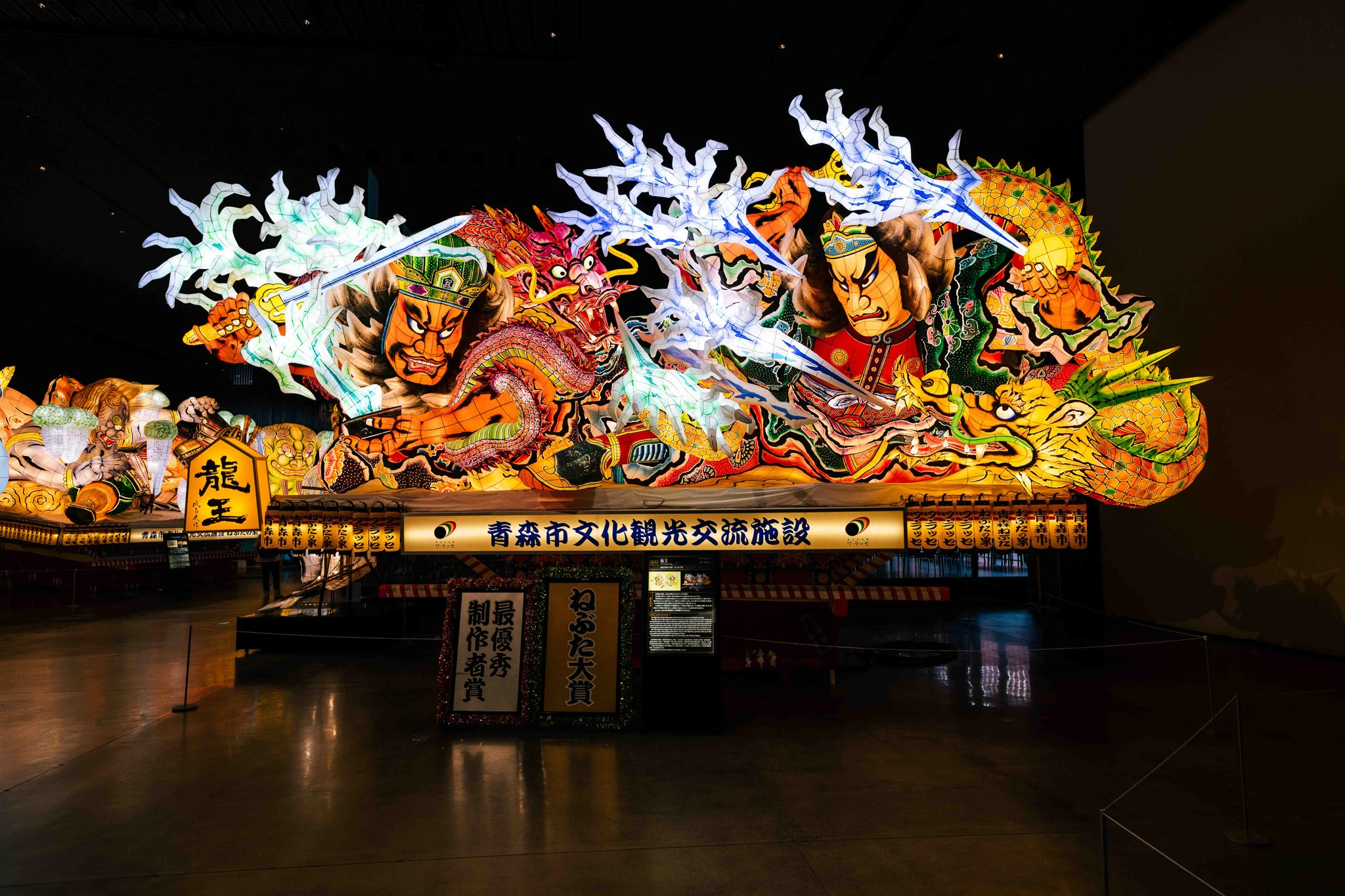
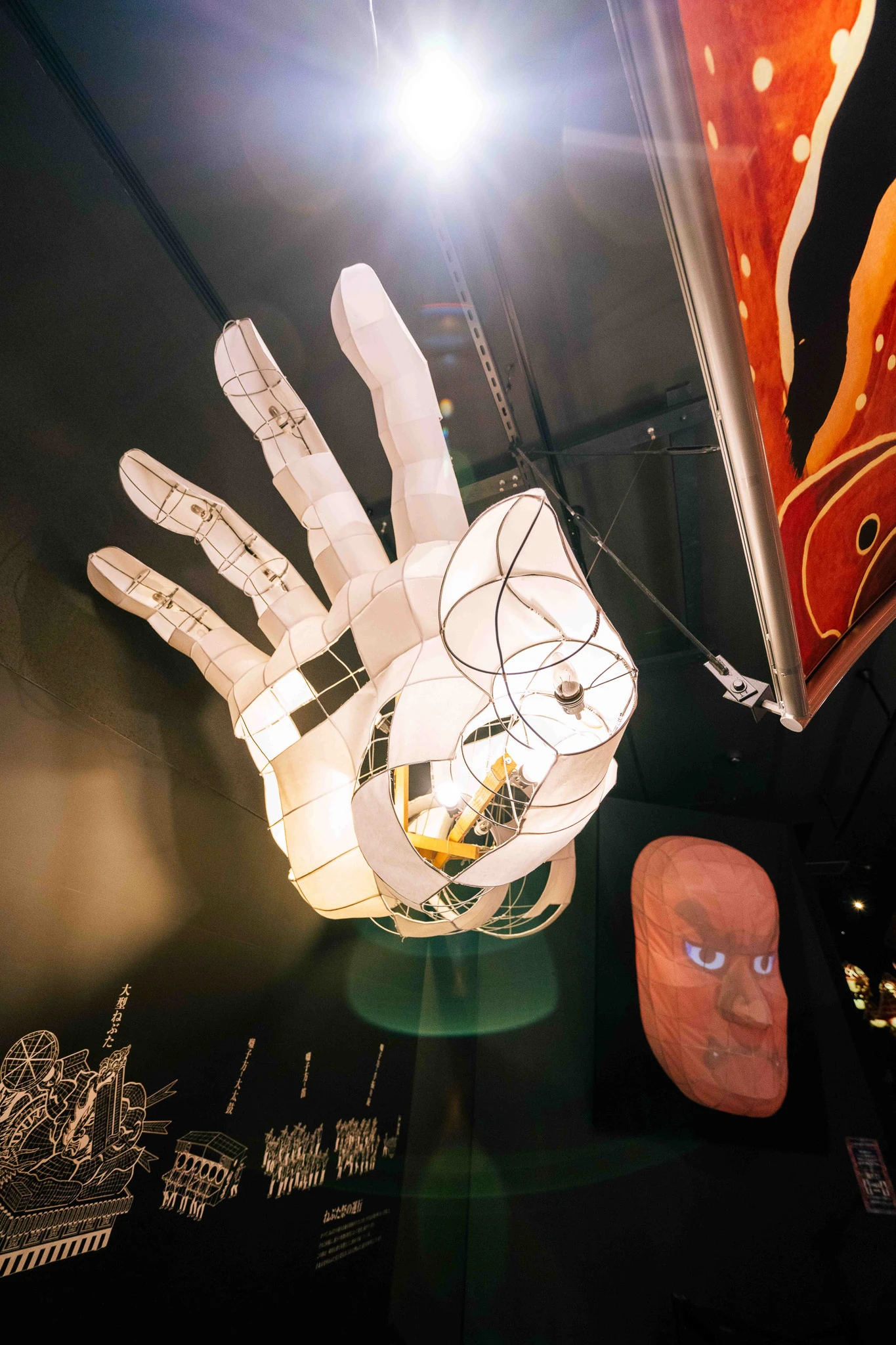
Ask what a frame needs to answer. A wide view can show where the display sits, how the room is lit and how far away it feels. A mid-distance frame keeps the main outline legible. A close view can point to a surface, joint, line or translucent structure. When one frame is asked to show everything, its priorities often become difficult to read.
Try arranging the edit as “whole, detail, whole again”: establish the setting, invite a closer look, then return to a wider view that places the object back in the room. Each frame should add information the previous one did not. If two images offer almost the same distance and content, keep the clearer one.
Darkness and reflections describe the room too
The dark areas of an exhibition are not empty space that must always be lifted. When they preserve the boundary between the background and an illuminated object, they give the form room to read. Push the exposure too far and the highlights may lose definition; let the shadows close up completely and the surrounding space disappears. During review, check that the outline, bright areas and background remain distinguishable before deciding whether an adjustment is needed.
Reflections can show how the floor, glass or light relates to a display, but they can also make a frame feel busy. Notice whether a reflection extends the form or obscures an important structure. If the reflection is part of the visual evidence, a caption can describe where it appears in the photograph without assigning it a symbolic meaning.
Use people as a reference, not an invented story
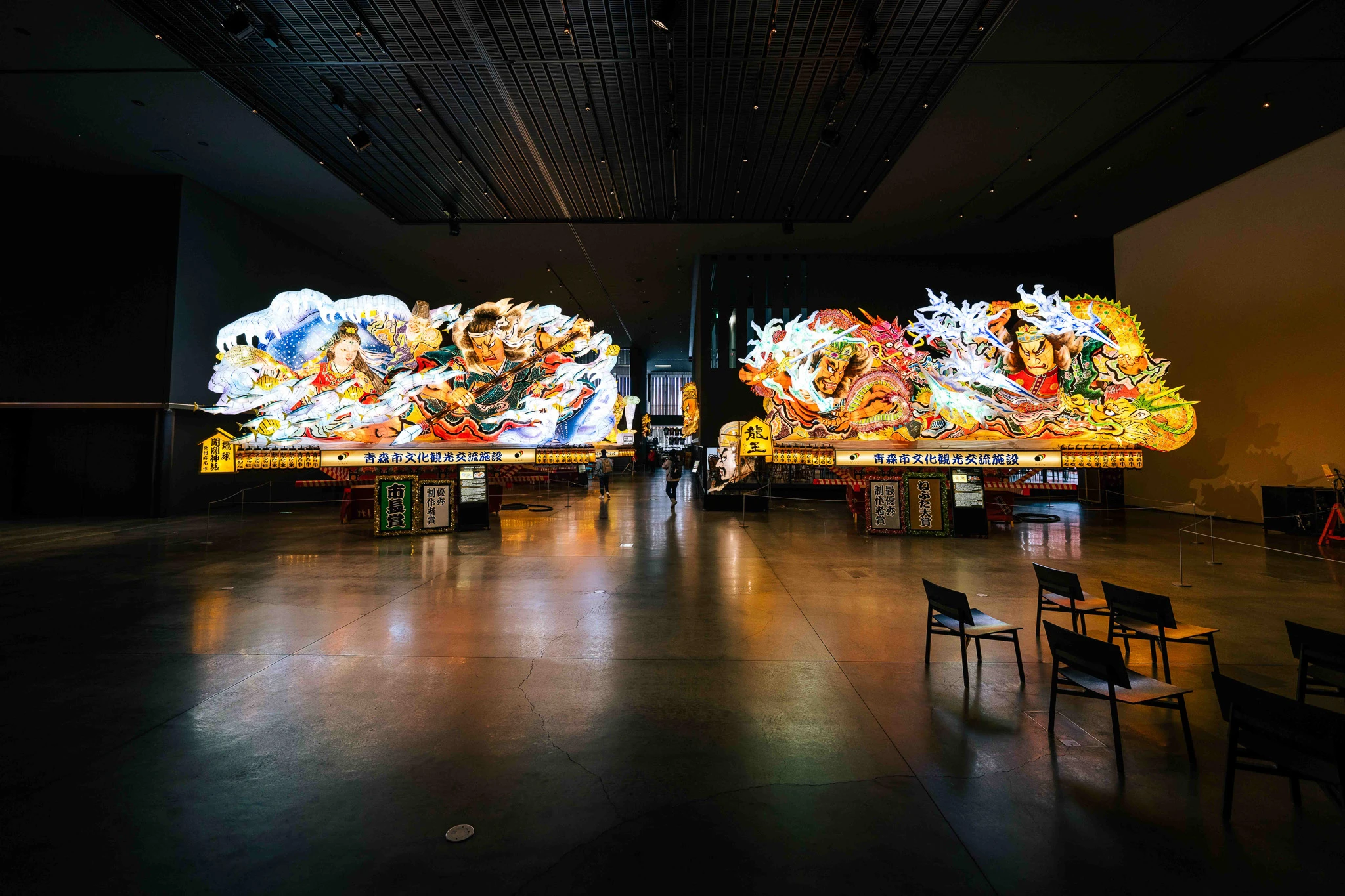
A visitor beside a display gives readers a rough sense of its size and shows the relationship between a person and the work. Check that the figure does not cover the main outline. Then consider whether an identifiable face or personal detail is needed in the frame. If someone is present only as a point of scale, a caption can state that visible relationship without attributing a feeling or story to them.
Review the sequence with four questions
- Does the opening frame place the display in its setting?
- Does the close view reveal structure that the wider frame cannot?
- Can readers distinguish the shadows, highlights and reflections?
- Do people or surrounding objects provide scale without taking over?
Not every photograph of a large display needs to feel monumental. When one frame establishes scale, another brings the reader closer and a third points to a detail, the series can move from seeing an object to understanding how it occupies a space. The photographs discussed here are available on the WA RASSE project page.