Lifestyle photography often places a product in several settings. Once the settings multiply, the edit is no longer simply a matter of choosing the strongest picture from each location. It has to decide what a reader learns with each change of scene. The public 24hrs series includes a person with a camera by a window, printed material indoors, and a seat beside a city street. Those images can form a reading sequence without being presented as a record of one day.
Let an activity establish the first setting
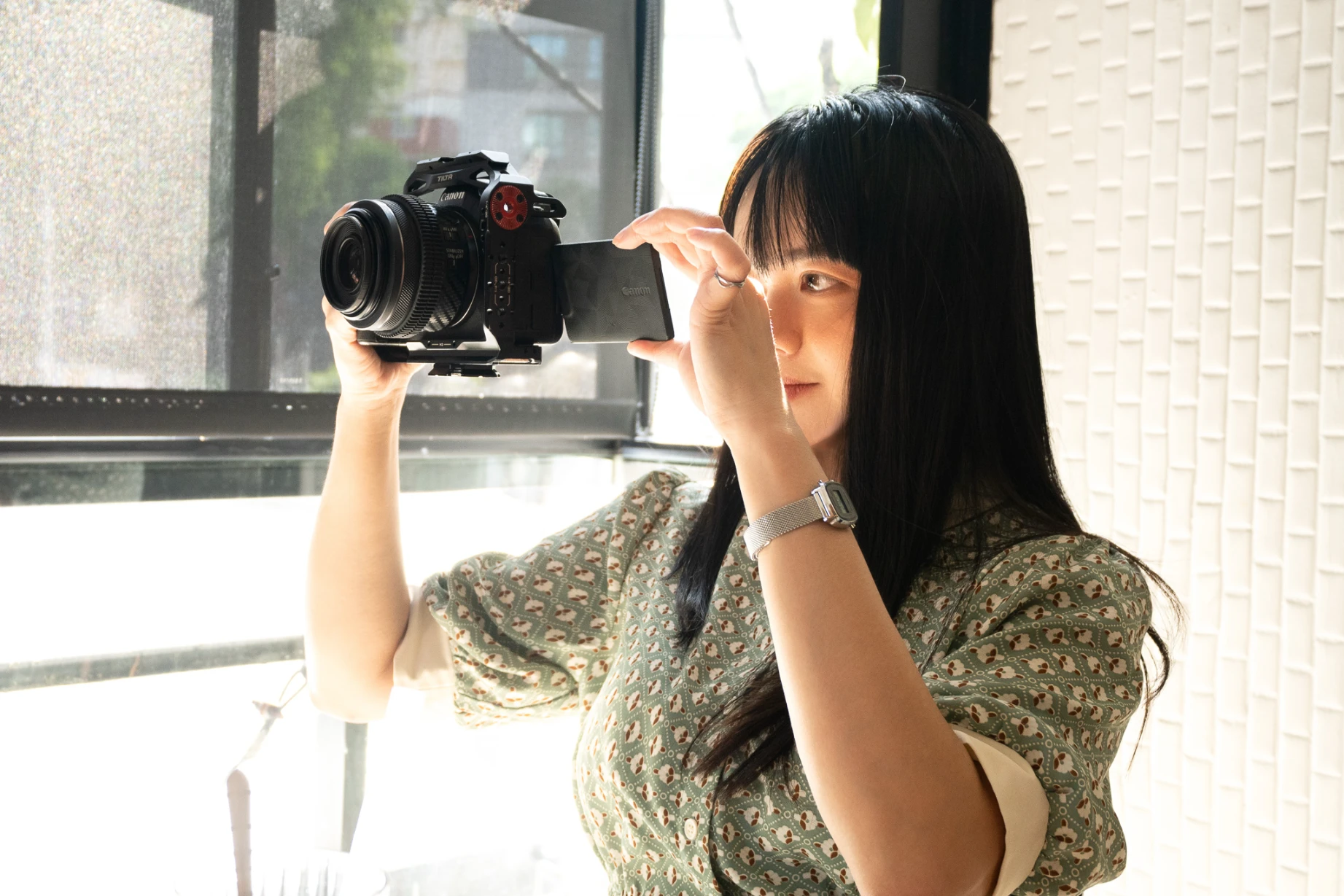
Beside a bright window, a person raises a camera. The equipment in their hands and the light around them make the action easy to read. As an opening frame, the photograph gives the viewer something to understand before asking them to notice the clothing within the movement and space.
That does not make the subject's occupation known, nor does the pose prove how comfortable a garment feels. The camera is visible evidence of an activity. Claims about the wearing experience still need accurate product information from the brand.
Keep a different relationship in the interior frame
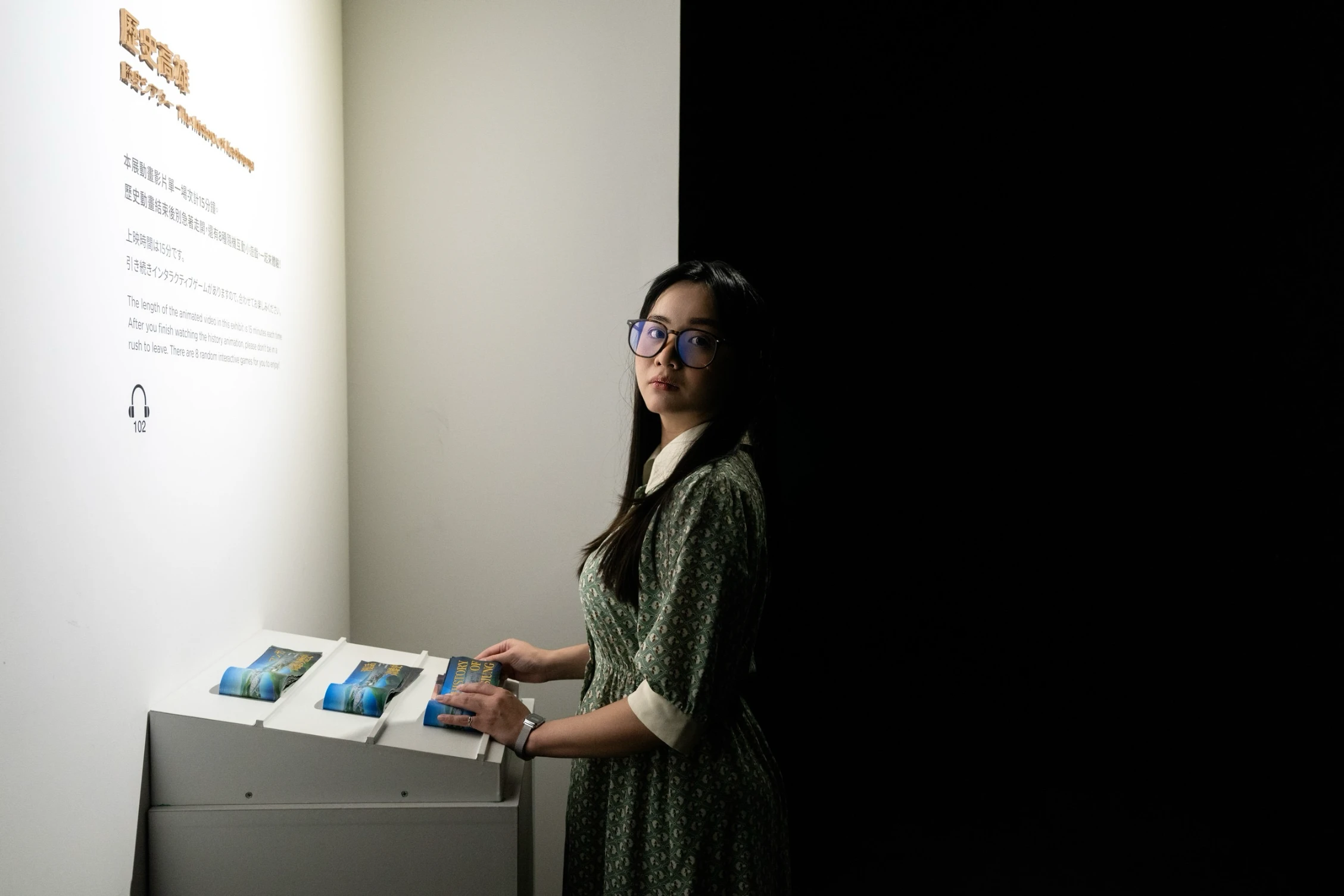
In another photograph, a person stands beside several colour prints, with a hand near the paper. The objects, gesture and surrounding room remain in view. This makes the image more than a second portrait in similar light: the viewer can read the distance between person and material, and see that the scene has a different purpose from the camera frame.
If an edit favours only a matching expression or colour palette, the two images may answer much the same question. Keeping the prints visible gives the second photograph another piece of work to do.
Let the street change the photograph's job
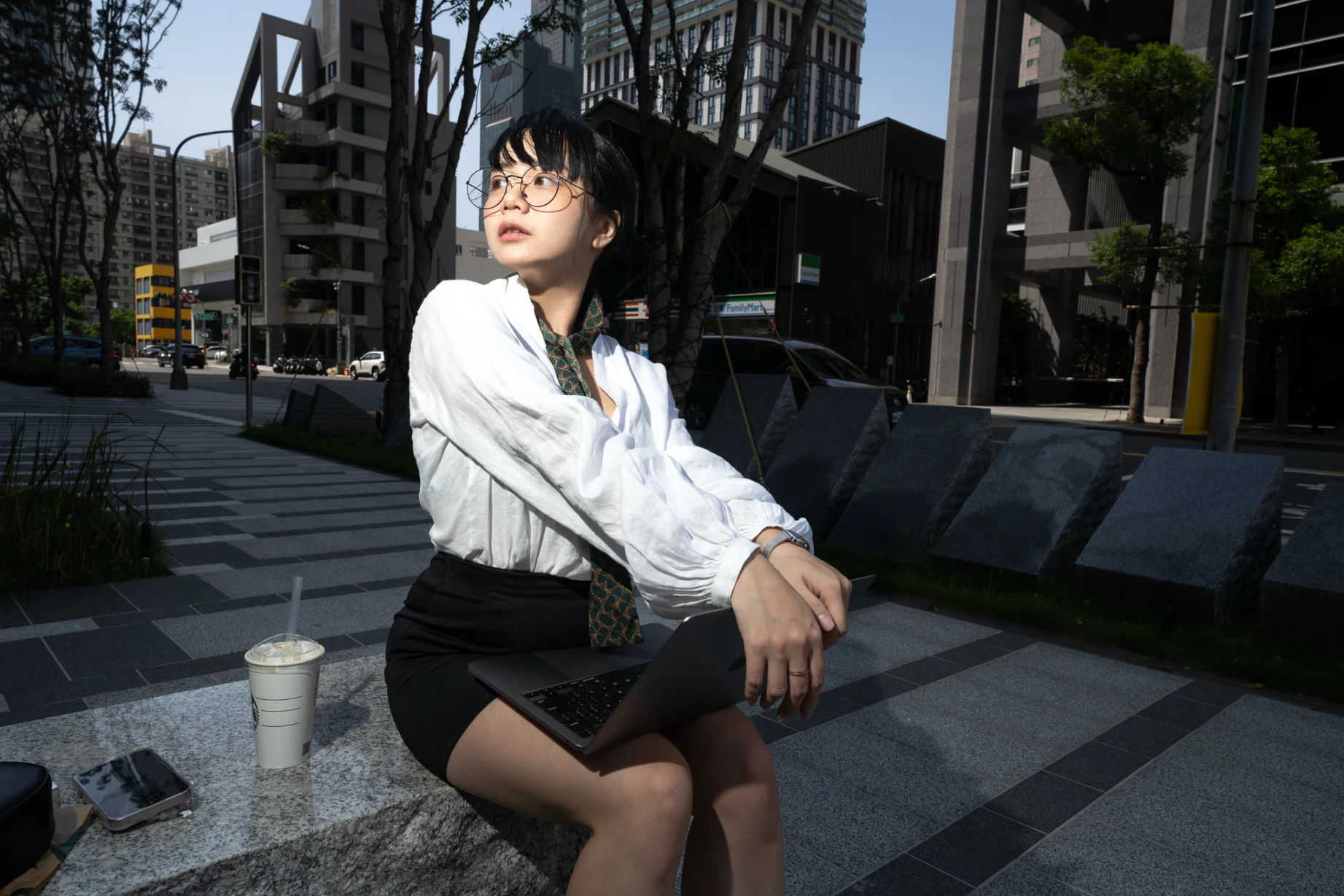
Outside, a person sits beside the street with a drink nearby and a laptop on their lap. Compared with the two interior photographs, this one brings a public setting and the subject's position within it into the frame. It can change the pace of the series, moving attention from objects close at hand to the relationship between person and city.
The street scene need not prove that the clothing suits every activity. Nor should it be written as the next stop after the indoor work. Its contribution is a different context, allowing the series to leave one room and one viewing distance behind.
Separate the edit from a claim about time
The public 24hrs project describes morning routines, work, creative time, companionship and movement through the city as settings explored by the series. An editor can use those settings to shape a rhythm. The photographs alone do not establish that these three moments took place on the same day or formed a continuous itinerary.
A useful lifestyle sequence gives each frame a distinct task: establish an activity, add a relationship between person and object, then open up the setting. That is clearer, and more credible, than supplying a daily story the pictures cannot verify.