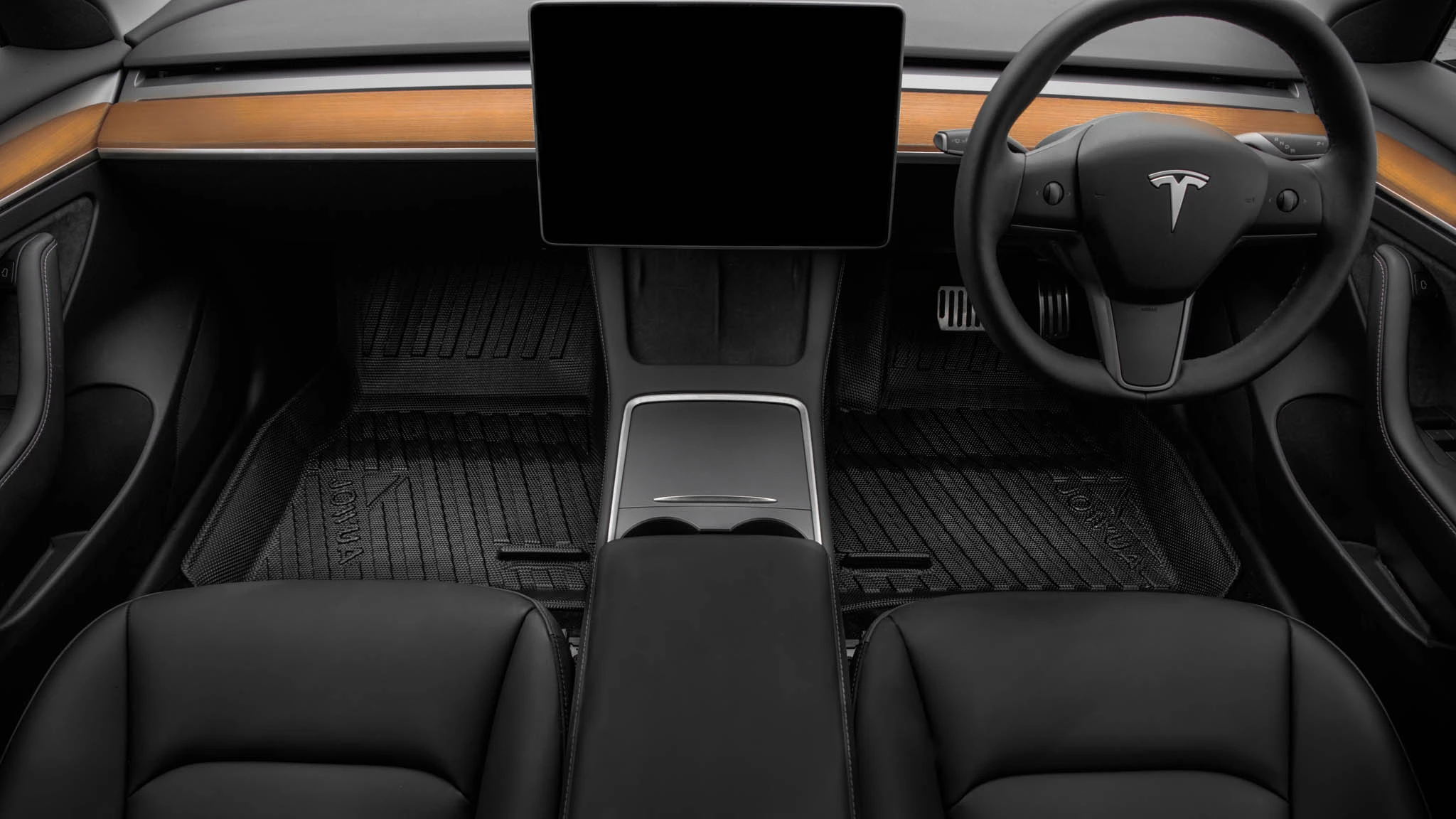
A car accessory can be photographed as an object, but its purpose often becomes clearer in place. The public Jowua project by Moss & Grain pairs a view of the Tesla Model 3 cabin with closer photographs of fitted floor mats. The sequence brings three kinds of evidence into view: the product within the vehicle, the way its shape follows a footwell, and the surface detail a close frame can reveal. That is a useful structure for product photography when fit and integration matter as much as appearance.
Start with enough context to identify the use
The cabin view introduces the product in relation to the car’s interior. A wider frame can show where the accessory sits and how it belongs within the surrounding space. It also helps the viewer distinguish an in-use image from an isolated catalogue photograph.
Context should remain specific to what the image shows. One project photograph cannot establish compatibility across every vehicle year or trim. Keep product specifications tied to approved product information rather than visual inference.
Move closer to explain shape and fit
A floor mat follows the contours of a footwell. A close photograph can show edges, texture and the way the piece sits around nearby surfaces. The rear and passenger-footwell views in the project add different placements to the sequence, helping a viewer compare how the accessory occupies distinct areas of the cabin.
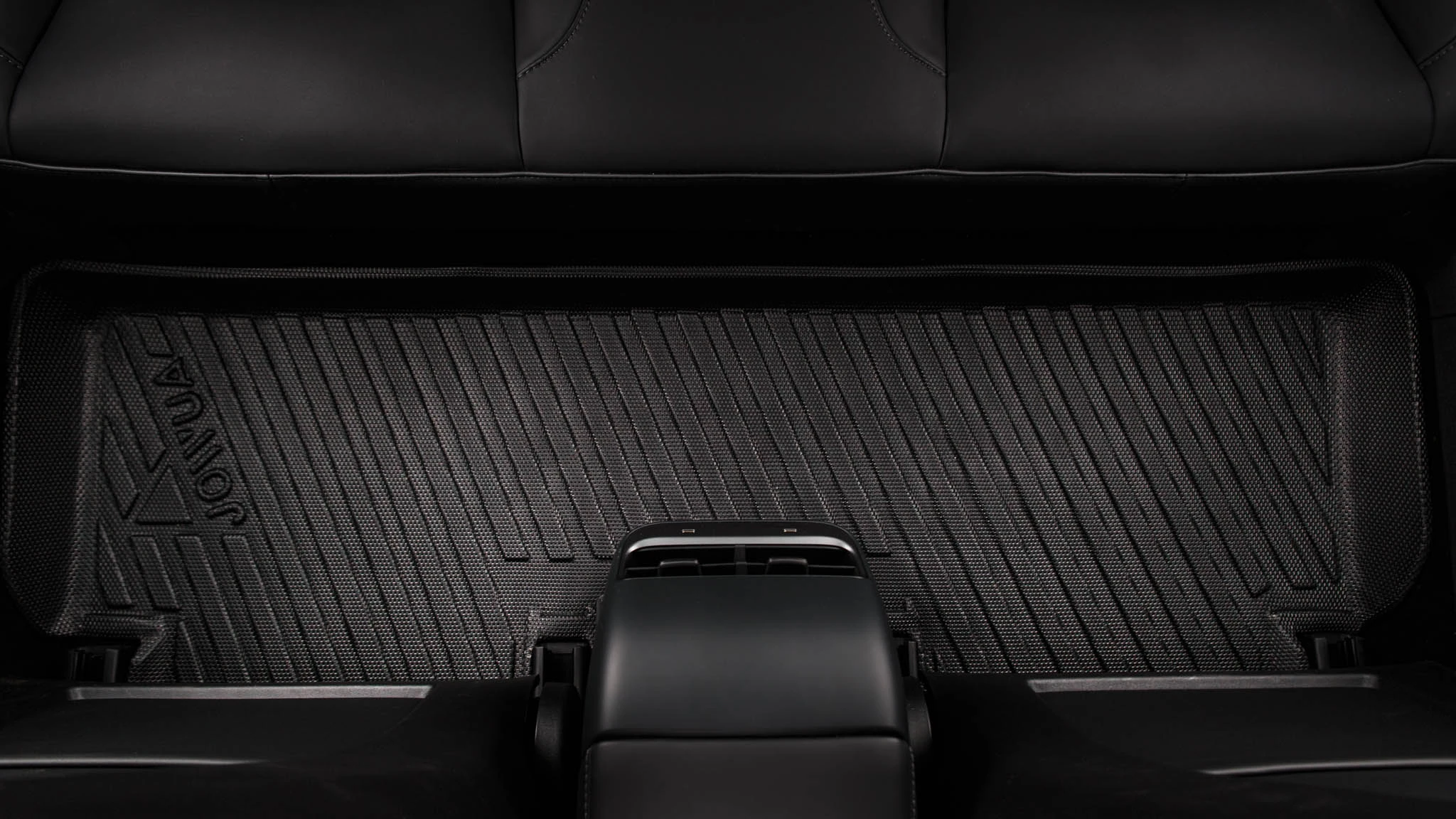
The frame should be close enough to show construction, but not so tight that the viewer loses orientation. A visible threshold, seat edge or adjacent surface can help maintain scale. Avoid describing a seal, attachment method or protective result unless those features have been confirmed separately.
Use a detail frame to add, not repeat
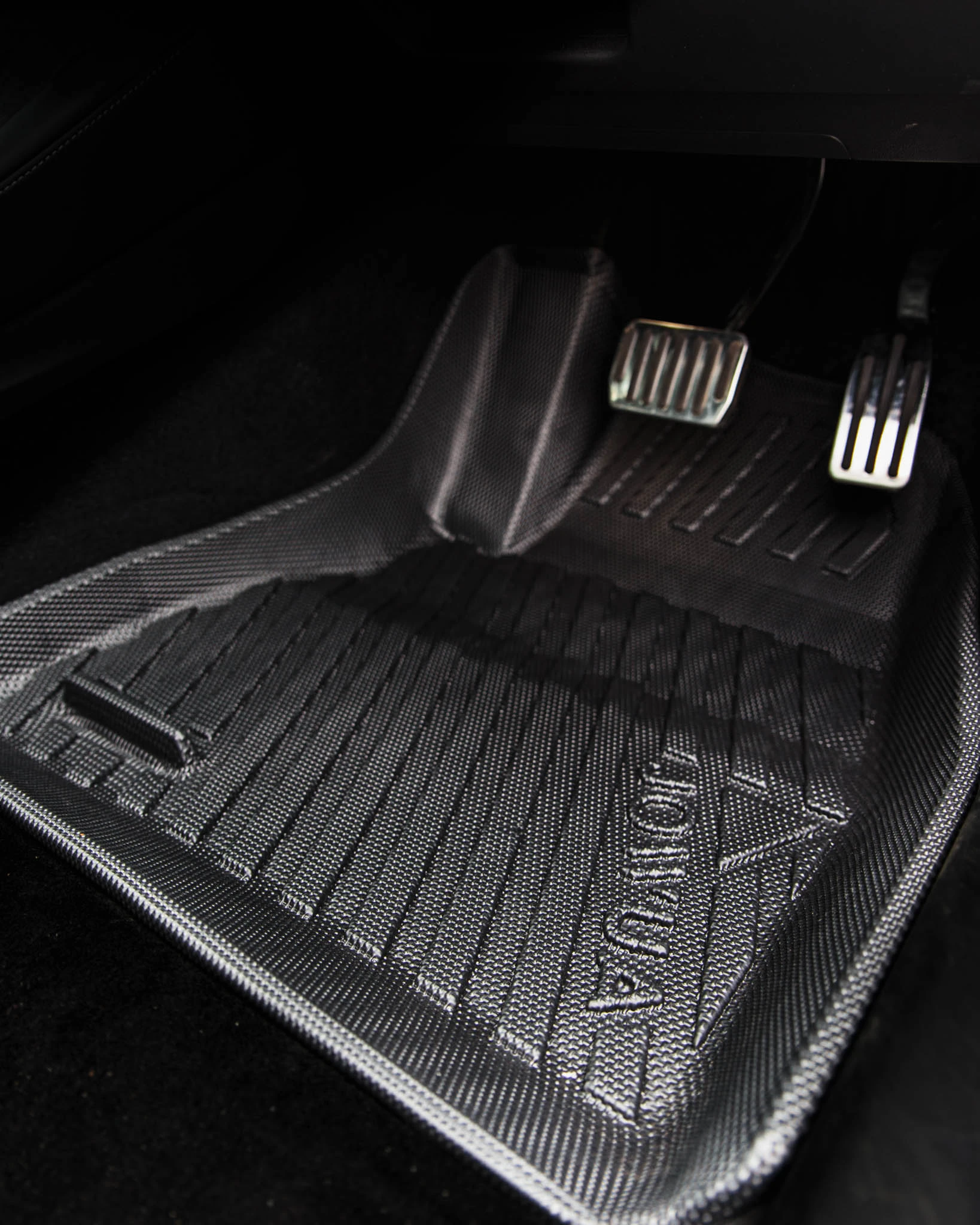
The driver’s mat photographed beside the metal pedals adds a new relationship between product and vehicle controls. It gives the set a different point of reference from the broader cabin frame and the rear mat. Details are most useful when each one answers a separate question: where the product goes, how its form fits, and what its surface looks like.
Build a sequence across scales
For a compact edit, begin with a contextual view, move to a placement-specific frame, then finish with a close detail. This order helps the audience understand the product before inspecting it. The Jowua portfolio page describes the work as brand-content and product photography highlighting functional details, material quality and integration with the vehicle. Those are the supported editorial themes; further claims should come from verified product documentation.
For brands commissioning automotive product photography, the same principle applies beyond floor mats: choose frames that show the object, its relationship to the vehicle and the details that distinguish it, while keeping every claim grounded in visible evidence or approved specifications.