Industrial heritage is a building, a set of machines and the space between them. A photographic sequence can move through three distances: an exterior that locates the entrance, a wide view that explains the room, and a closer frame that reveals its visible components. Together, they give the site a scale that no single detail can provide.
The Tainan Shan-Shang Garden and Old Waterworks Museum preserves buildings and waterworks facilities from the former Tainan Waterworks. In Moss & Grain’s self-initiated photographs, a red-brick exterior, timber roof structure and rows of machinery offer these three distances. The images show spatial relationships; the museum remains the source for the equipment’s history and operation.
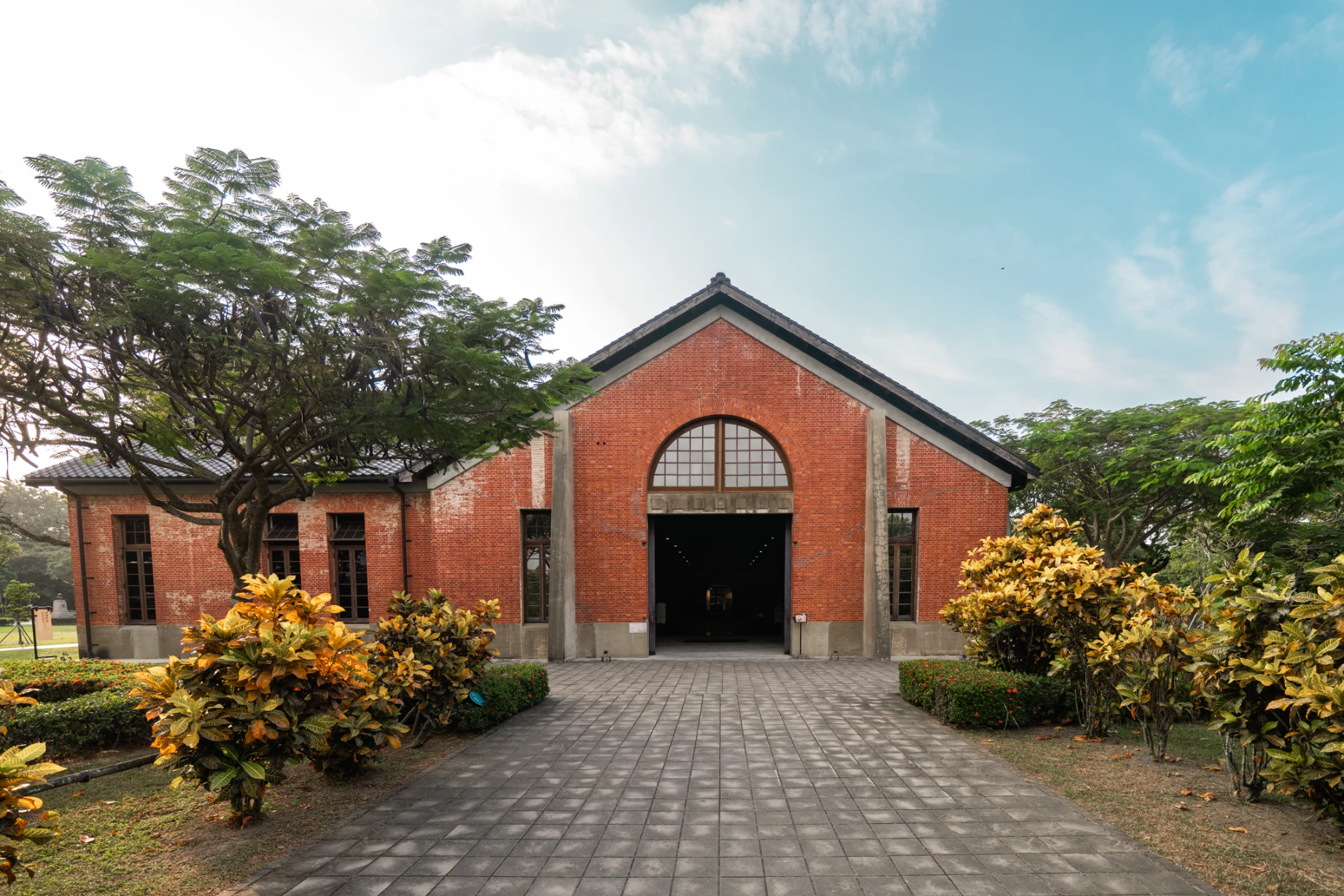
The red-brick façade and arched entrance establish the building before the machinery appears.
Start outside, where the entrance is visible
The opening frame looks along a path towards a red-brick building. Trees and planting hold the edges, while the arched entrance sits near the centre. The darker interior remains visible beyond it. This is more than a record of the façade: the image shows how one might approach the building.
Placed first, the exterior gives the subsequent interior photographs a location and a scale. A series made only of close machinery views would ask readers to imagine the building around them.
Let the wide view establish the room
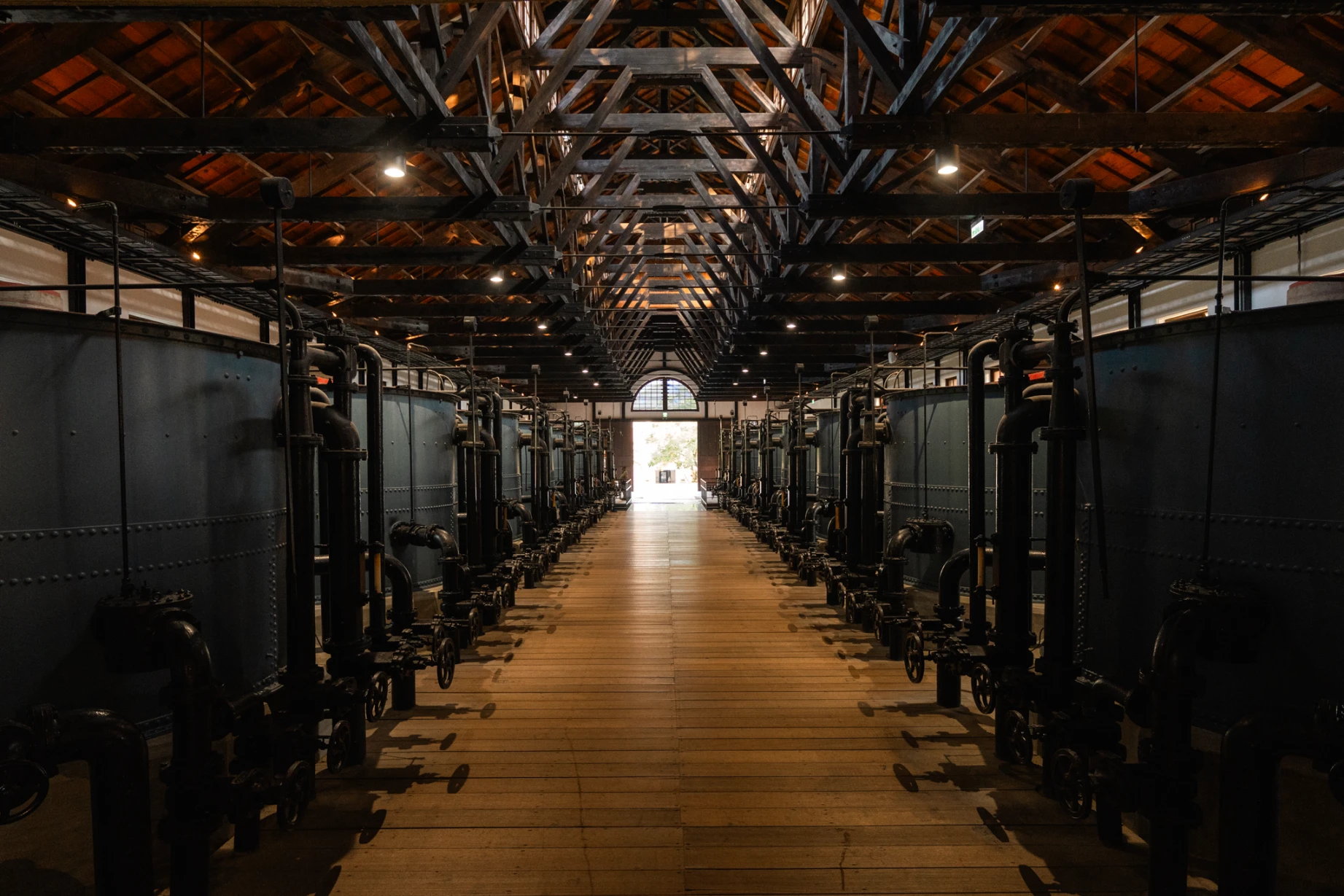
Inside, a timber aisle runs between rows of blue-grey cylindrical equipment. Roof trusses and lights repeat towards the doorway at the far end. The machines sit within a clear arrangement, with a route through the middle rather than an undifferentiated collection of objects.
A wide frame needs to retain both the aisle and the equipment. Crop too closely and the machinery loses its position; stay too far away and the smaller forms disappear. Here, the photograph’s task is to establish the relationship between the room and what it contains.
Move closer without losing direction
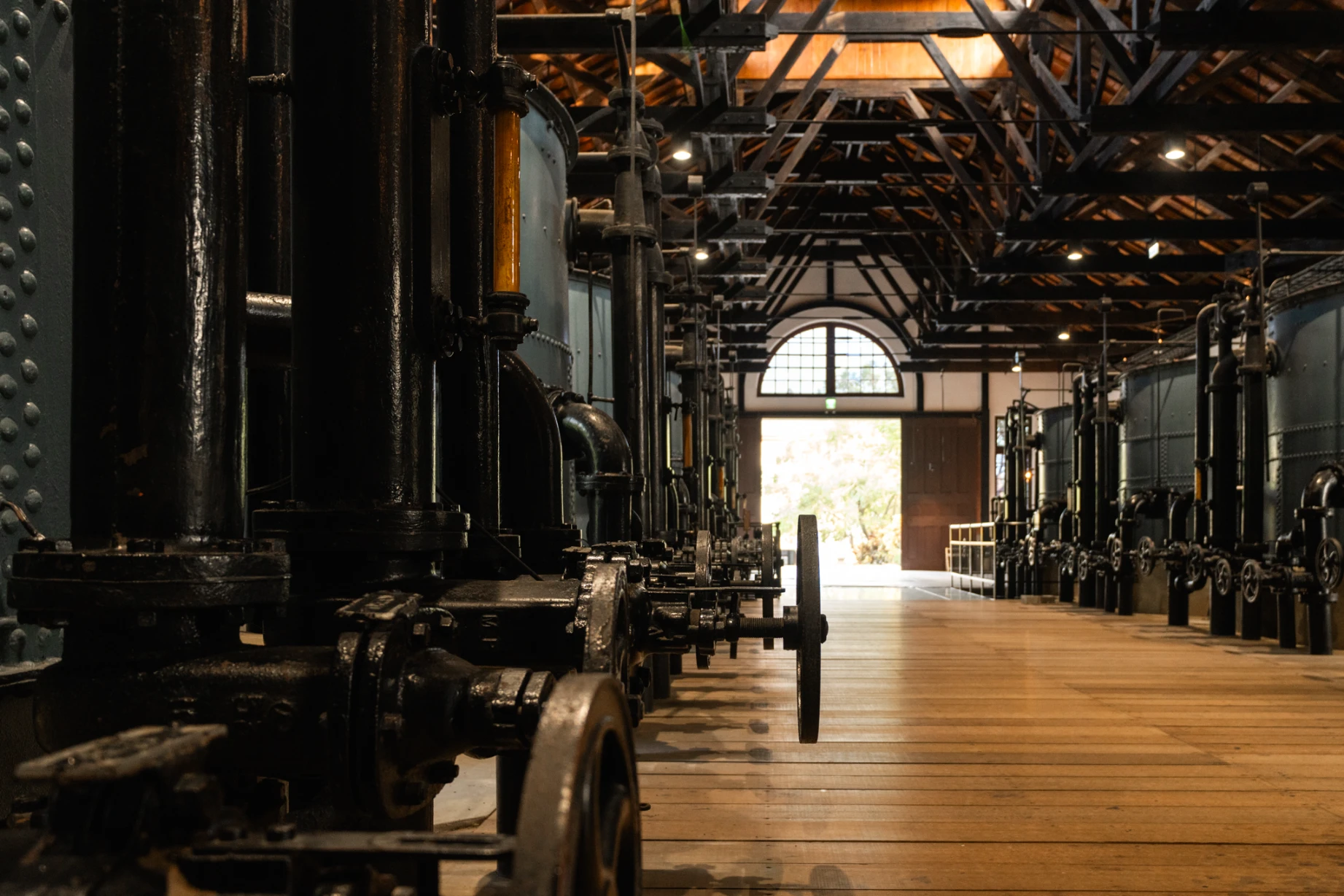
The closer image brings dark pipework and valve wheels into the foreground on one side. The aisle, further equipment and light at the far doorway remain in view. Readers can examine the joints and scale of the machinery while still knowing where it stands.
A detail need not be isolated to be useful. A strip of floor, part of the roof structure or a distant exit can keep the viewer oriented. That makes the closer image a continuation of the wide view rather than a separate study.
Edit the three distances as one sequence
Exterior, room and detail create a route through the photographs: towards the brick entrance, along the machinery, and finally up to the pipework. The sequence does not claim to explain what each component did. Names and historical functions belong with the museum’s interpretation.
When editing photographs of an industrial site, three questions help: which building is this, how is the equipment arranged, and which detail merits a closer look? If each frame answers a different question, the series becomes more useful than its strongest image alone.