Two room types can share soft lighting, white bedding, and attractive detail photographs while leaving a guest unsure which to choose. Hotel website photography needs to do more than make a place appealing. It also needs to help people recognise whether the space suits the people travelling with them.
When editing a room page, ask whether each photograph adds something a guest can assess or simply repeats the mood. These images from NOHGA Hotel Kiyomizu Kyoto offer a way to consider what photographs explain. They are not a substitute for the hotel’s current room descriptions and specifications.
Make room types possible to compare
You can begin with the photographs already available. Put two room pages alongside one another and ask whether they answer the same basic questions: how are the beds arranged, what surrounds them, and which parts of the room can be used for different activities? If one page begins with the beds and the other only shows a window view, the guest is comparing photographic choices rather than necessarily comparing rooms.
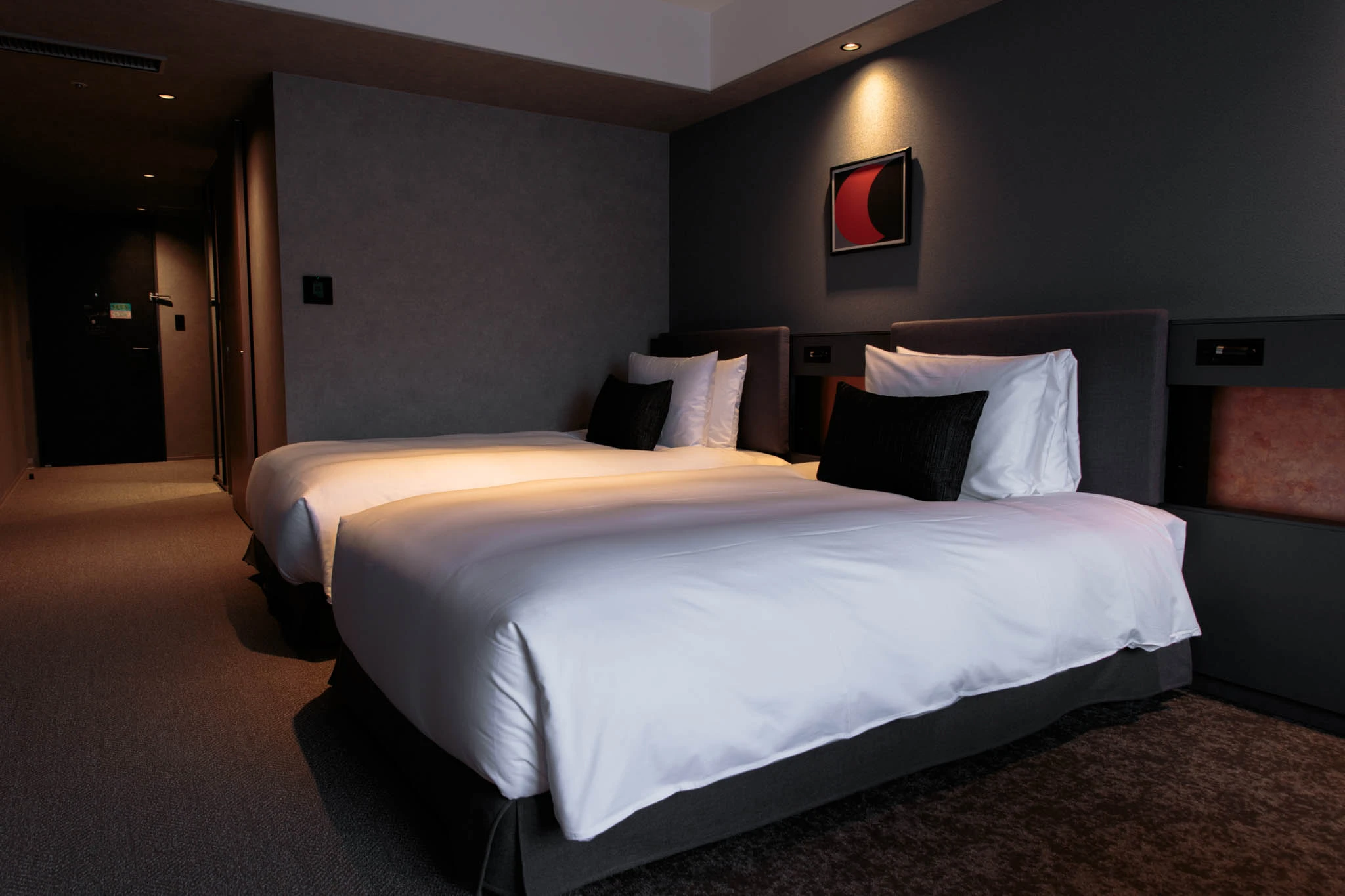
Comparable coverage does not require identical pictures. Give each room type a clear view of the beds and their surroundings, then let subsequent photographs introduce its particular character. The twin-bed image here retains the door on the left, making its position relative to the beds visible. It provides neither precise dimensions nor a floor plan.
A photograph can describe atmosphere without clarifying bed numbers
In another image, warm light extends along the wall while the black frame and mirror create repeating lines. Reflected bedding gives the composition depth. It also makes a useful distinction visible: the number of pillows appearing in a photograph does not establish the number of beds in the room.
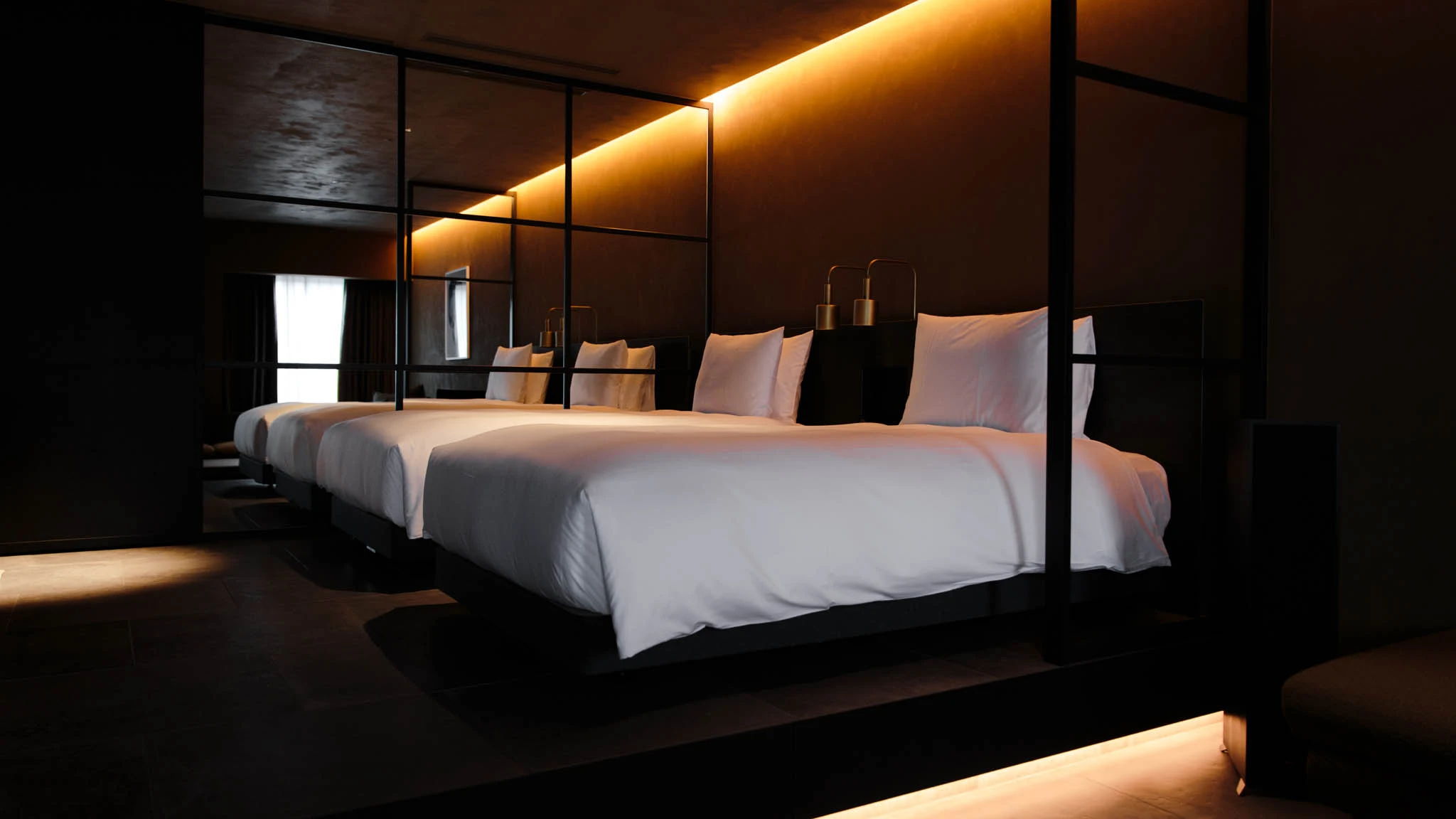
Keep the image, but consider placing it after a view that makes the layout clear. Guests can then appreciate the light and materials without having to interpret reflections to work out the sleeping arrangements. Confirmed written information should establish bed numbers, bed widths, floor area, and permitted occupancy. Photographs help readers understand those facts; they should not have to supply them by implication.
Let a detail answer a smaller question
The vanity photograph shows mirror lighting, the basin, and objects arranged on the counter. It helps someone picture the setting for getting ready. It does not show a shower, a bath, or the layout of the whole bathroom. If a guest is choosing a room because they need a bath, an attractive vanity image has not answered that question.
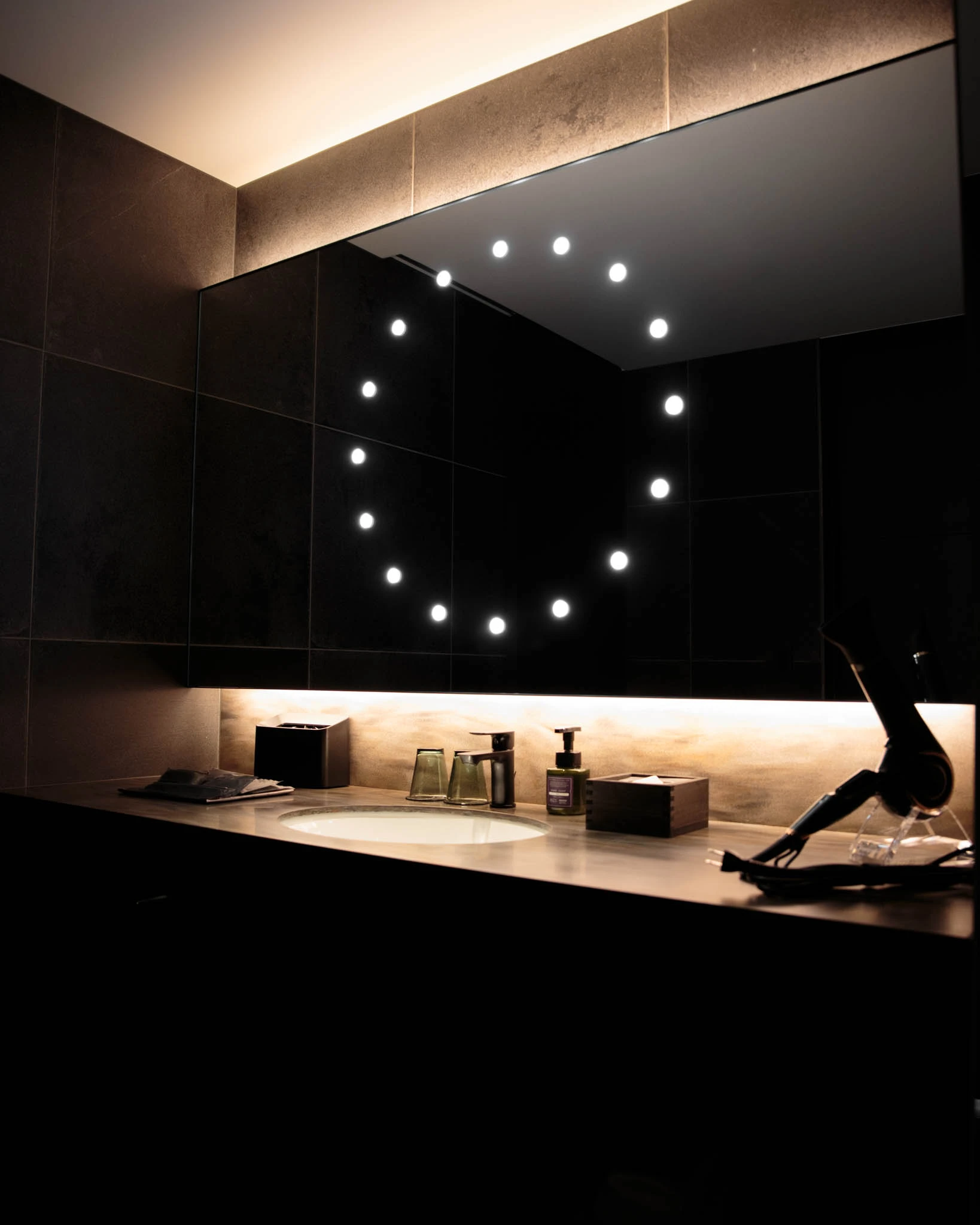
For each detail, write down the question it can actually answer. “How is the counter arranged?” is more precise than “a luxurious bathroom”. Do not assign an image to a room-type gallery until its association has been confirmed. Being photographed in the same hotel does not establish that every room has the same arrangement.
Review a room gallery with four questions
- What does the opening image make clear? Look for readable relationships between beds and space, as well as an appealing palette.
- What does the next image add? Keep photographs that answer another question; reduce minor variations of the same view.
- Which conditions need written confirmation? Place dimensions, occupancy restrictions, and equipment information near the relevant images. Do not let a visual suggestion stand in for a specification.
- Does each photograph belong to this room type? Check the association and separate shared spaces and other rooms. Review older photographs when the arrangement changes.
Finally, read the images and descriptions in sequence on a narrow screen. Has a crop reduced a two-bed view to one bed? Does each caption still sit with the correct photograph? When essential information disappears, change the display or choose a more suitable composition rather than leaving guests to guess.
If new photography is needed, carry those specific gaps into the brand photography shot list. A clear room page does not necessarily need more photographs. It needs the photographs, the written information, and the space available to book to describe the same thing.