A guest does not begin to understand a hotel only when the room door opens. The approach, the entrance, the first pause in a shared space, and the view encountered from the room all shape the idea of staying there.
Hotel photography therefore has a job beyond making each room look attractive. It can show how spaces connect. This Jodogahama hotel photography series, photographed for FUN! JAPAN in 2022, offers a useful example from Iwate, Japan: the entrance, lounge, dining room and guest room allow the destination to move gradually indoors.
Let the first image show how arrival happens
An entrance photograph does not need to explain the whole building at once. Its first task is to answer a simpler question: how does the hotel relate to its surroundings?
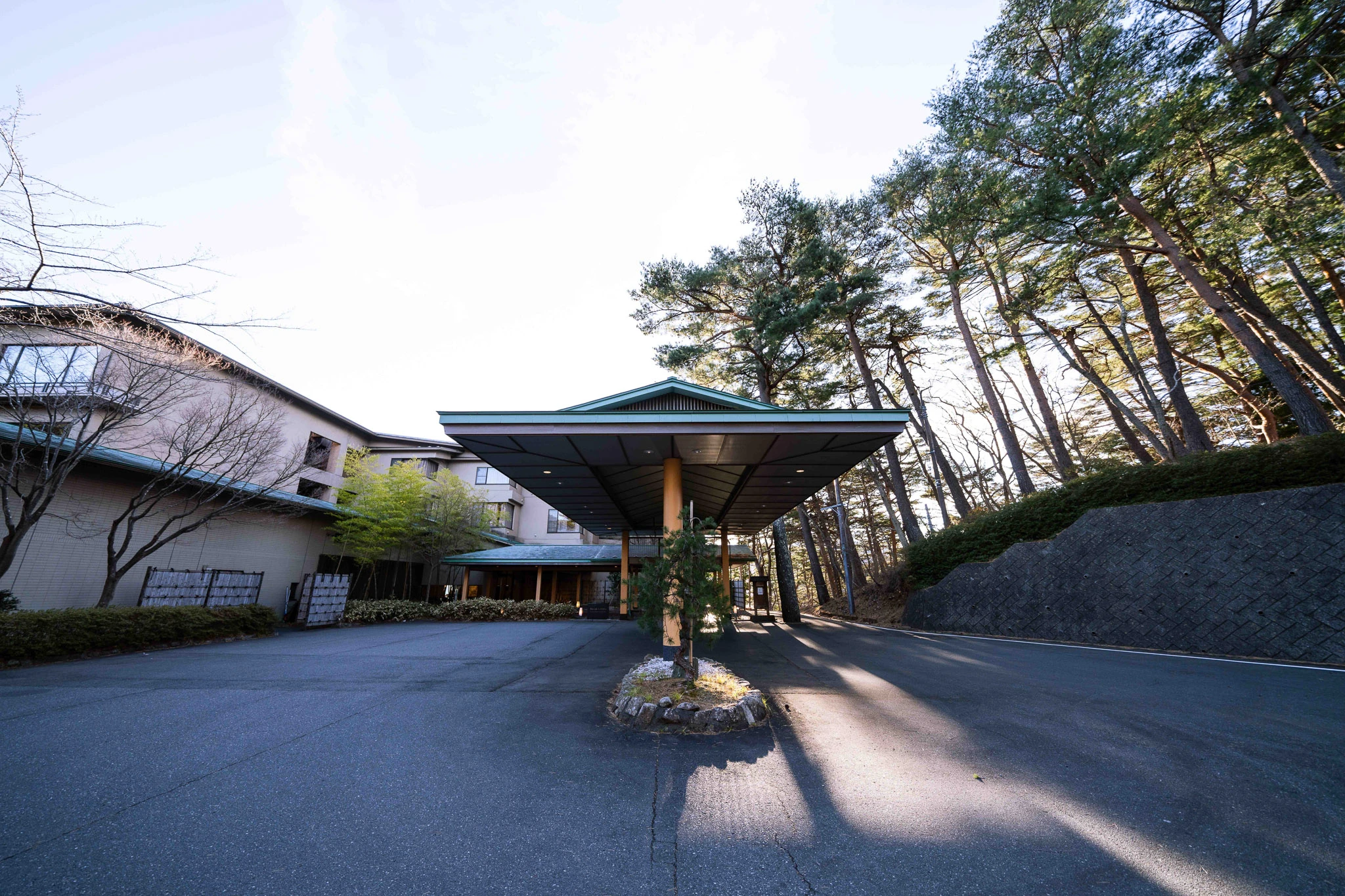
Here, the entrance canopy sits at the centre of the frame. The building holds the left side, while pine trees and a sloping bank occupy the right. The approach runs from the foreground towards the door. The entrance is not cropped into an isolated sign or façade; the direction of arrival remains visible. That gives the viewer more than a formal exterior: the hotel becomes part of a route through the landscape.
When a hotel sits among woodland, coast or an old town, an exterior image can establish its relationship with the place first. It does not need to provide a complete map or promise a particular feeling. It only needs to show where the approach begins and how the building appears within its setting.
Let shared spaces create a pause between arrival and the room
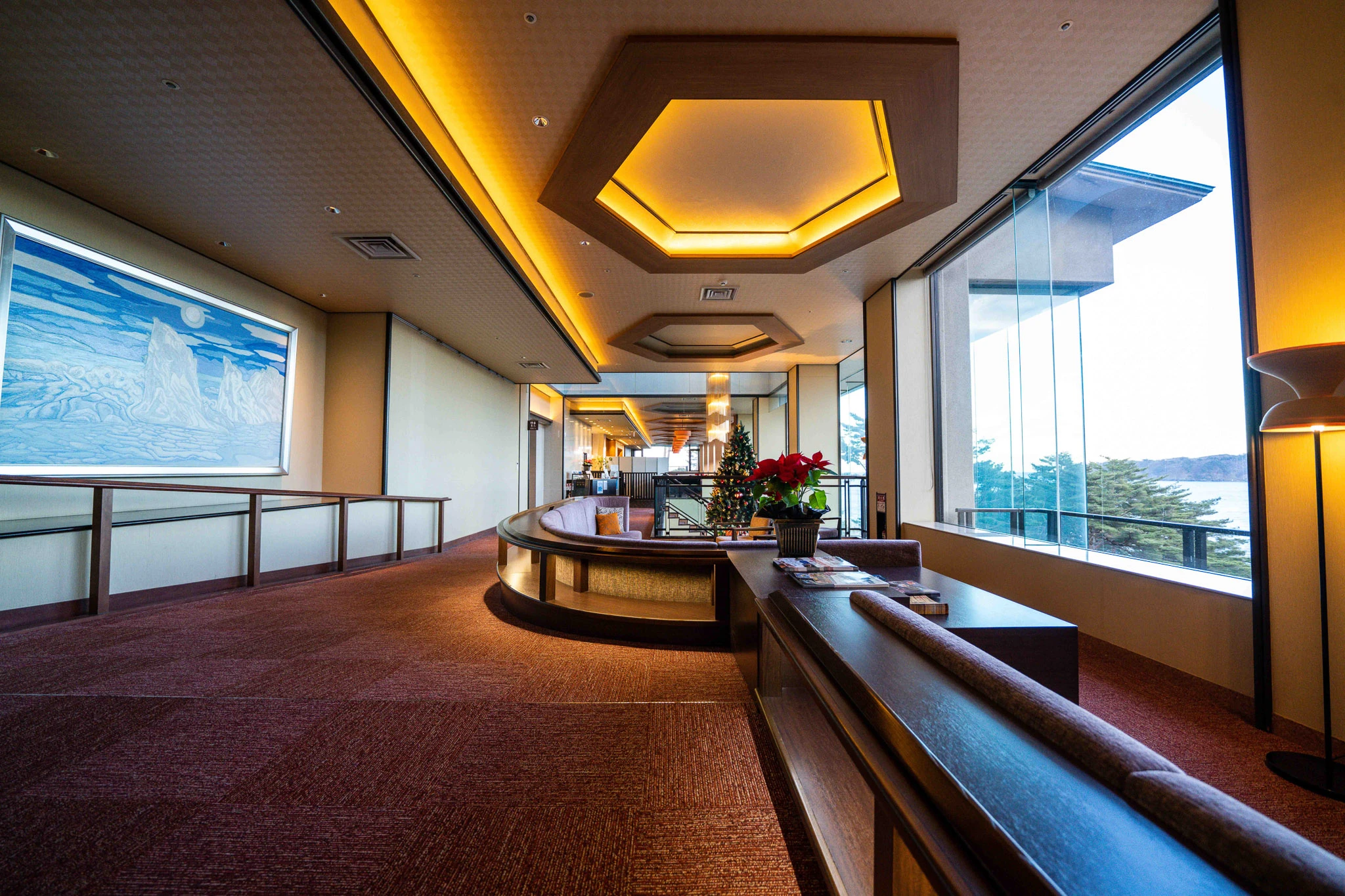
There is usually a period between arriving and entering a room. Lounges, corridors, dining rooms and window seats are where a hotel turns the outside landscape into an interior experience.
In this lounge photograph, the view continues along the right side while seating and low tables create the foreground. Light, material and circulation suggest a place where someone can pause, rather than simply stand at the entrance and look out. The image does not need to promise a particular service or level of comfort. It only needs to make clear how the landscape enters the shared space through the windows.
This is why shared-space photographs should not be treated as leftovers from a room shoot. They describe the communal scale of a stay: how people pass through, wait, sit down, or remain briefly in contact with the destination before moving on.
Do not separate the view from the room that holds it
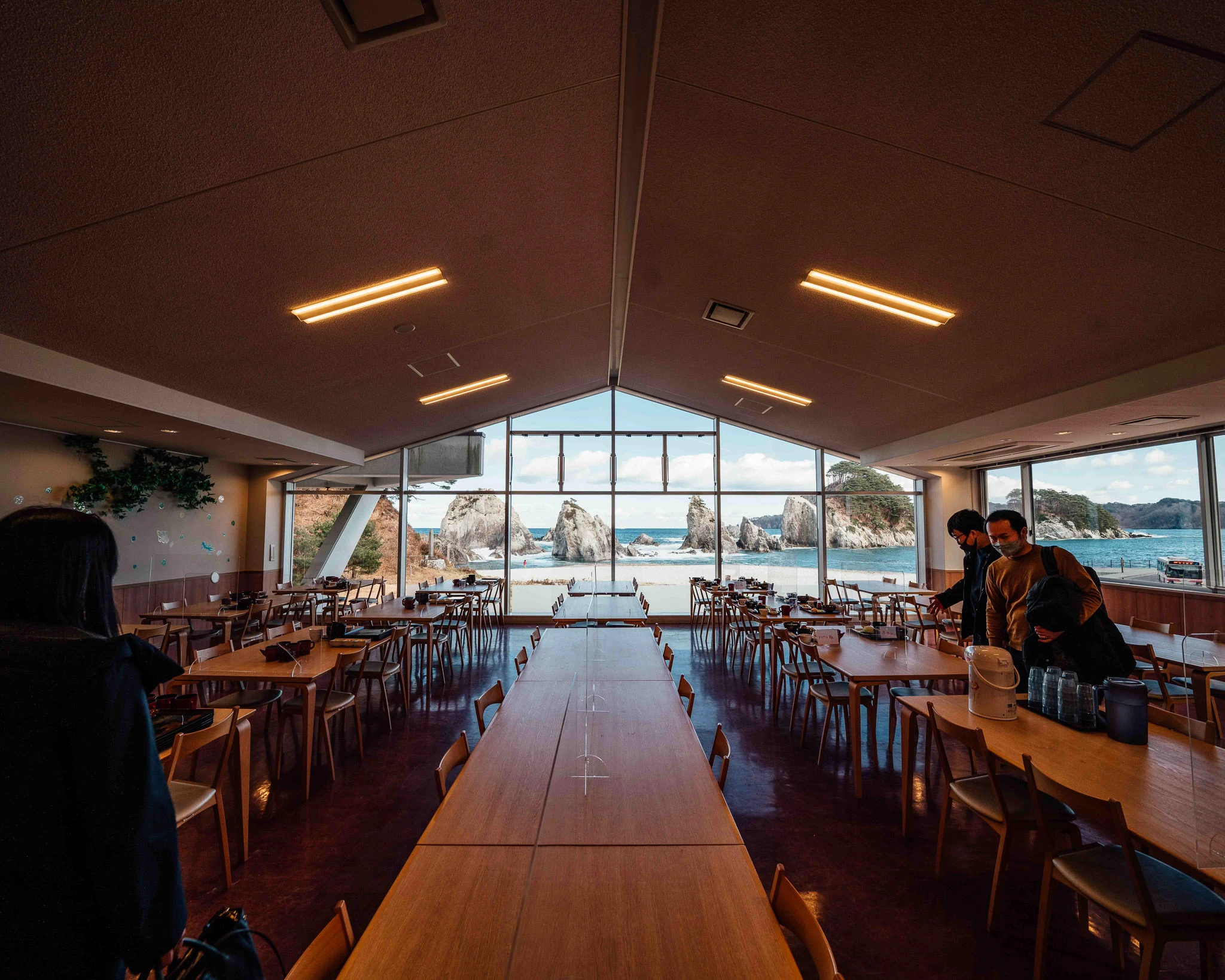
The more beautiful a view becomes, the easier it is to remove it from the space that gives it meaning. For a hotel, the view often matters because of its relationship with how the interior is used.
The dining tables lead from the foreground towards Jodogahama Bay, while the chairs, ceiling and window frames preserve a sense of scale. The sea is not decorative background material. It shows how the dining room faces the destination. The picture lets a viewer understand not only that there is a bay, but what it might mean to see it from this kind of room.
When photographing a scene like this, ask what remains if the view is removed. Then ask what disappears if only the view remains. Hotel photography often earns its value by connecting the two, rather than allowing one to replace the other.
In the room, the view becomes personal
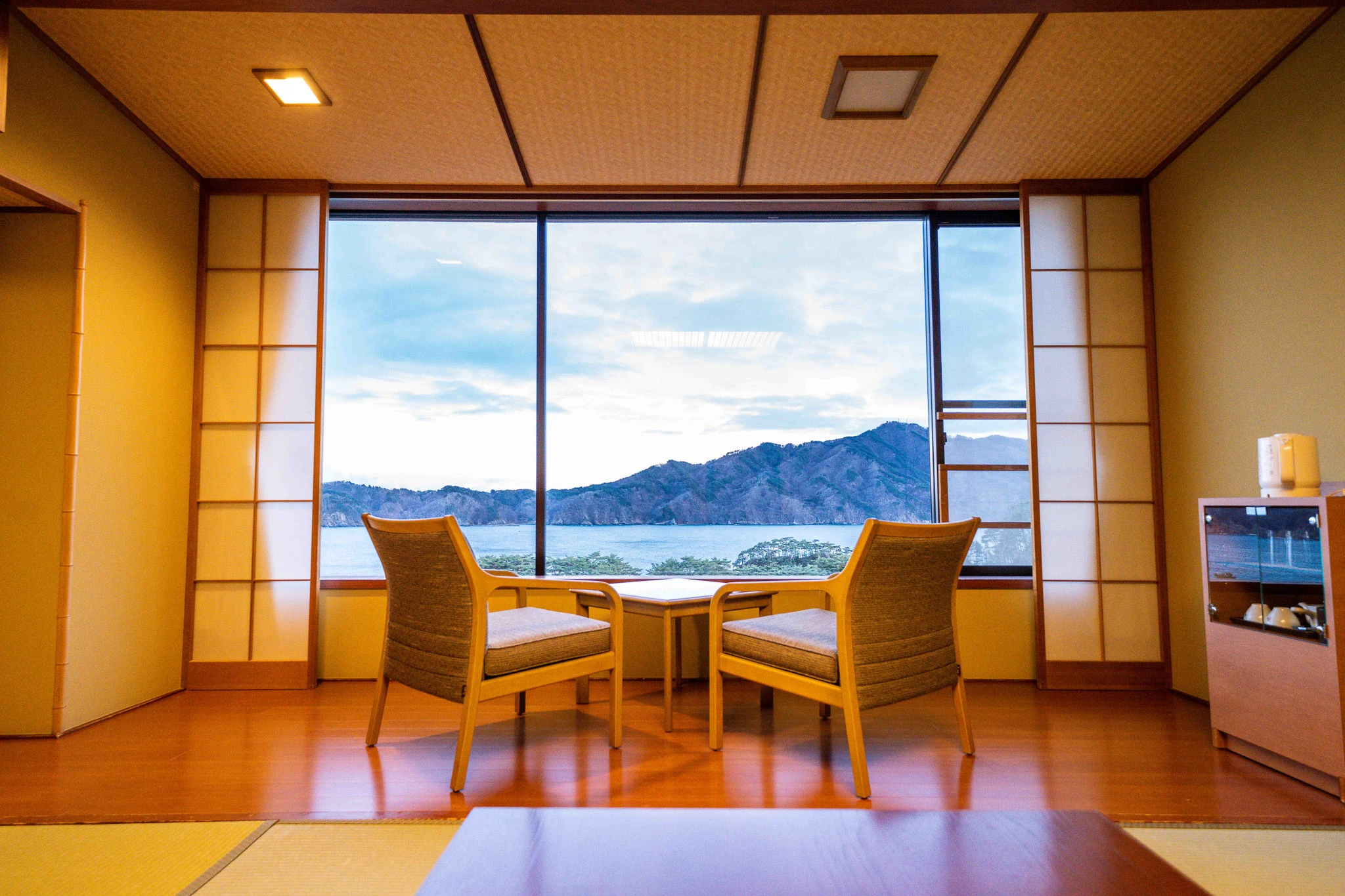
The final room photograph does not need to repeat the earlier wide views. Two chairs, a low table, shoji frames and the bay establish a quieter relationship. The landscape in a shared space belongs to everyone; the view from a room lets the viewer imagine how they might sit there and remain for a while.
This does not mean a photograph can specify the full room type, amenities or guaranteed view. Those facts still require confirmed text from the hotel. The image can place the act of looking out within the room, giving the imagination a scale it can trust.
Edit the photographs as a sequence of staying
When organising hotel images, try ordering them around the viewer’s spatial questions rather than the order in which the photographs were made:
| Moment | Question the image should answer | Useful frame |
|---|---|---|
| Arrival | How does the hotel meet its surroundings? | Exterior, approach, entrance and trees |
| Shared space | How is the view encountered and used? | Lounge, dining room or window seat |
| Guest room | At what personal scale does the guest meet the landscape? | Bed, chair, window frame and interior proportion |
Unlike an edit designed only to compare room types, this sequence is not trying to distinguish beds or amenities. It gives the spaces a readable order. A previous Journal article on room photographs looks at how guests can distinguish between rooms; this one is concerned with how a guest moves from the first impression to their own room. They can sit together because they answer different questions.
A hotel is remembered not only through the appearance of one room, but through how someone enters, where they pause, and when the landscape becomes part of the interior. When photography makes that route clear, the experience of the hotel can begin before check-in.