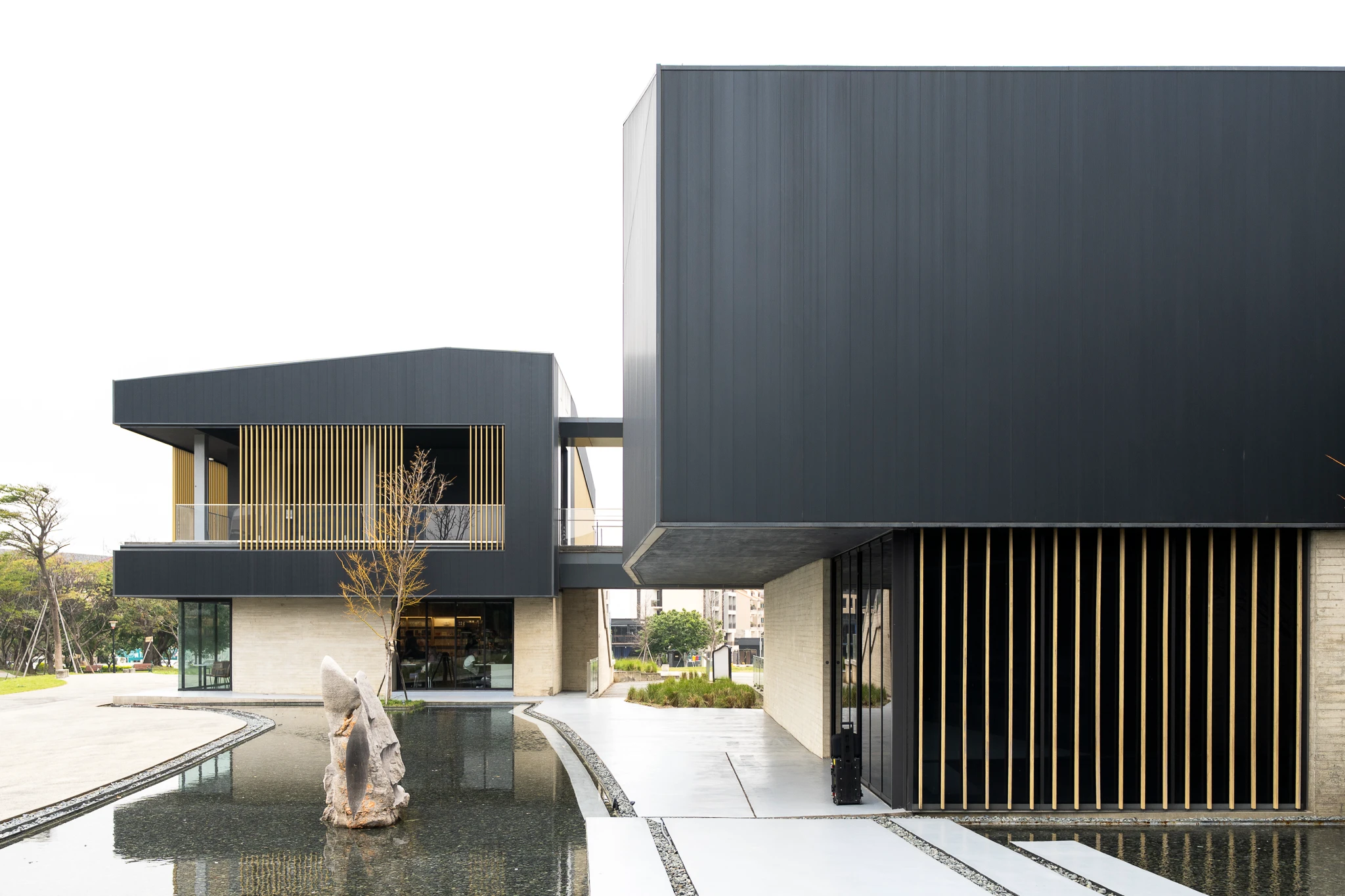
The pool edge separates building and water, while reflected slats continue towards the bottom of the frame.
A pool in an architectural photograph can turn the search towards symmetry. Step back, lower the camera: could the whole building fit inside its reflection? Yet the water also deserves attention for the texture that distinguishes it from the building.
In Moss & Grain’s architectural photographs of Hengshan Calligraphy Art Center, dark façades, gold-toned slats, and concrete pool edges establish clear lines. In the water, those lines break, narrow, or disappear beneath a patch of brightness. The question shifts from how much architecture is reflected to what the water does to it.
Keep the pool edge in view
In the opening photograph, the pool extends through the space between buildings. Pale paving traces its changing boundary. On the right, the vertical slats continue briefly into the water, while the full building volumes remain above it.
That boundary tells the eye where someone could stand and where the water begins. Cropping it away to enlarge the reflection might make the photograph more abstract, but it would also remove this distinction. Before deciding how much water to include, consider whether the pool edge explains a relationship the image needs.
Let fixed edges meet a changing surface
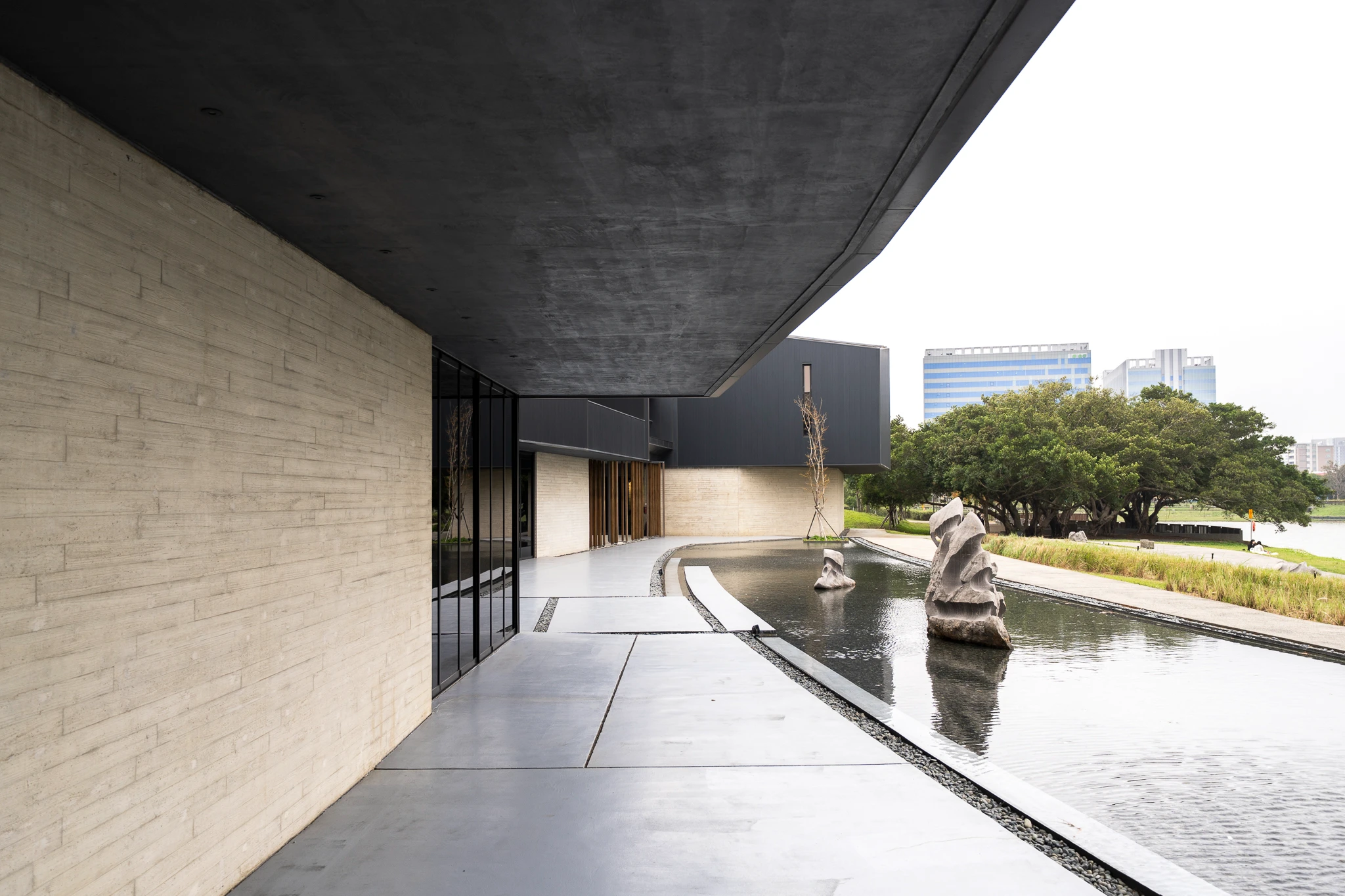
Looking out from the covered walkway, the wall, roof, and paving give the frame clear directions. The stones in the pool also have recognisable outlines. Their reflections are less settled: small ripples break those outlines apart. Water becomes tangible through the difference between a firm edge and a wavering one.
That difference is worth retaining when selecting and processing photographs. Alongside the completeness of a reflection, look for readable ripples and variation in the bright areas. If the water becomes a single smooth patch of light or darkness, one of the image’s materials becomes harder to recognise.
A reflection can end at the frame
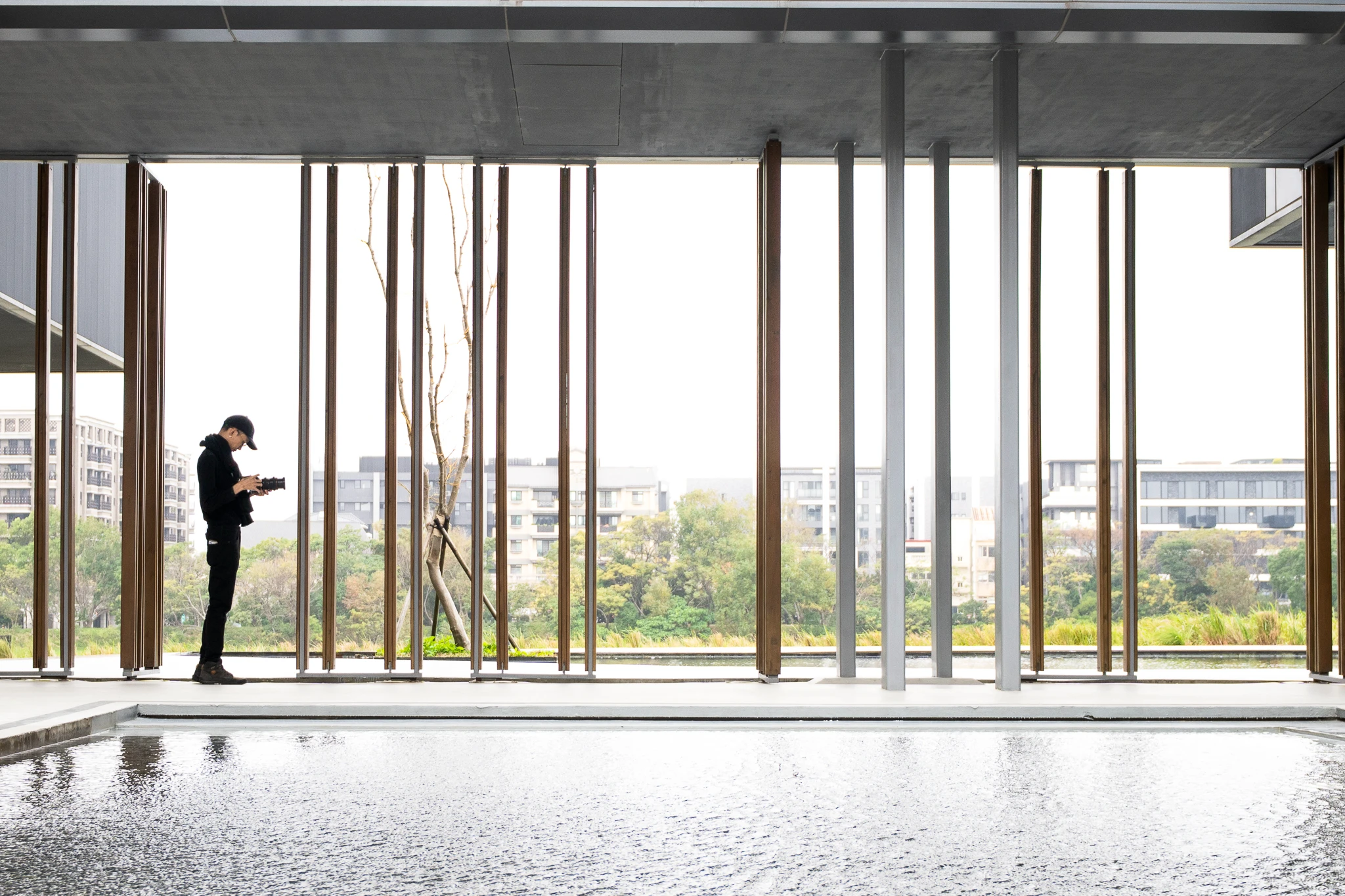
In another photograph, a person holding a camera stands beside tall slats. The figure, tree, and upright lines establish the upper part of the space. Water occupies the foreground without accommodating a complete reflection of either the person or the screen.
The reflection meets the edge of the frame before it is complete, yet the connection between above and below remains readable. It does not need to provide a second full account of the architecture. Giving more room to the water would change the balance of the figure, roof, and slats. That choice depends on what deserves attention in this particular photograph.
Ask what the water adds
When editing a series of architectural photographs, a small question can help: what does the water add here? It might clarify the relationship between a pool and a walkway, give hard lines a different texture, or extend the position of a figure through a partial reflection.
If several photographs offer the same answer, the series may not need them all. These three views of Hengshan move from buildings and pool edges to stones and ripples, then to a person and a fragmented reflection. Water remains present throughout. It does not always need to become a mirror.