The most obvious event photograph is often the person at the front with a microphone. Yet a gathering also takes place between the seats. When someone in the audience speaks, attention changes direction. A record made entirely from the front of the room can miss that change.
Moss & Grain’s published project documents a Tsing Hua College visit to Taiwan’s Ministry of Foreign Affairs. The portfolio page says the work was commissioned by Tsing Hua College of National Tsing Hua University. The three photographs considered here support observations about position, participation and setting. They do not establish what anyone said, their job title, or the order in which these moments occurred.
The frame places the speaker and audience within the same room.
Show the speaker and audience in one room
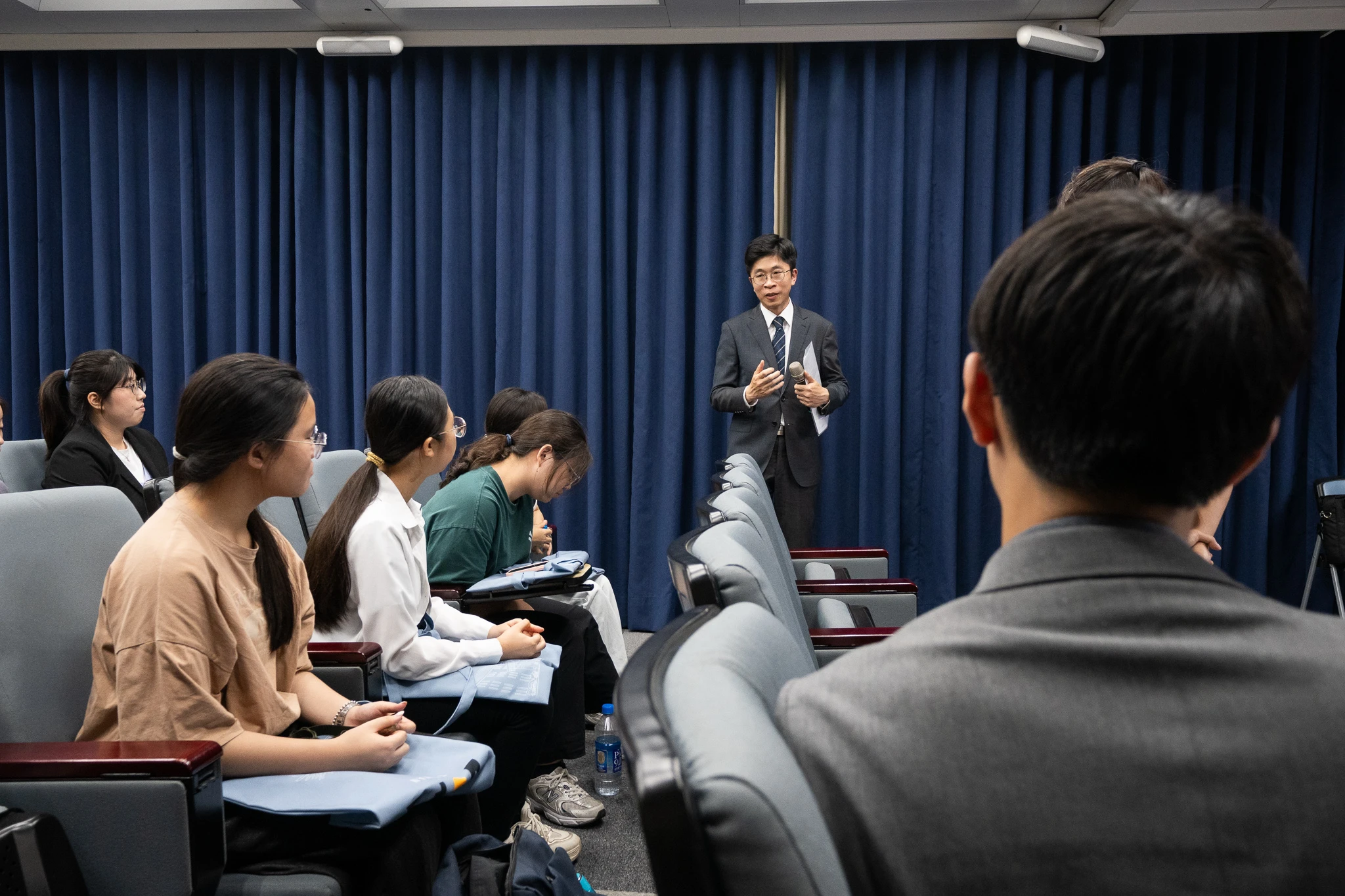
In the opening photograph, a speaker stands against a blue curtain while people seated along the side look towards him. Chair backs take up part of the foreground. They give the speaker a room and show where the listening is taking place.
A tight portrait would record the speaker’s face more clearly, and might serve another purpose. This wider frame does something a portrait cannot do alone: it places speaking and listening within the same space. The foreground is useful because it tells us who the speaker is facing.
Turn towards the microphone among the seats
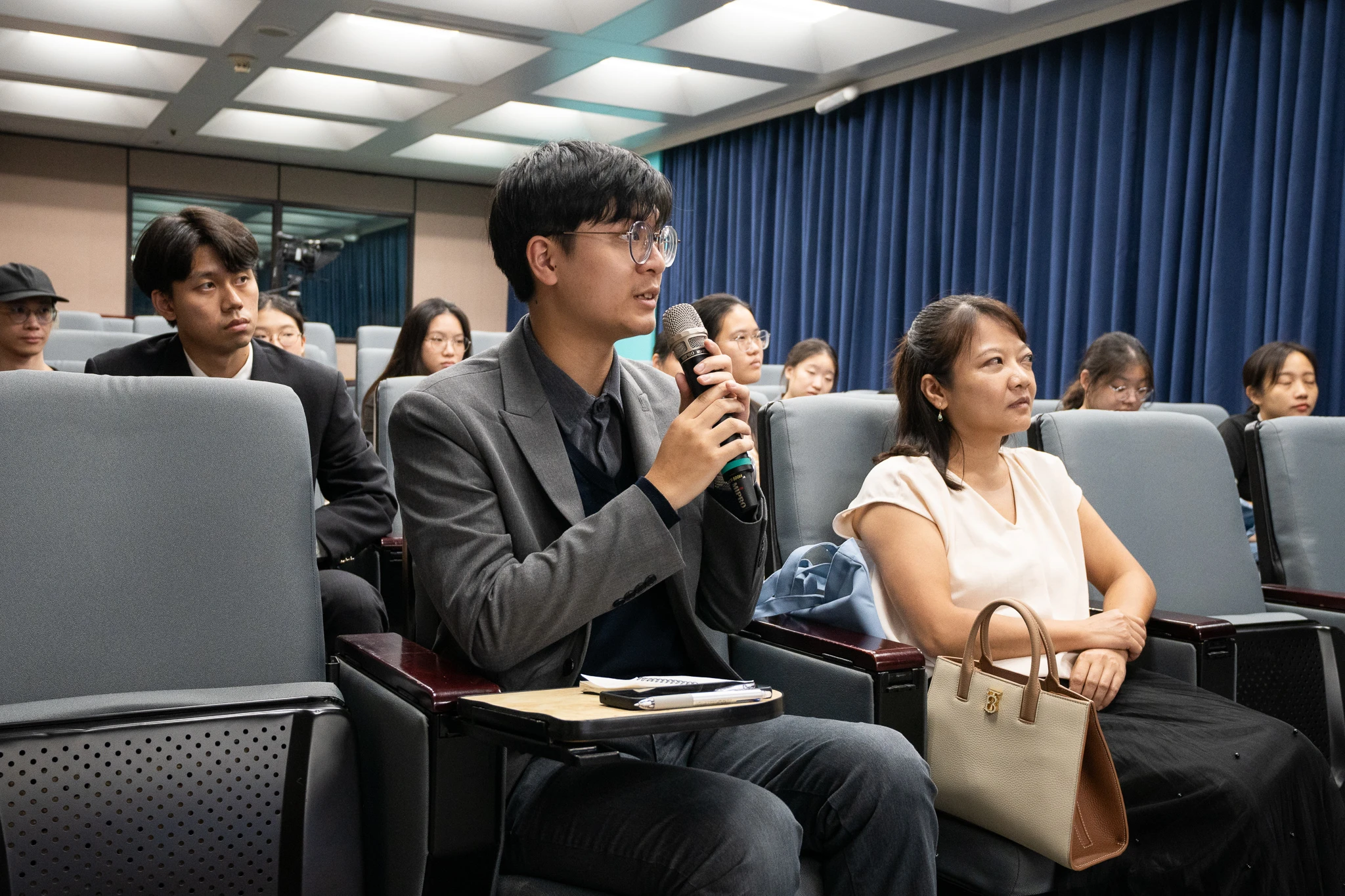
Another photograph shows a participant speaking into a microphone from his seat. Other attendees and rows of chairs remain in view. He is not detached from the gathering as an isolated portrait; the setting makes his position within it clear.
Including this frame in an event edit shows that the microphone was not confined to the front of the room. We can see someone speaking from the audience. We cannot know from the photograph what he said, whether he asked a question, or how anyone responded. A caption should respect that limit.
Keep the institutional setting legible

A third frame shows a suited speaker holding a microphone beside a projection screen, with flags behind him. Those details locate the formality of the room. Alongside the published project description, they help place the photographs within the Tsing Hua College visit.
The setting is evidence of what appears in the frame, not a substitute for reporting. The projected text cannot be read reliably here, and the flags do not identify the speaker’s role or subject. Names, affiliations and the commissioning relationship should come from the published project information.
Give each photograph a different job
Read together, the three frames answer different questions. One shows where speaker and audience sit in relation to each other. One makes a voice from the seats visible. One gives the gathering an institutional setting. This is an editorial way to read the photographs, not a reconstruction of the event’s timetable.
When selecting event images, ask whether the edit tells a reader who was present, whether participation appears beyond the stage, and what kind of space held the encounter. A sequence becomes clearer when each frame contributes something specific, rather than repeating the same view of the person at the front.