A craft photograph can make someone pause. Its caption can show them where to look. When every image is described as dedication, mastery, or exceptional craftsmanship, distinct actions begin to sound exactly alike.
For anyone editing a maker’s website, project story, or image collection, a useful starting point is to identify one visible relationship and add one piece of context that changes how we understand it. The reader gains something specific without being told in advance how highly to value the work.
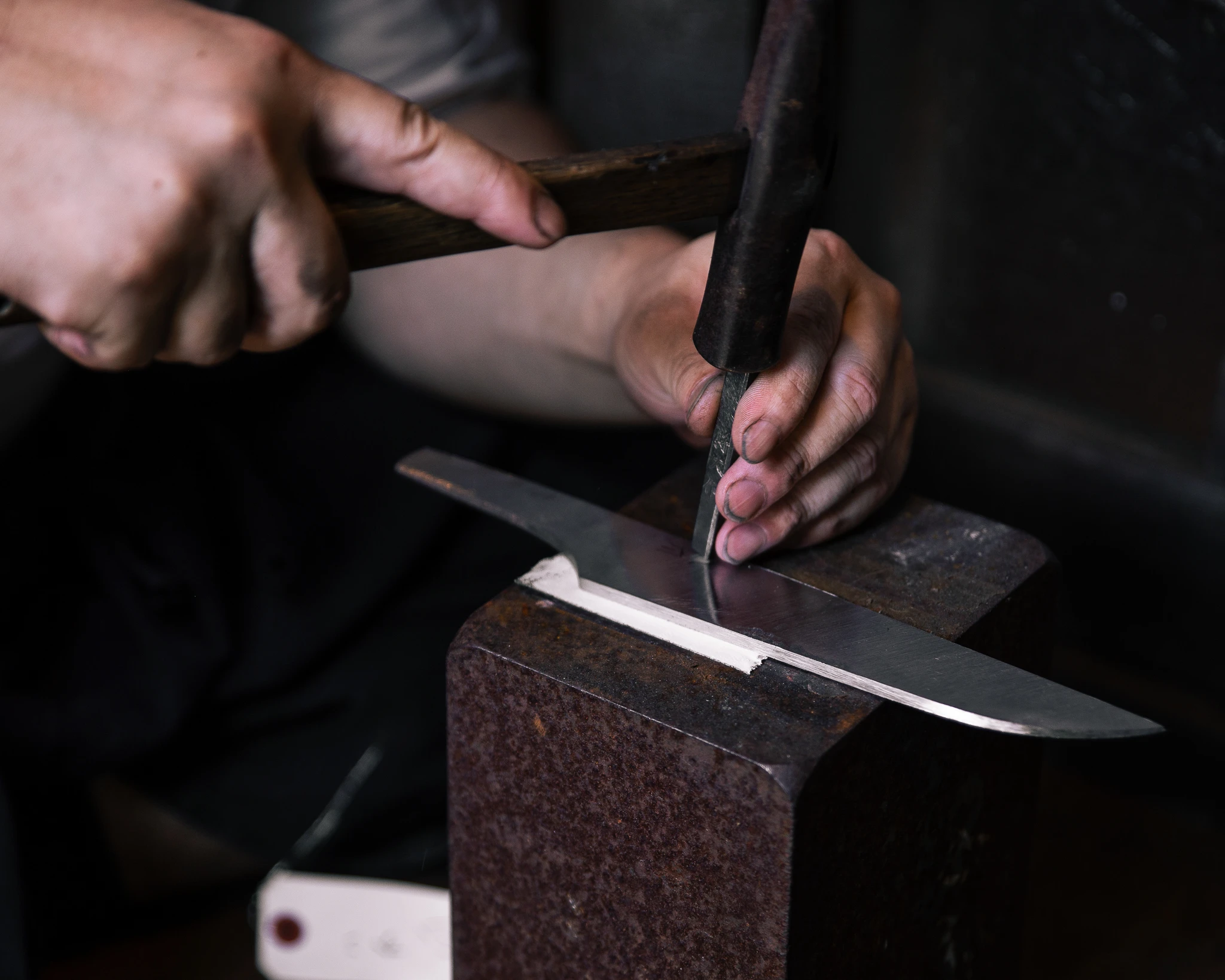
The narrow tool meets the blade, with the hand holding the hammer above.
Begin where the tool meets the material
In this close view, one hand holds a wooden-handled hammer. The other steadies a narrow tool against the blade. Those points of contact give us something precise to describe without guessing what the maker is thinking.
“Absolute concentration creates a perfect knife” offers little help in reading the image. “The narrow tool meets the blade, with the hand holding the hammer above” directs attention to a particular relationship. It does not name the operation, but it gives the reader a clear place to begin.
If the maker has confirmed the tool’s name, the purpose of this operation, and what can be shared, that information can form a second sentence. Until then, stay with what is visible. A photograph alone does not establish the steel grade, the number of blows, or whether the blade has passed a quality test.
Add context that earns its place
A close view cannot easily establish location or the circumstances of a project. These photographs belong to our Masahiro Bladesmith Workshop series in Kyoto, commissioned by FUN! JAPAN in 2022. Naming the workshop, place, and year locates the detail within a particular working environment.
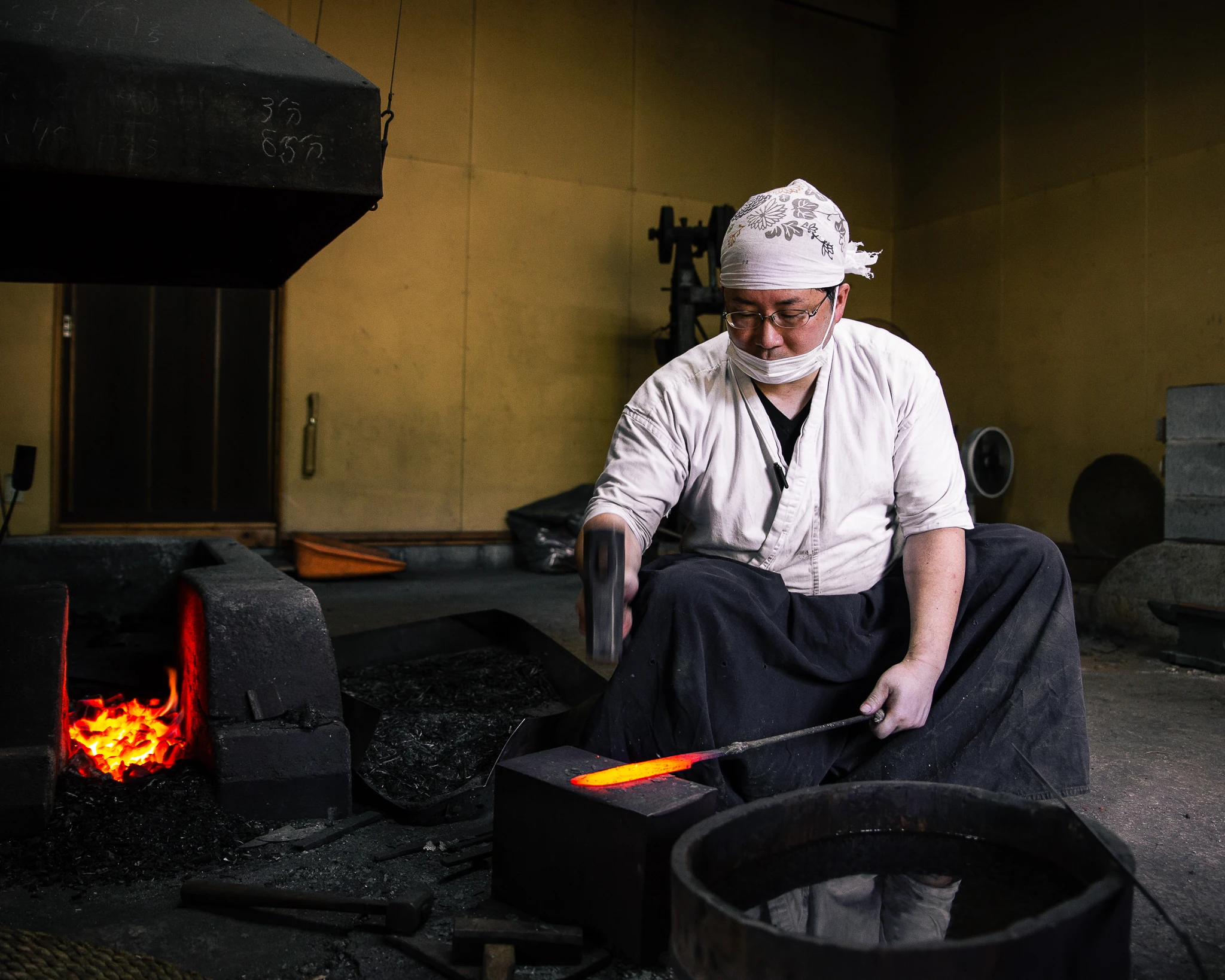
The forge photograph already shows a craftsperson, an anvil, and orange-red steel. A caption can identify Masahiro Bladesmith Workshop in Kyoto in 2022, then draw attention to their relationship within the frame. Further explanation of the process can sit in the article rather than being compressed beneath the image.
“A century-old family tradition”, “the final operation”, and “made for a particular customer” each require their own evidence. Seeing someone at work does not establish a family history, a complete sequence, or the identity of an order.
Let the caption return attention to the photograph
After writing, temporarily remove the adjectives. What remains? If the sentence says only that a maker is making something, look for a more useful distinction: where a hand rests, which tool touches the material, or which part of the surroundings matters.
Then ask whether the text encourages a second look at the photograph. A paragraph devoted entirely to brand philosophy may belong in the main article. A list of every object can usually be reduced to the relationship most relevant to the reader’s question. The caption need not explain every corner.
The same photograph may have different captions in different articles. A discussion of tools might point to the contact with the blade; a discussion of working space might emphasise the forge and anvil. Both readings must remain faithful to the image, with any added context checked.
A short exercise before the image goes on the page
Choose one craft photograph you plan to use and write three separate sentences. What can you actually see? What confirmed background would a reader not know from the photograph alone? What should this page help them understand?
Reduce the first sentence to one clear action or relationship, then select the most relevant information from the second. Use the third to judge the choice. If the article concerns tools and materials, their point of contact is more useful than a claim of luxury. If it concerns local craft, the workshop and place may matter more.
Our existing Masahiro workshop article considers how traces of making can make time visible. Captions have a smaller, distinct task: placing accurate words beside an image while leaving room to look. When the sentence points somewhere specific, readers can return to the photograph with their own attention.