A finished brand photograph hides many adjustments outside the frame. Someone checks the light, someone watches the monitor, and someone brings people, objects, and space back into the same rhythm. The more natural the final image feels, the less visible those judgements become.
Moss & Grain’s team series turns the camera towards the production set. It records setting the light, working with the camera, monitoring the image, and giving a creative direction its physical form. This is not a list of job titles, and it is not an attempt to make equipment the hero. It is a set of notes about shared judgement. Three approaches help explain what the photographs make visible.
Bring the people outside the frame back into it
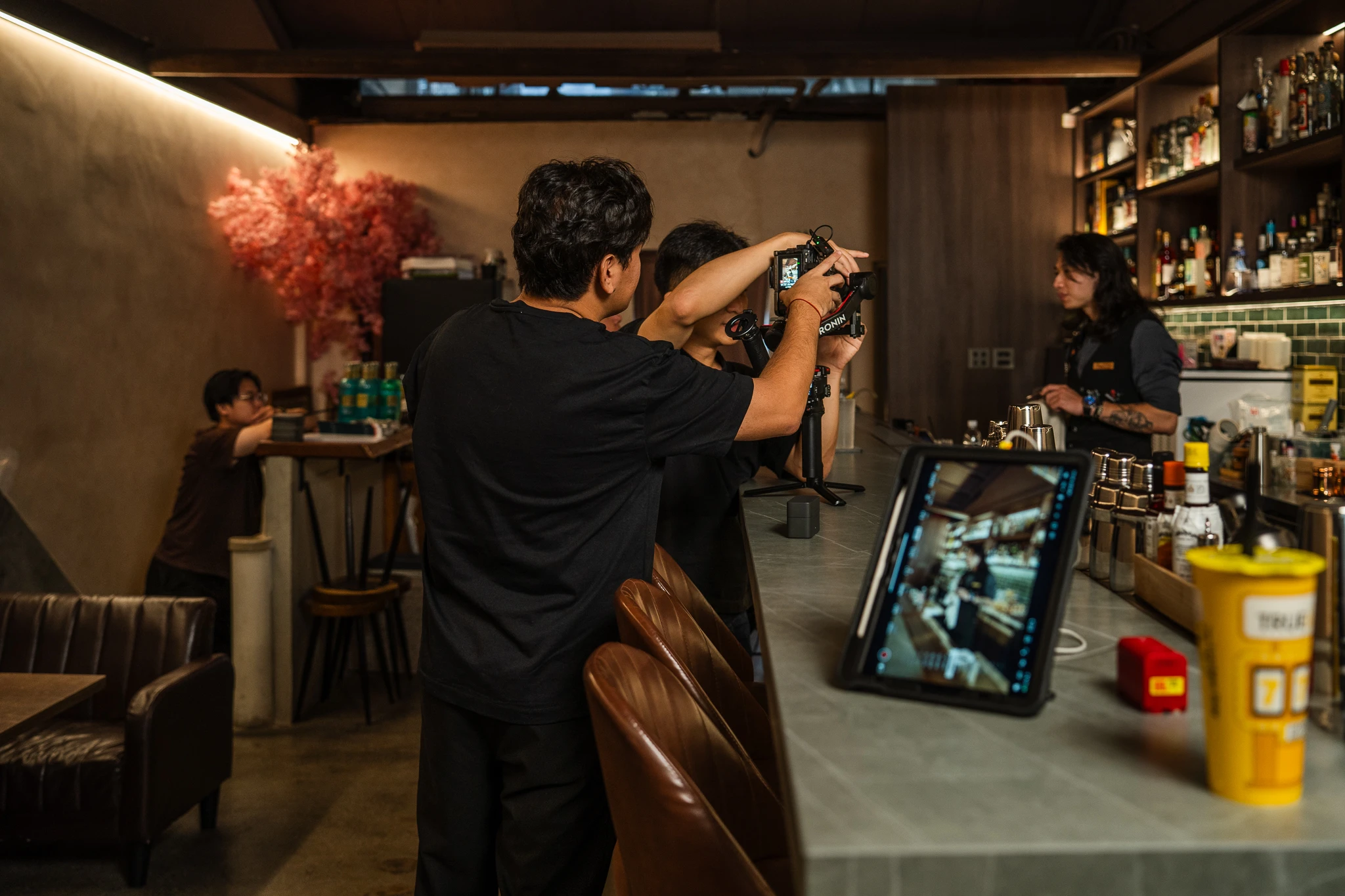
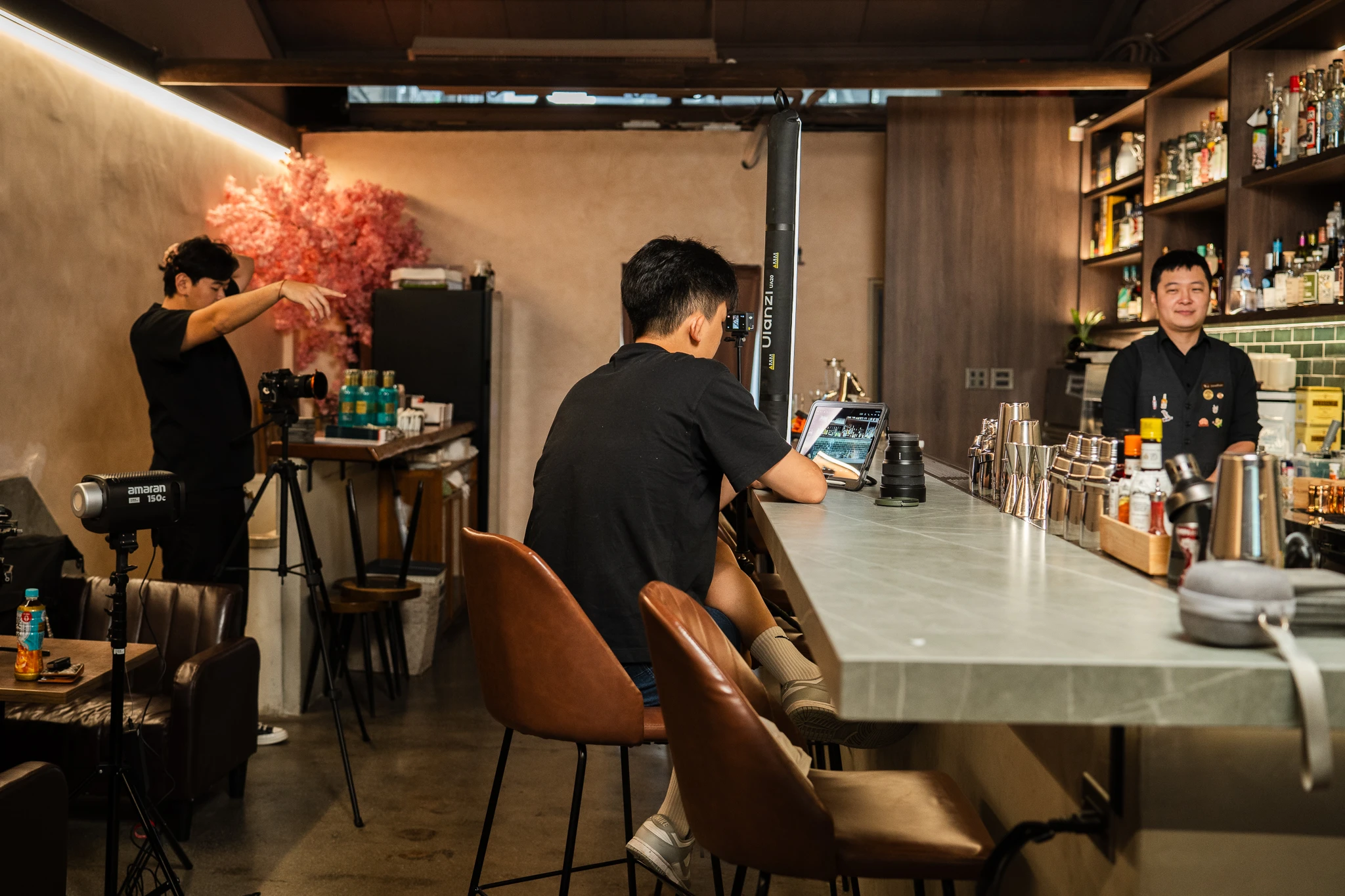
In the first behind-the-scenes photograph, the crew adjust a camera and monitor a shoot at a bar. Its value is not only that it tells us a shoot is happening. It brings the people who would normally sit outside the camera’s view back into the space: where they stand, what they watch, and how they relate to the setting being photographed.
When a behind-the-scenes frame contains only equipment, production can look like a pile of objects. Keeping people and surroundings present shows that the equipment is serving a particular visual relationship. If the Work page does not identify a client or script, the scene should not be used to invent one.
Let equipment describe work, not perform as a hero
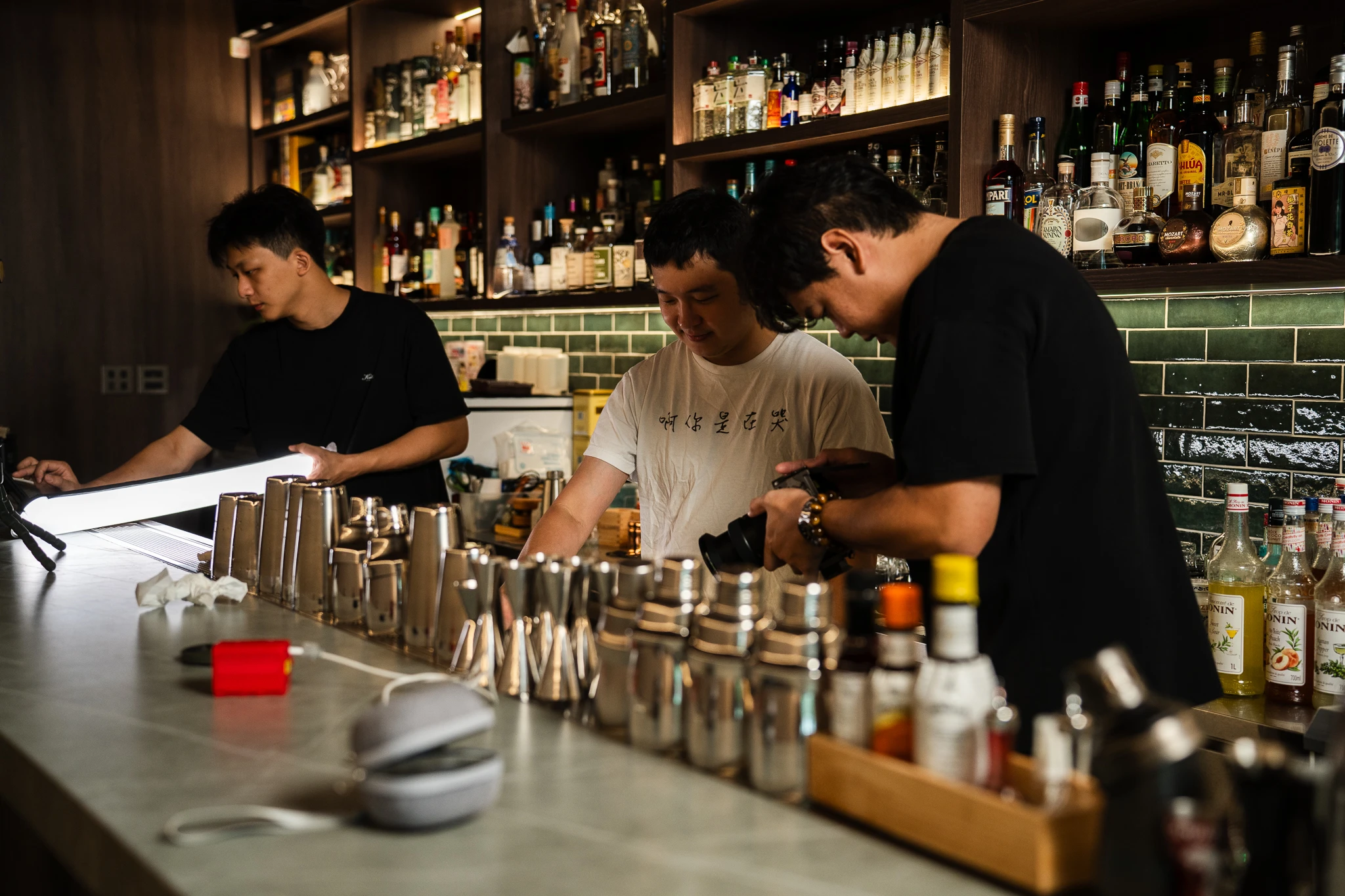
The second photograph can prompt a practical question: does the equipment help the viewer understand a judgement? When a lens, screen, or light fills the foreground without a visible relationship to people, position, or illumination, the frame can become only a symbol of professionalism.
A more useful behind-the-scenes image connects equipment to a person’s line of sight, gesture, or the boundary of the location. The viewer need not know every model number to understand that someone is comparing, correcting, and confirming. This matters in brand content because a creative direction becomes real through a series of decisions that can be carried out on set.
A photograph still cannot establish the scale of a production, its number of days, or its eventual result. It can make work visible without standing in for project information that has not been verified.
Look for a shared purpose, not a list of titles
The third photograph returns collaboration to a wider relationship: the camera, people, and space are not isolated from one another. The frame does not need to label everyone to show how the work connects. Strategy and creative direction give the production a common purpose; the team’s judgement and craft carry that purpose into the image.
When writing about behind-the-scenes photographs, describe visible actions and relationships. Who is looking at the monitor? How does equipment sit beside the setting? How much distance remains between a person and the camera? If roles or names are needed, use confirmed project information rather than inferring them from where someone is standing.
Four questions for editing behind-the-scenes photographs
- Does the frame bring people normally outside the camera back into the working space?
- Does equipment connect to an understandable adjustment rather than only symbolise production?
- Do people, camera, and place remain in a relationship of working together?
- Do the words stay with visible actions instead of inventing a client, script, or result?
The complete Moss & Grain team series places these photographs within the work of the production team. For planning image uses before a shoot, see our brand photography shot list. A behind-the-scenes photograph need not name every responsibility. It should let the viewer see that an apparently effortless image was made through shared judgement.