A city, layered in light.
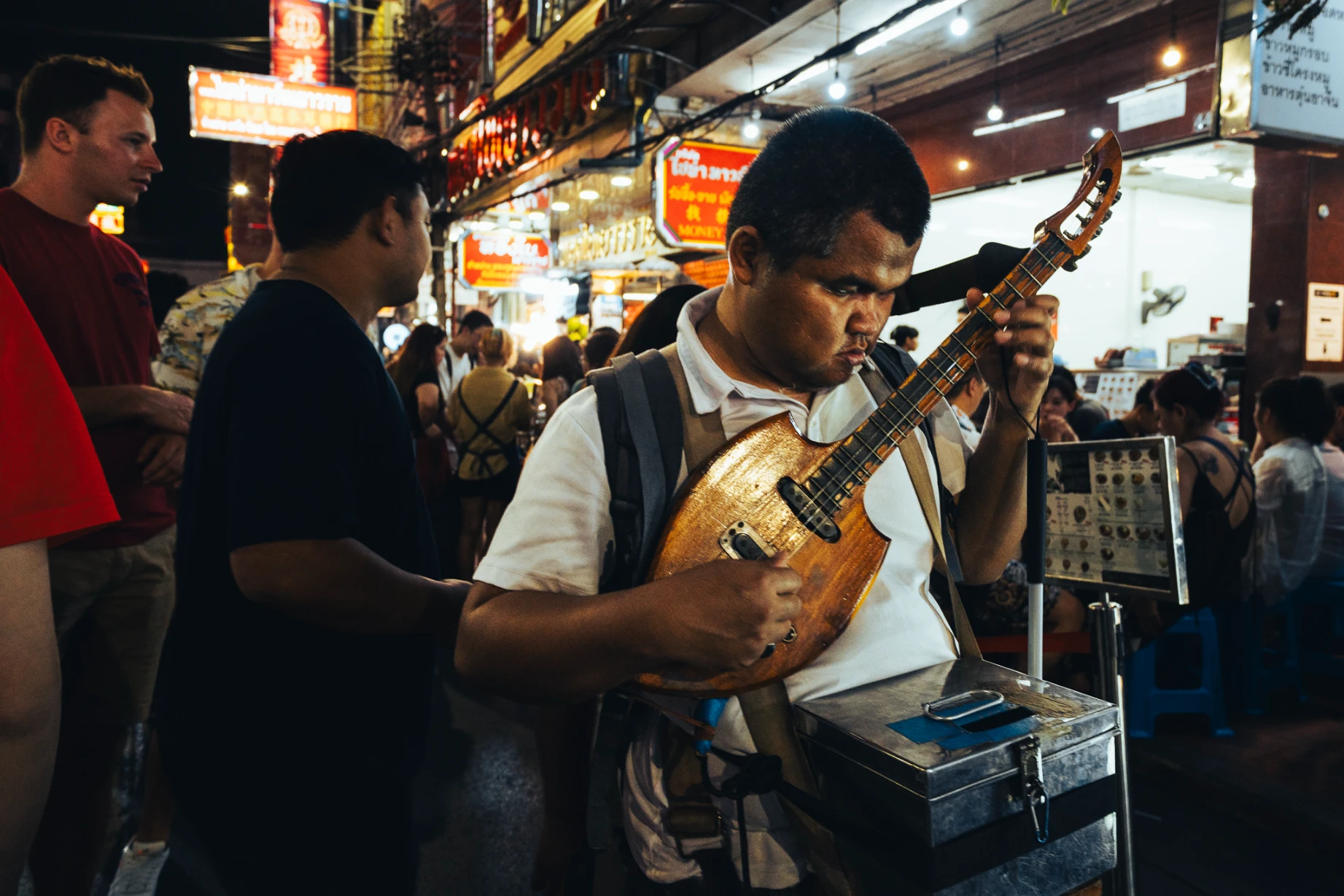
A street musician and a busy food stall offer two distances from which to look at Bangkok’s Chinatown. The lead photograph brings the instrument and performer into the foreground while keeping the surrounding crowd in view. The stall photograph holds signs, people at work and cooking equipment together.
Density does not come from buildings alone. A gesture, lettering behind a person and light falling across a working surface can organise a street scene. The viewer finds a person first, then follows their relationship with the surroundings.
When photographing a busy street, start by finding an entry point: a movement, a face or a legible sign. The remaining elements need not disappear, but they should help the reader understand where the subject is.
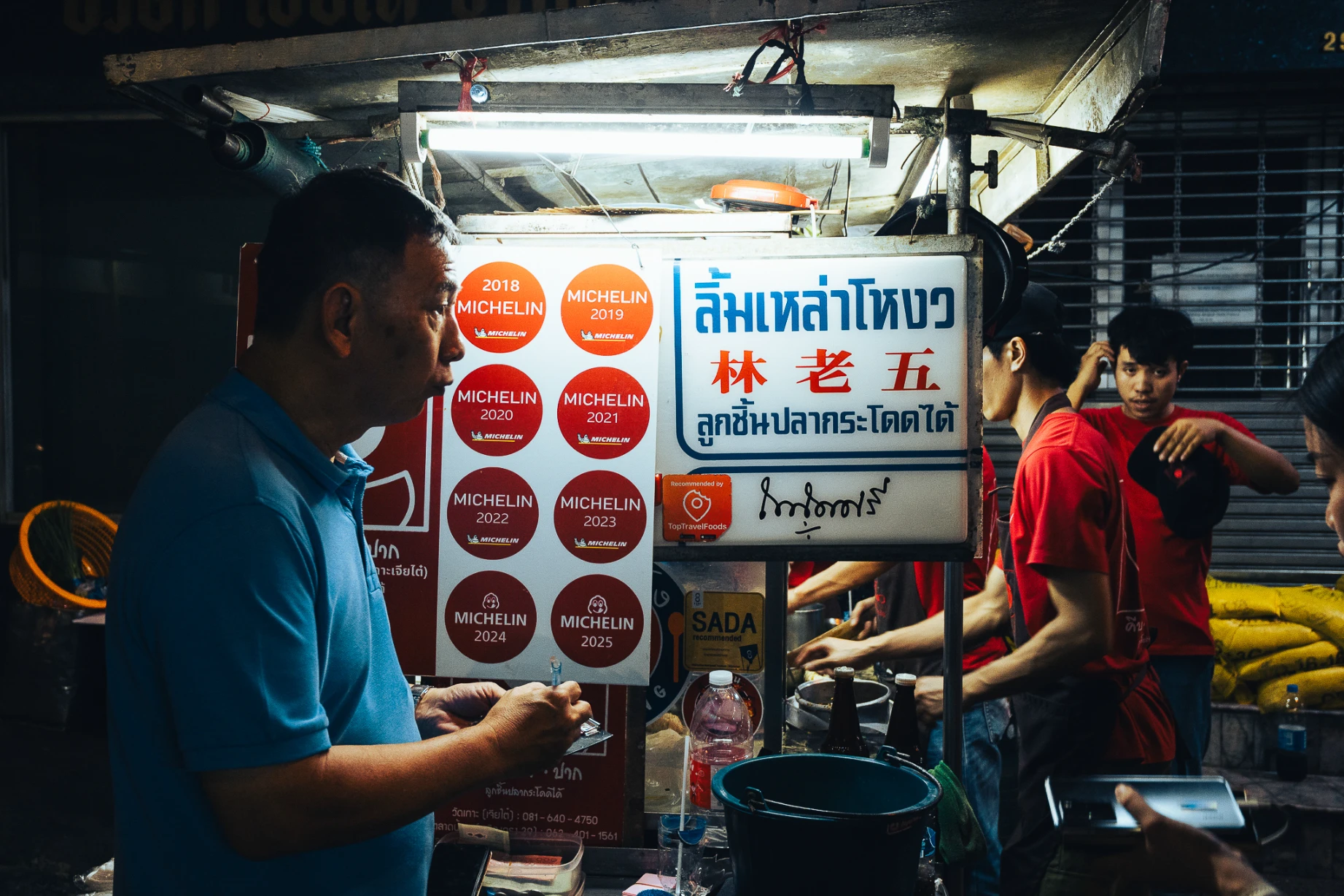
Each photograph retains a particular activity. Neither explains the whole city, nor supplies the sounds and conversations outside the frame. The visible distances between people, signs and work are enough to offer specific clues to the setting.
Place the images side by side and ask whether they add different information. The performer draws attention to pausing and watching; the food stall brings preparation and service into view. The two scenes extend the story more usefully than another version of the same night view.