At Amanohashidate, a wide view can tell readers where they are almost immediately. It cannot, on its own, give them a sense of what there is to notice once they arrive. In destination photography, the landmark can set the orientation. Smaller scenes give the story somewhere to pause.
Let the Amanohashidate view establish the place
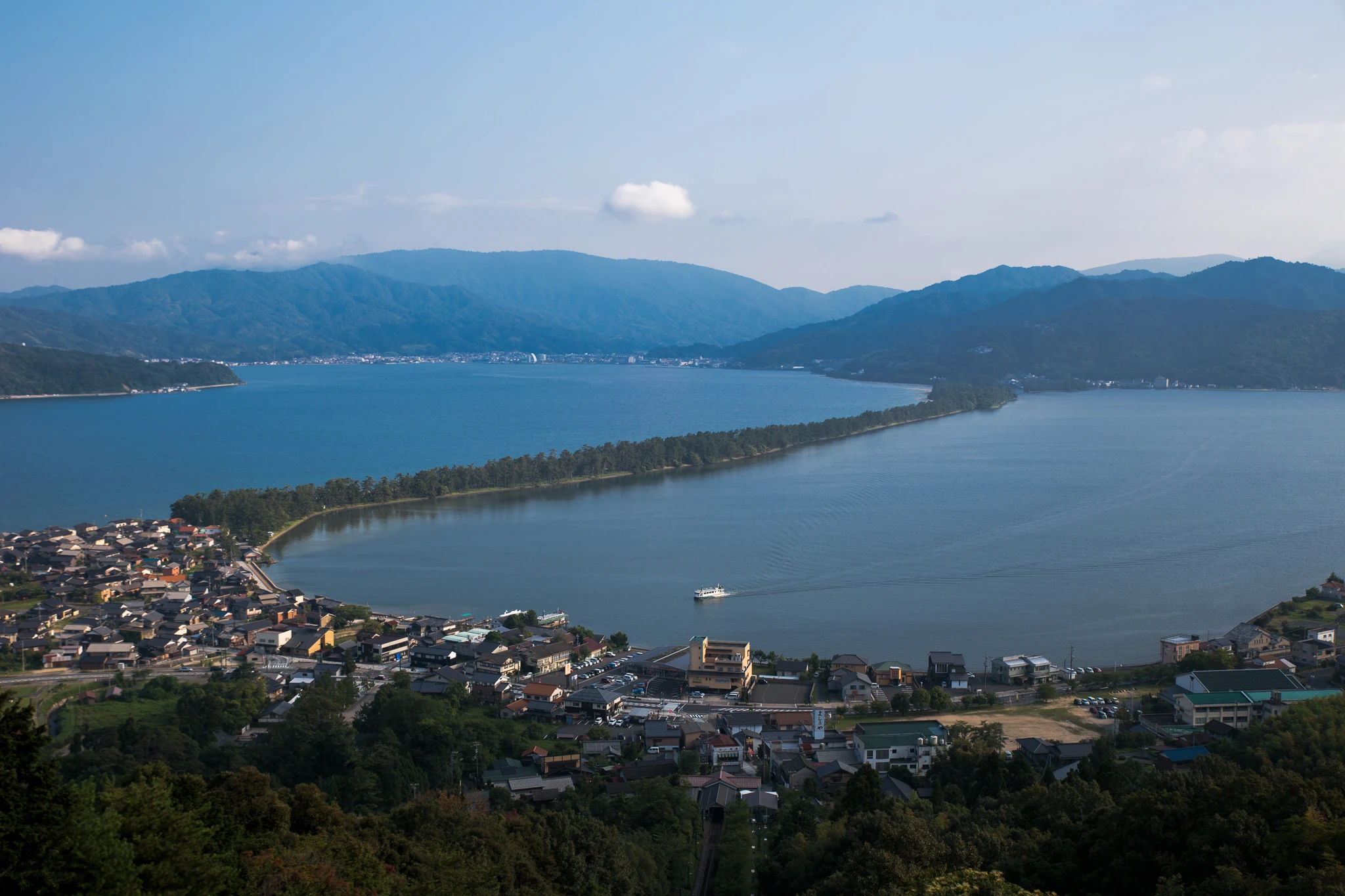
In 2022, FUN! JAPAN commissioned Moss & Grain to make editorial imagery at Amanohashidate in Kyoto. A photograph taken from above holds the sandbar, bay, shoreline settlement, and distant hills in one view. It works as an opening frame because the shape of the place is immediately legible.
The Amanohashidate Tourist Information also describes a pine-covered sandbar. Yet the overview does not have to carry the entire sequence. If each picture tries to be higher, wider, and more complete, the reader may simply recognise the same landmark several times.
Keep a small scene beside the landmark
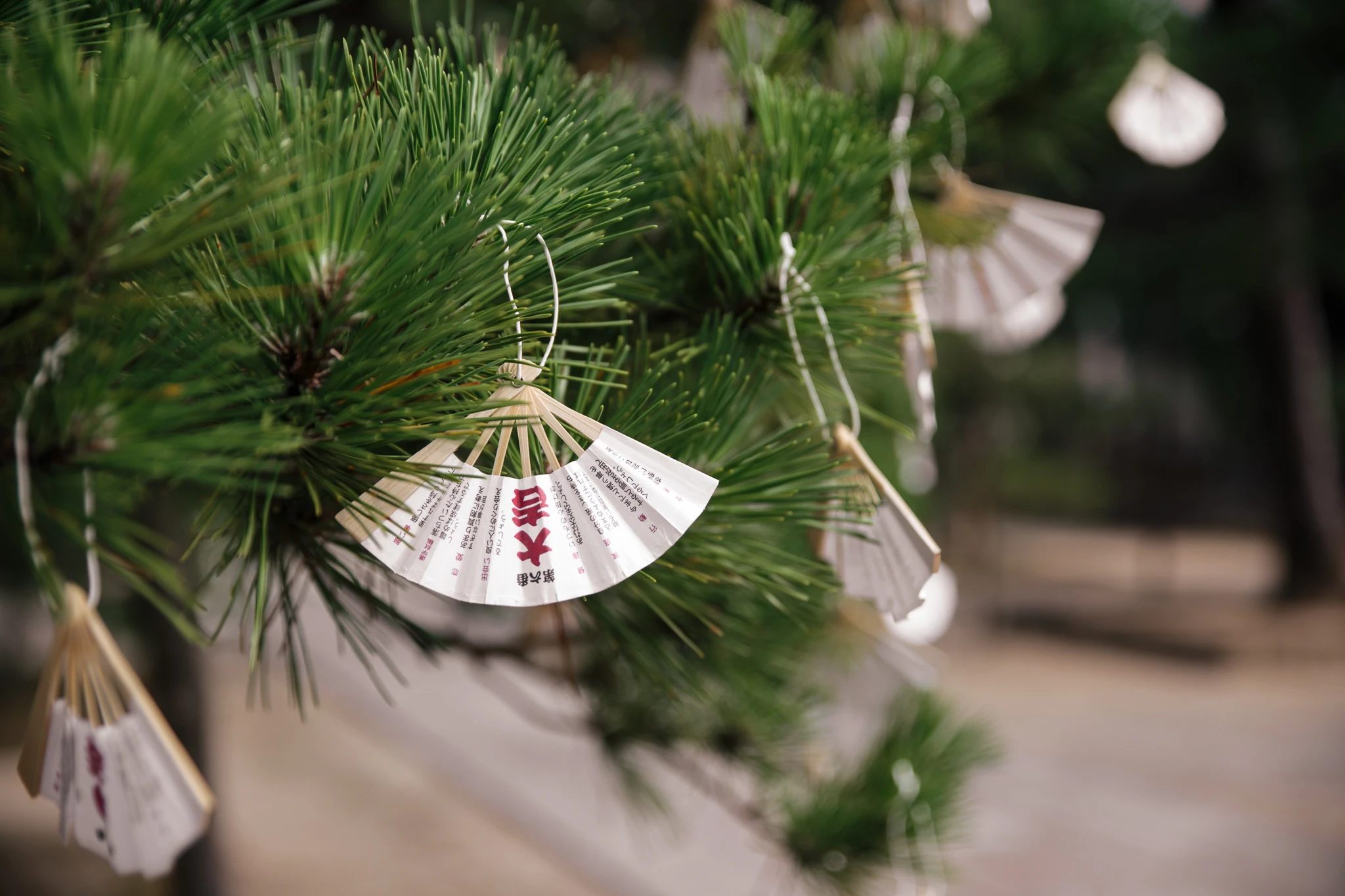
Small paper fans hang from pine branches, with some writing visible on their surfaces. The public project page describes them as wishes left along the way. After the panoramic view, this photograph asks the eye to pause among needles and paper rather than search for the sandbar again.
A detail like this gives the destination more than a shape on a map. It offers something close enough to examine, while leaving room for the viewer's own attention.
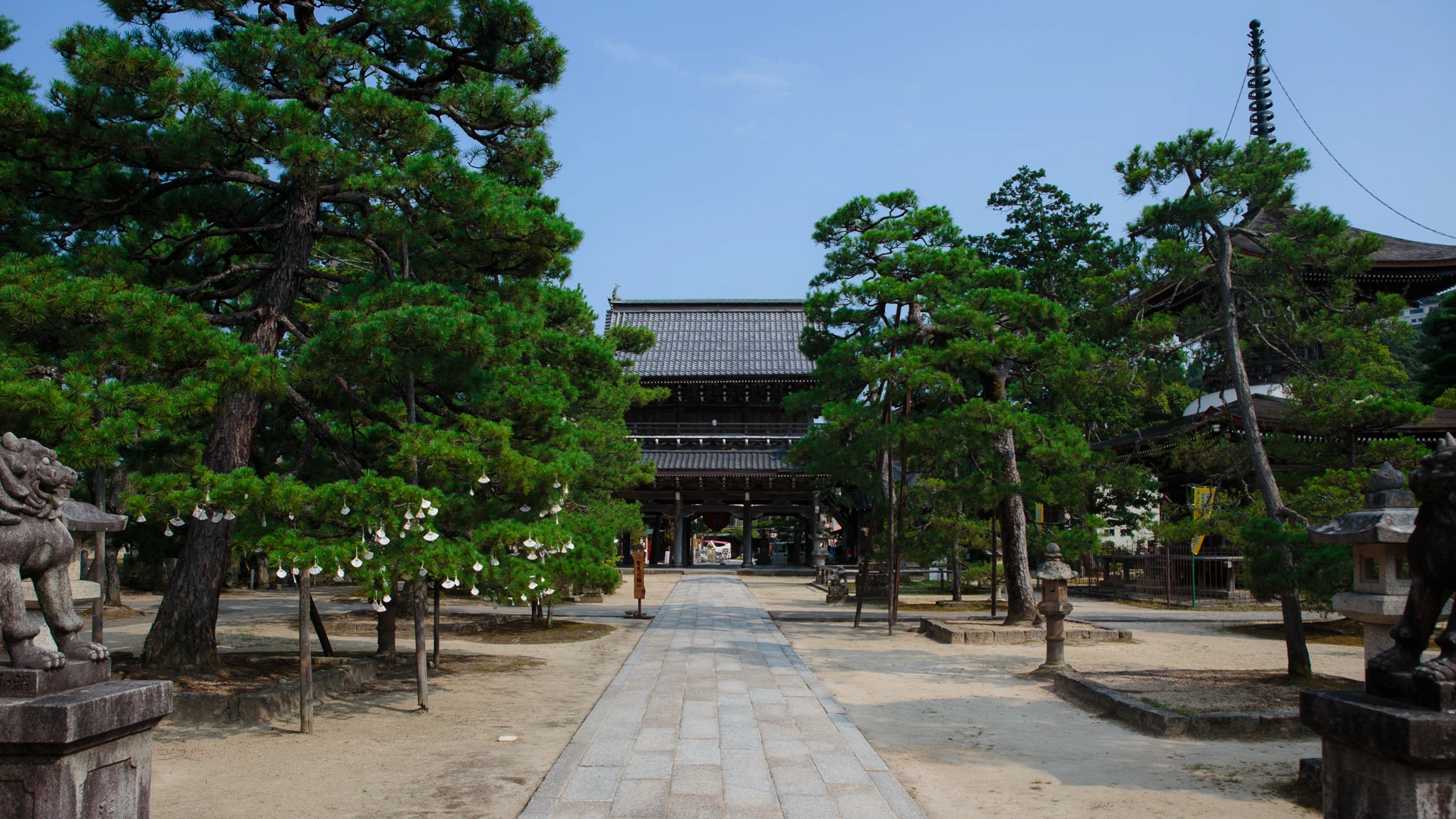
Use a path to bring the place back to walking scale
Another photograph follows a stone path towards a building in a tree-lined temple courtyard. It is slower to identify than the panorama, but its path gives the eye a way through the space.
Placed beside the landmark and the fans, it brings the scale back from the bay to somewhere a person could walk. That change of viewpoint carries the sequence further than another distant view would.
Give each photograph a distinct job
The Amanohashidate panorama provides orientation; the fans hold a moment of attention; the path gives the setting a human scale. Each frame contributes something the others cannot. More views of the same landmark would not necessarily make a fuller editorial story.
The complete Amanohashidate project also includes the chairlift and the return journey by cable railway. A landmark helps readers recognise a place. Details give them a reason to keep looking.