In a forest, the eye keeps making choices: a nearby leaf, light beyond a trunk, the ground underfoot. A photograph places those things together on a flat surface. What felt rich in person can become difficult to read as an image.
The answer need not be to remove every stray branch or wait for spectacular light. Our Xitou forest photographs suggest another approach: retain the density, but give the eye somewhere recognisable to pause. That point might be a circle, a repeated tread or the boundary between light and shade on stone.
Look for a different shape, not only the brightest patch
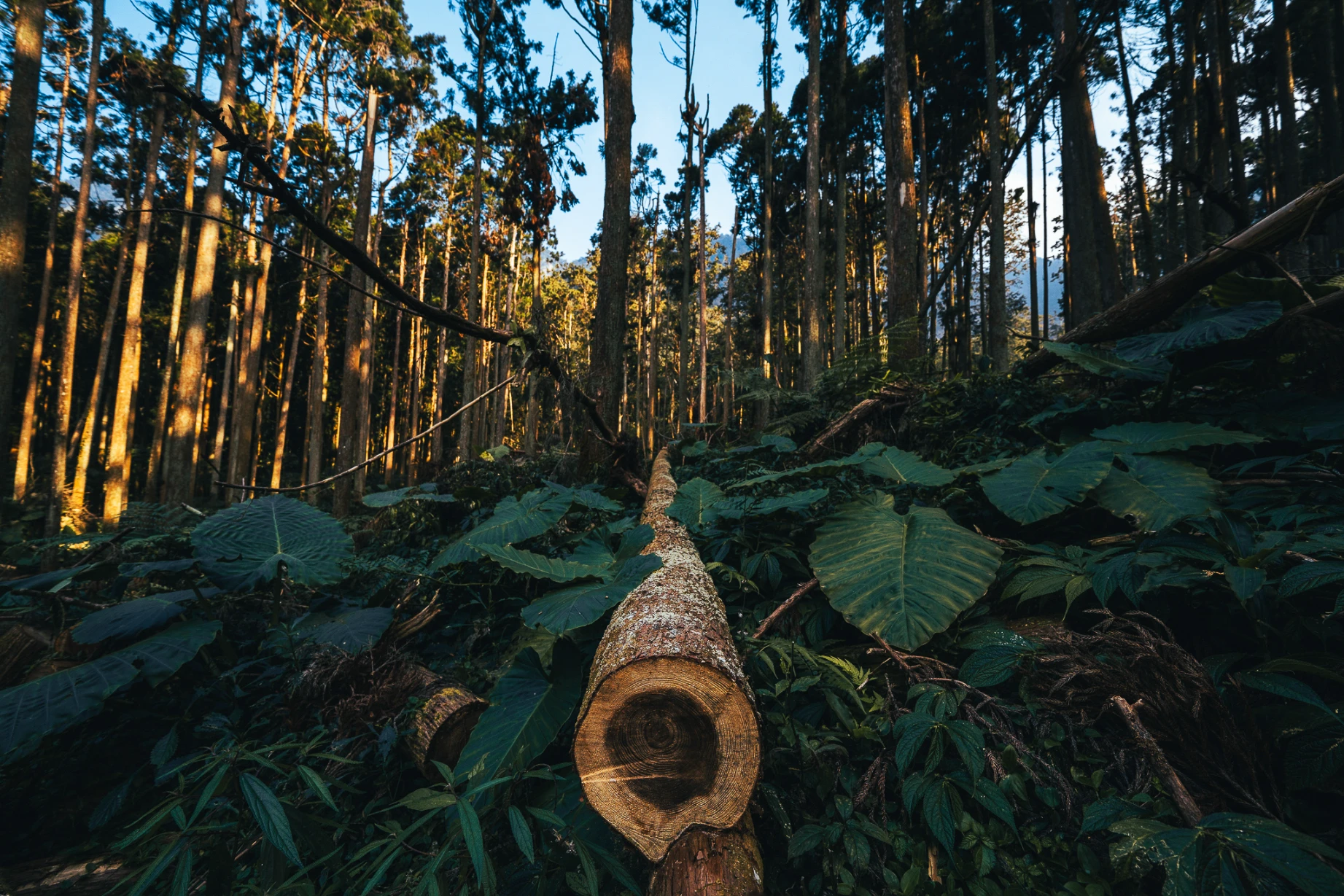
In the woodland view, upright trunks establish a repeated rhythm, with sunlight picking out strips of bark. The round cut end of the foreground log introduces a different shape amongst those verticals. It need not fill the frame to offer a recognisable point of attention. Following the log inwards brings the eye back amongst trunks and leaves.
The photograph does not reduce everything else to a dark background. Broad leaves, crossing branches and openings of sky preserve the density of the scene. Clarity here means giving the viewer an initial foothold, rather than simplifying every corner.
When selecting images, try naming that foothold precisely: “the round end of the log”. If the description is only “beautiful greenery”, compare neighbouring frames. Is there a shape that differs from its surroundings and makes the picture easier to recall? Not every forest photograph needs a single subject. This is a useful test when density has made a particular image difficult to read.
Make a route legible without revealing its destination
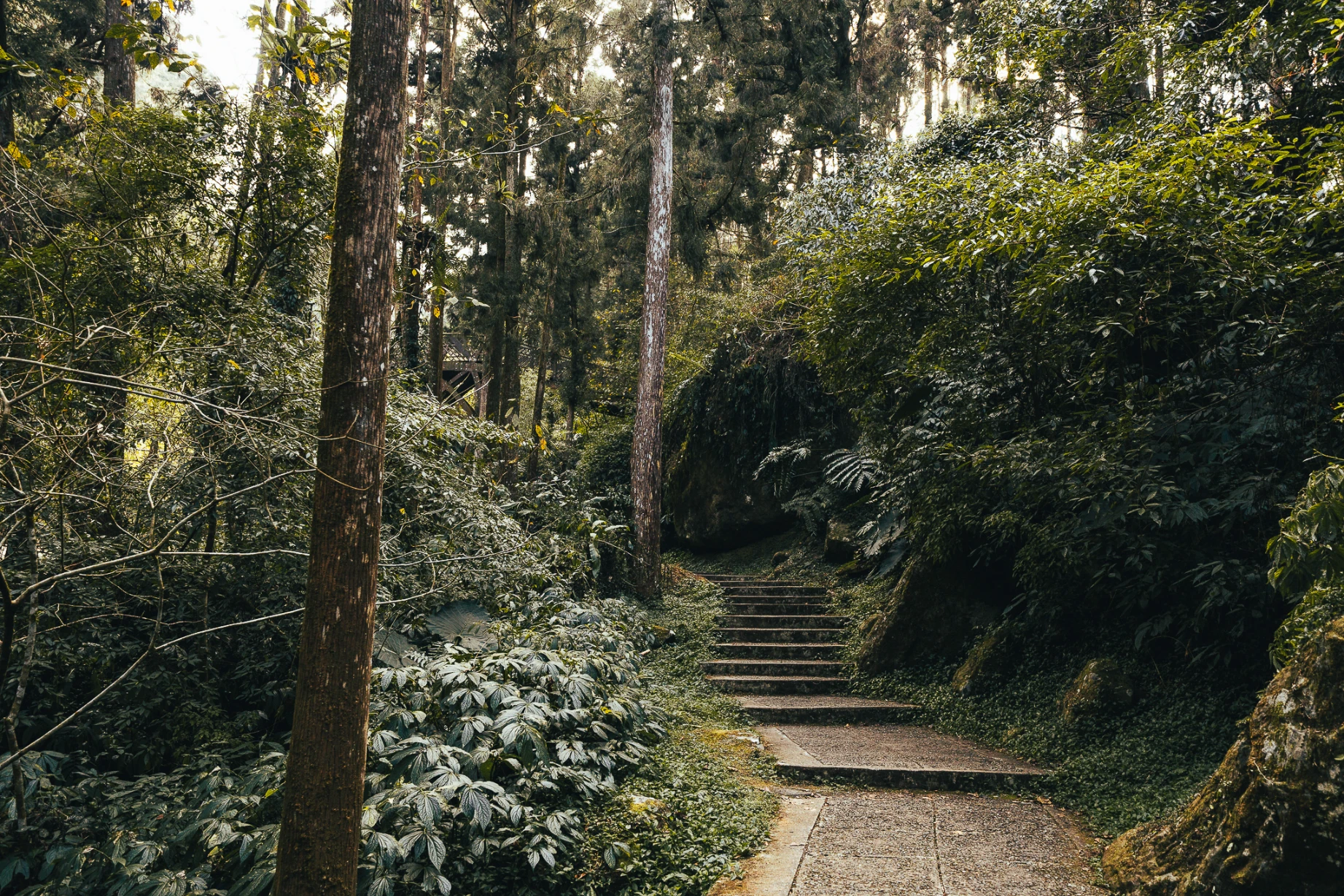
In the next photograph, steps enter from the lower right and curve towards a shaded area near the centre. Repeated treads make the route recognisable. Trunks, stone and vegetation keep it embedded in the woodland. The picture neither reveals an endpoint nor needs to announce the next attraction.
Its role differs from that of the log photograph. One holds attention through a contrasting shape; the other lets the eye move through repetition and a bend. Describing both simply as “layers of greenery” would miss the distinction that makes them useful together.
There is room to retain the shade where the route disappears. A photograph can offer somewhere for the eye to continue without functioning as a guide. This image alone cannot establish a trail’s length, difficulty or destination.
At close range, a small patch of light can carry the picture
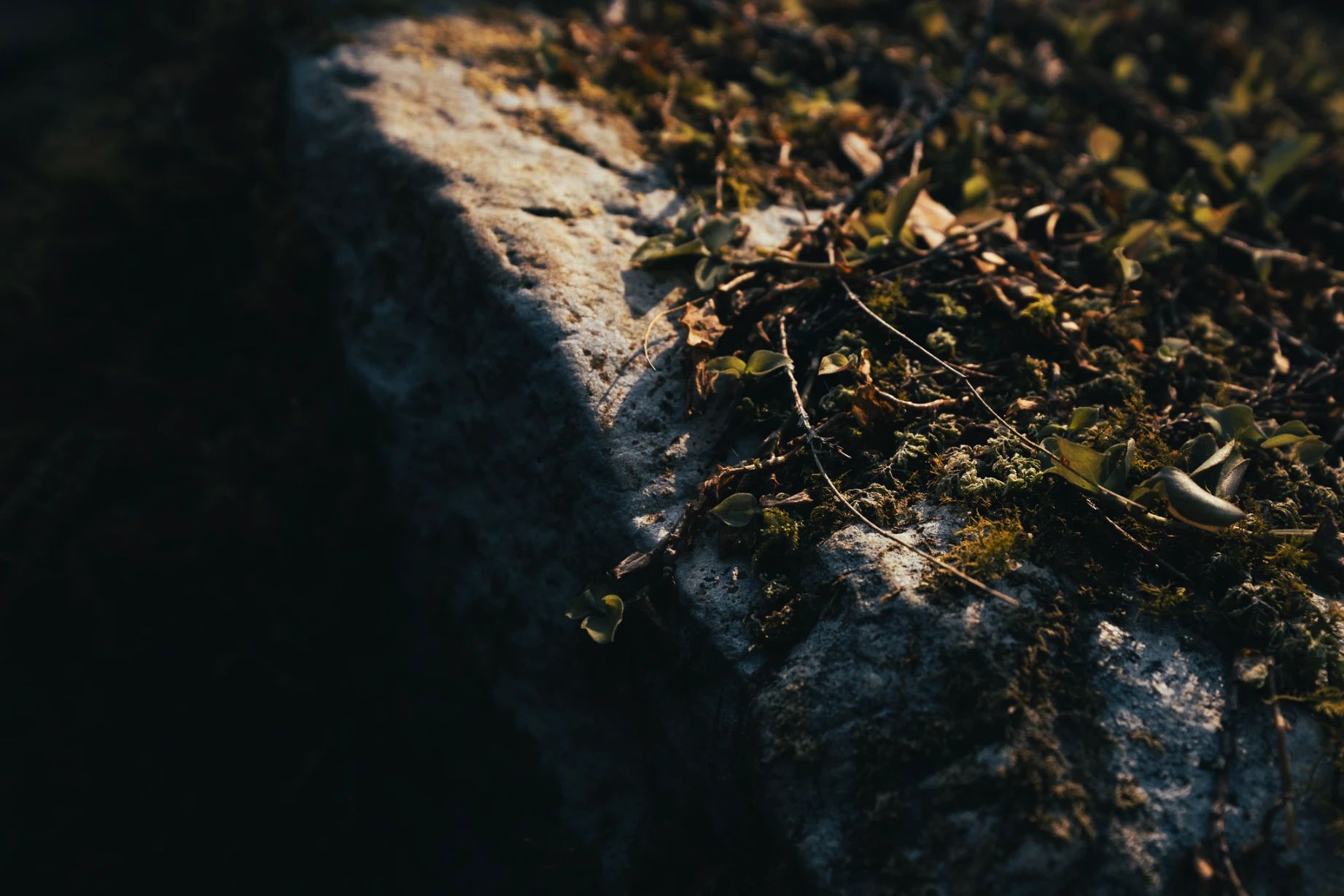
At the scale of a stone edge, moss and fallen leaves, the large structures of the earlier views disappear. A diagonal edge crosses the frame. Warm light reveals a rough surface, while neighbouring shade leaves part of the scene unresolved. Attention shifts from the size of the forest to the meeting of several surfaces within a small patch of light.
A detail photograph earns its place by doing more than adding a close-up to a set. It changes the pace of looking: instead of identifying trees and a route, the viewer notices the contact between a leaf, moss and stone. Its caption should narrow its scope too, describing visible materials, positions and light without turning the image into unsupported botanical or seasonal information.
Choose three photographs and give each a different verb
Try a three-picture edit of your own forest images. Before choosing the three most attractive frames, write one sentence for each candidate: “This picture lets the eye…”
- Pause: recognise a shape that differs from those around it, such as the round end of the log.
- Follow: trace a visible repetition or direction, such as treads bending into shade.
- Look closer: attend to a small meeting of surfaces and light, such as leaves beside the stone edge.
If all three sentences say the same thing, consider whether the edit needs all three images. When each offers a different way of looking, the woodland can remain dense while the sequence gains room to breathe. This is a reading order, not a claim about the order in which these scenes were visited or photographed.
A single picture need not explain all the richness of a forest. Giving someone one small difference to notice can be enough to keep their attention amongst the trees. Explore the complete Xitou forest study.