A gallery begins before art.
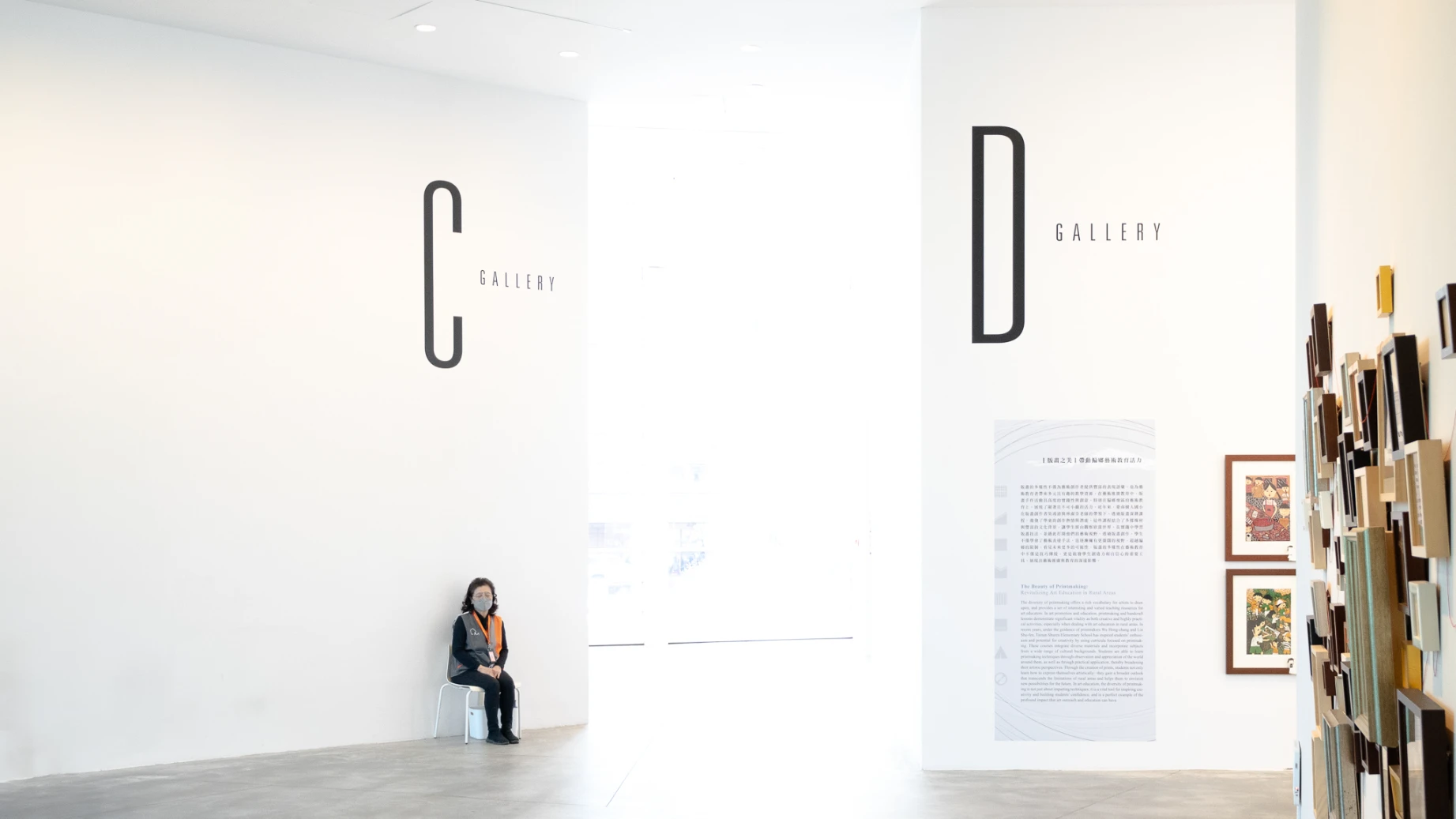
This photographic study moves between the structural character of Tainan Art Museum and an interior marked “Gallery D.” That shift is the point: an institution is not communicated by its exterior alone.
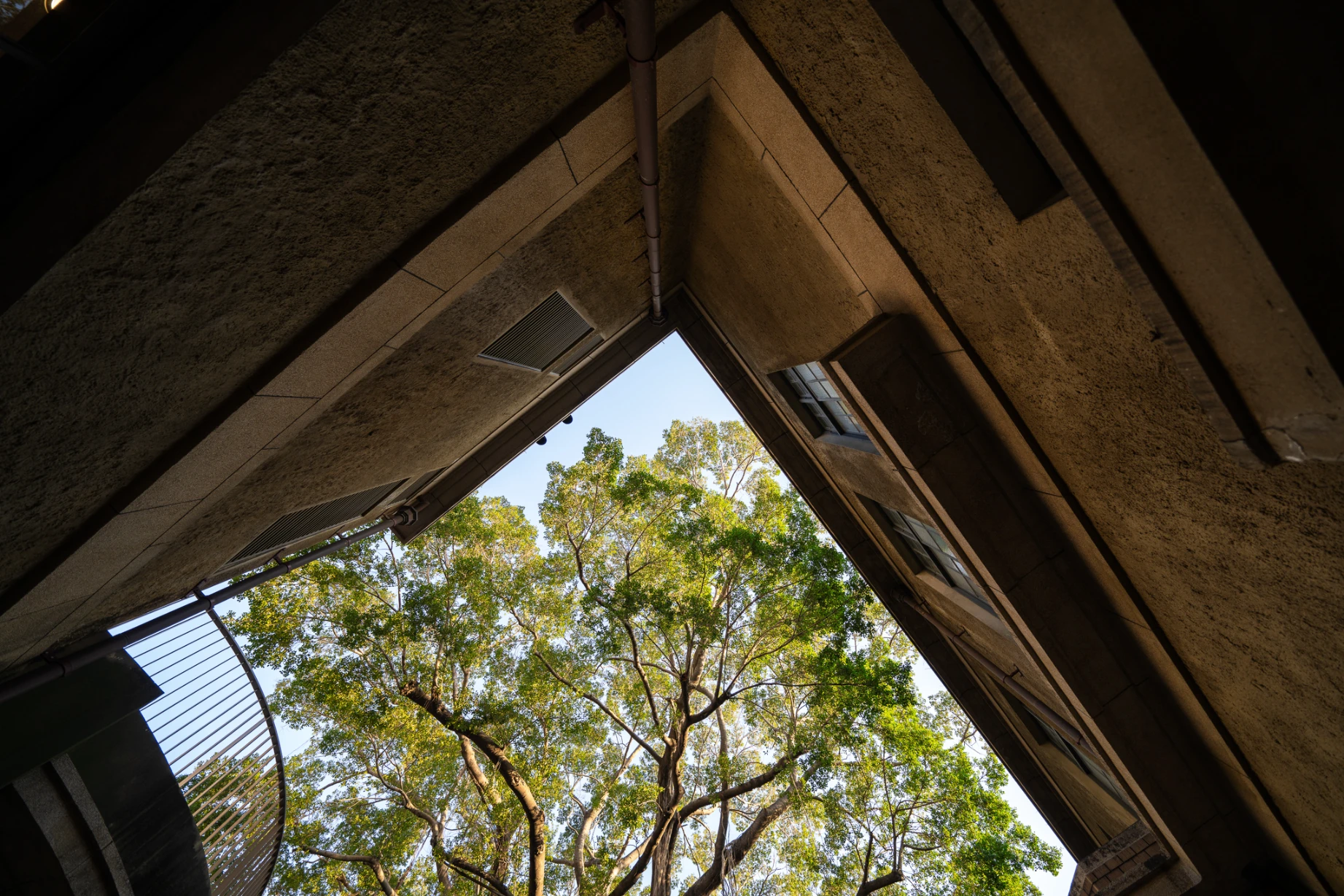
A museum photograph can easily become an architectural trophy—clean lines, empty surfaces, a recognisable silhouette. Those images have their place, but they do not always explain what the building enables. The stronger sequence begins with the way a space directs attention: a framed view upwards to the trees, a threshold of light and shadow, then a gallery where scale, circulation, signage, and artworks share the frame.
In the Gallery D image, the room is deliberately not empty. A seated visitor, wall text, artworks, and the large letterform identifying the gallery all remain present. The photograph allows the institution to be read as a functioning public space rather than an abstract object. It shows how architecture supports looking, waiting, moving, and returning.
This distinction matters for museums, galleries, and cultural organisations. Their visual archive needs to do more than announce a building or record an exhibition opening. It should help audiences understand the character of a visit. What is the pace of the space? Where does attention settle? How do the interior and the programme meet?
A wide exterior can establish context; a spatial detail can create rhythm; an interior image can show how a cultural venue is inhabited. These three viewing distances complement one another when selecting a sequence.
Architecture retains its presence, while the experience of visiting remains in view.
To view the complete photographic project, visit Tainan Art Museum — Contemporary Architecture in Historic Tainan.