
A product photograph can show a label, a form and a setting. On its own, it cannot explain how a spa treatment is delivered or establish what it achieves. Keeping those roles distinct makes both the images and the accompanying words more useful.
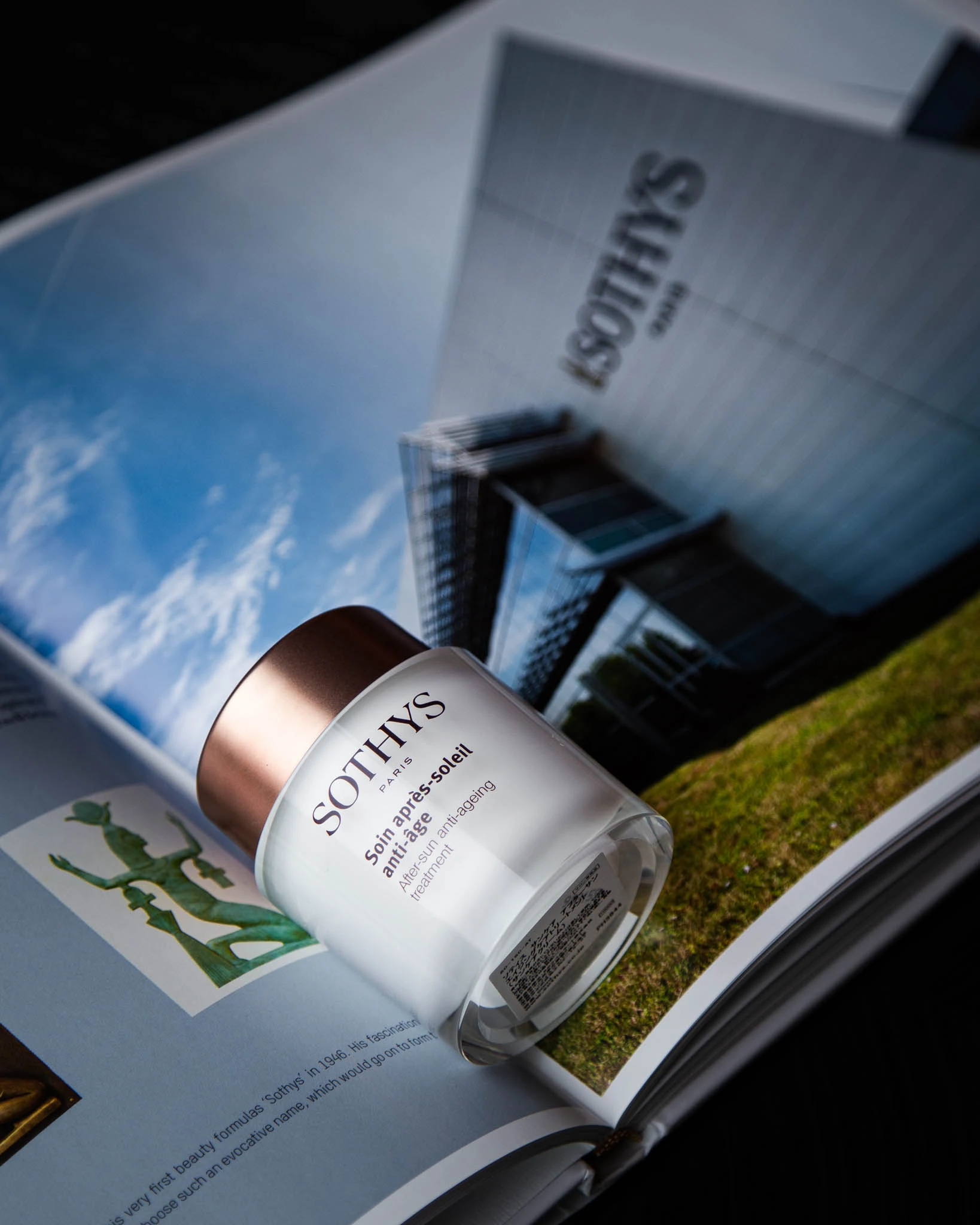
In Moss & Grain's Spa Chasi La Sothys photographs, a white jar rests on an open magazine. Two dark-coloured tubes stand on a reflective surface, while a dropper bottle appears within a dim interior. All three frames concern the products, but each offers a different amount of context.
The white jar sits on an open magazine, with the product name still legible.
Begin with what is visible
The opening photograph holds the white jar, rose-gold lid and printed pages in one frame. The Sothys name remains legible. A reader can recognise the object and see how the publication gives it a visual setting.
The frame says nothing about whether the jar is used in a particular treatment, who applies it or what effect it has. Those details need a reliable service source; lighting and styling cannot supply them.
Give the supporting photograph a different task
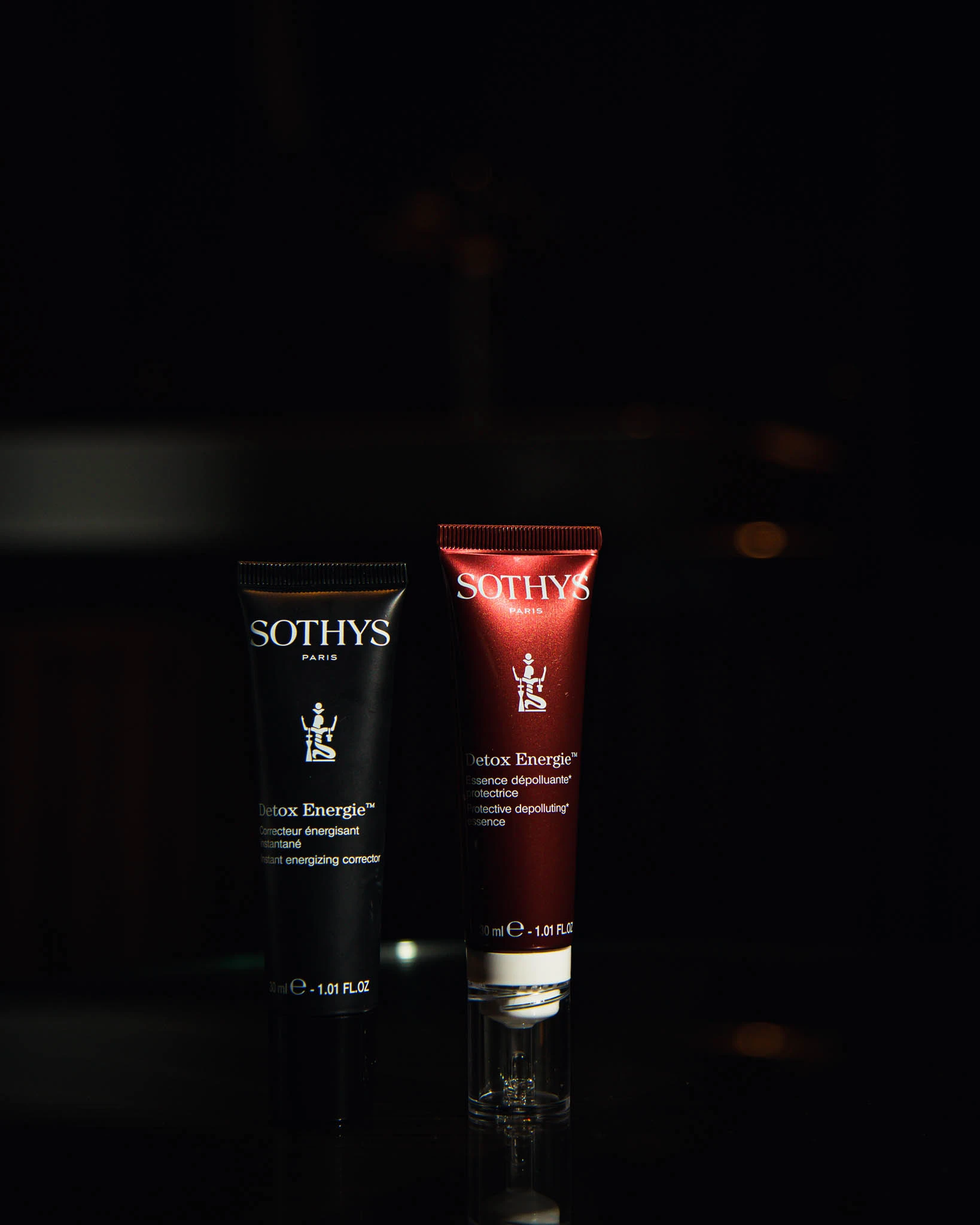
The second frame places black and red tubes together against a dark ground. Their reflection becomes part of the composition. After the single jar, this image shows another form of packaging within the series. It has a distinct job without having to carry every product detail.
If a page needs readers to inspect a full label or specification, a darker contextual image may need a clearer product view beside it. Before choosing a photograph, decide whether it should help identify an item, connect a range or establish a setting.
Atmosphere is not evidence of a treatment
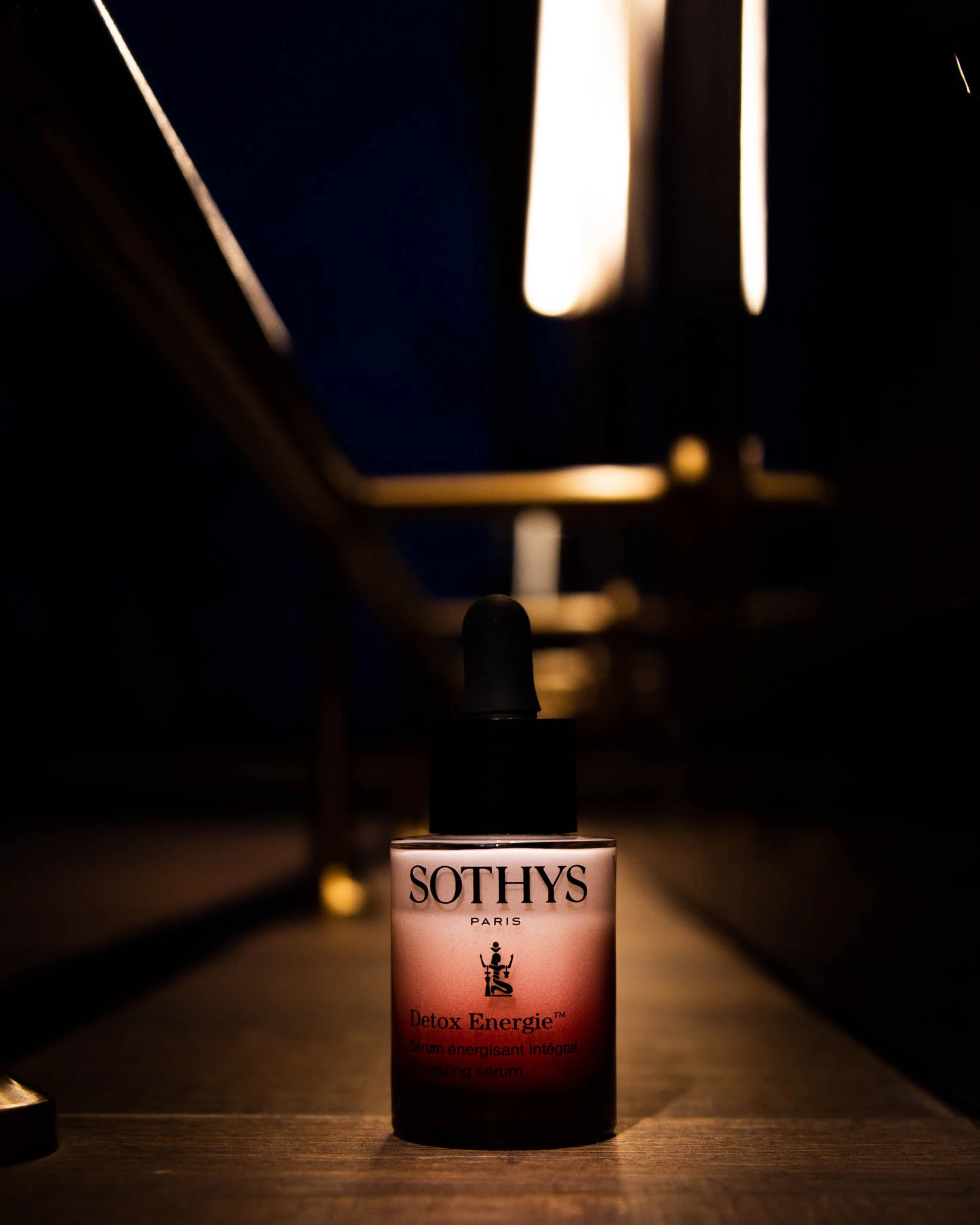
The dropper bottle sits in a dim interior, with warm lights behind it. The surroundings connect the product to a place. The photograph does not show a service taking place or a person receiving it.
Treatment steps, suitability and results should come from verified service information. A product appearing in spa photography does not, by itself, establish how it is used.
Let captions stay with the facts
A caption can name the visible product form, the packaging difference and a verified setting. It can also lead readers to the full photographic project for context.
A credible image series lets the photographs establish objects and surroundings, while checked copy explains the service. Readers can then see what the frame tells them and where further information is needed.