A photograph of a train tells us what carries the passengers. A view through the window may show the landscape they pass. The time spent inside deserves its own images as well. The arrangement of seats, the position of a stove and the distance between people and windows make travelling more specific than a route between two points.
Moss & Grain’s published Tsugaru Railway project is labelled as photography created for Fun Japan in 2023. The series includes the carriage, stove, food and snowy platform. Here, three photographs are read for what they visibly establish. They do not supply individual passengers’ stories, a service timetable or evidence of how anyone felt.
Seats, passengers, windows and stove pipe make the carriage a subject in its own right.
Let the carriage be a place in use
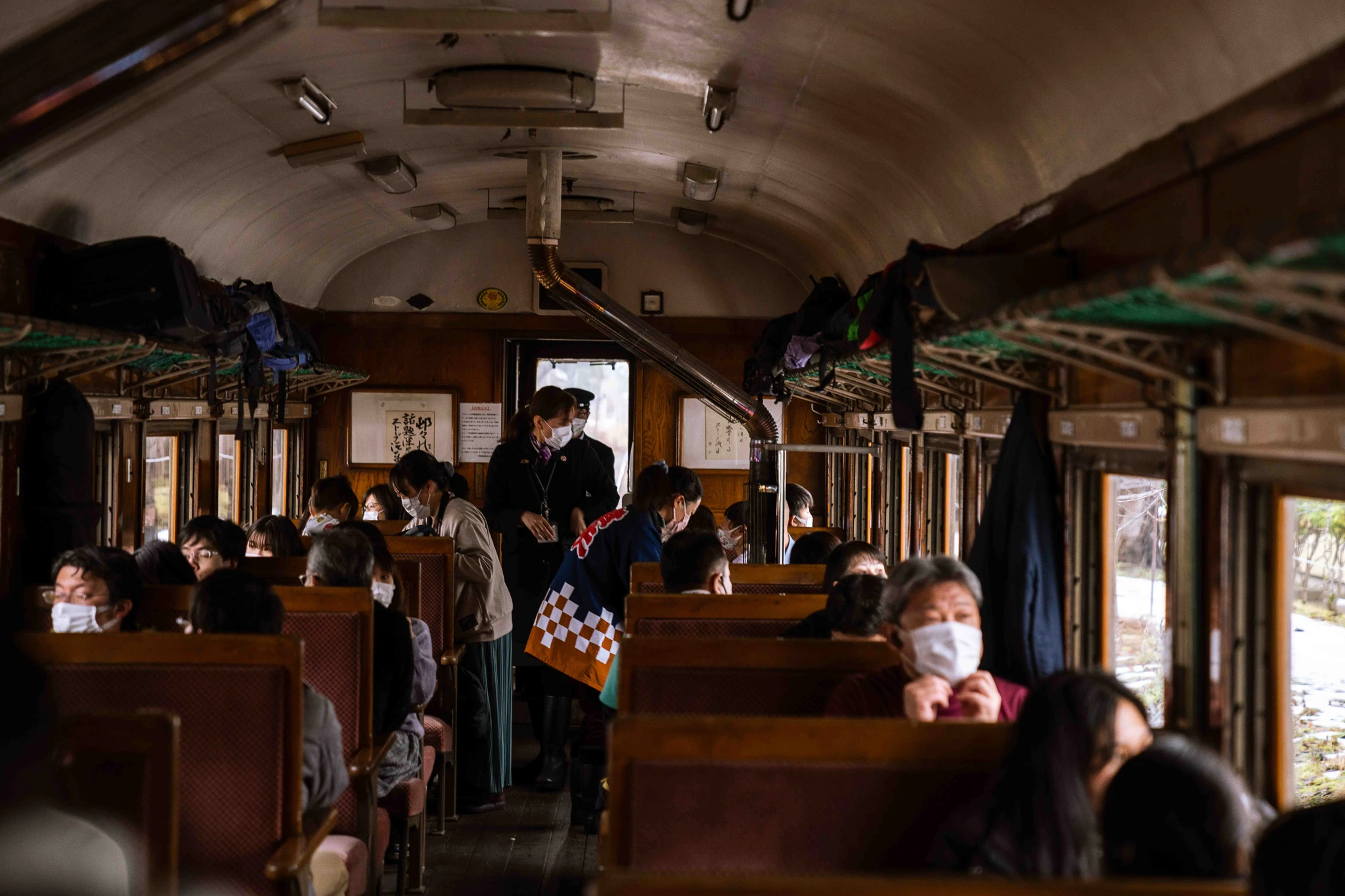
The opening frame looks down the length of the carriage. Wooden seat backs line both sides; some passengers sit by the windows while others stand further along the aisle. A stove pipe descends from the ceiling. There is enough of the room in view to understand its length and the relationship between seats, aisle and windows.
The photograph does not need to identify anyone. People bring the seats back to their working scale, while the racks and windows remain part of an occupied space rather than a display of interiors. An empty-carriage photograph might describe the materials; this frame also shows how the space is shared during travel.
Use one detail to make the train specific
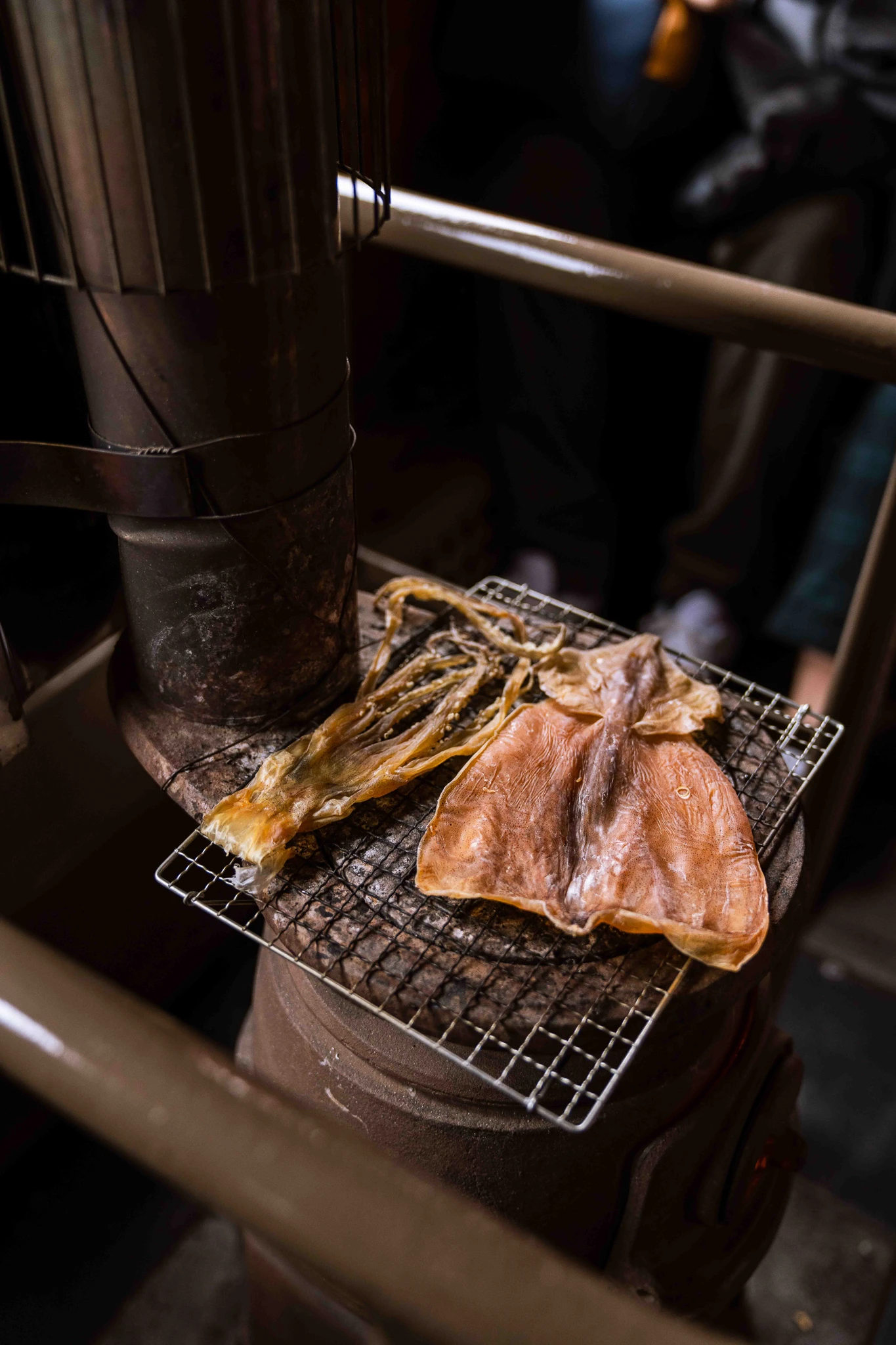
The second photograph moves close to the stove. Its dark metal pipe, wire grill and the food laid across the grill are all visible. A reader does not need another view of the whole carriage to understand why this is called a stove train.
The evidence is precise: there is a stove in the carriage and food on its grill. The picture cannot tell us who prepared the food, whether it was available to every passenger, or the temperature inside. A caption that stays with the visible detail gives the image room to do its work without inventing an experience around it.
Return to the platform for the winter setting
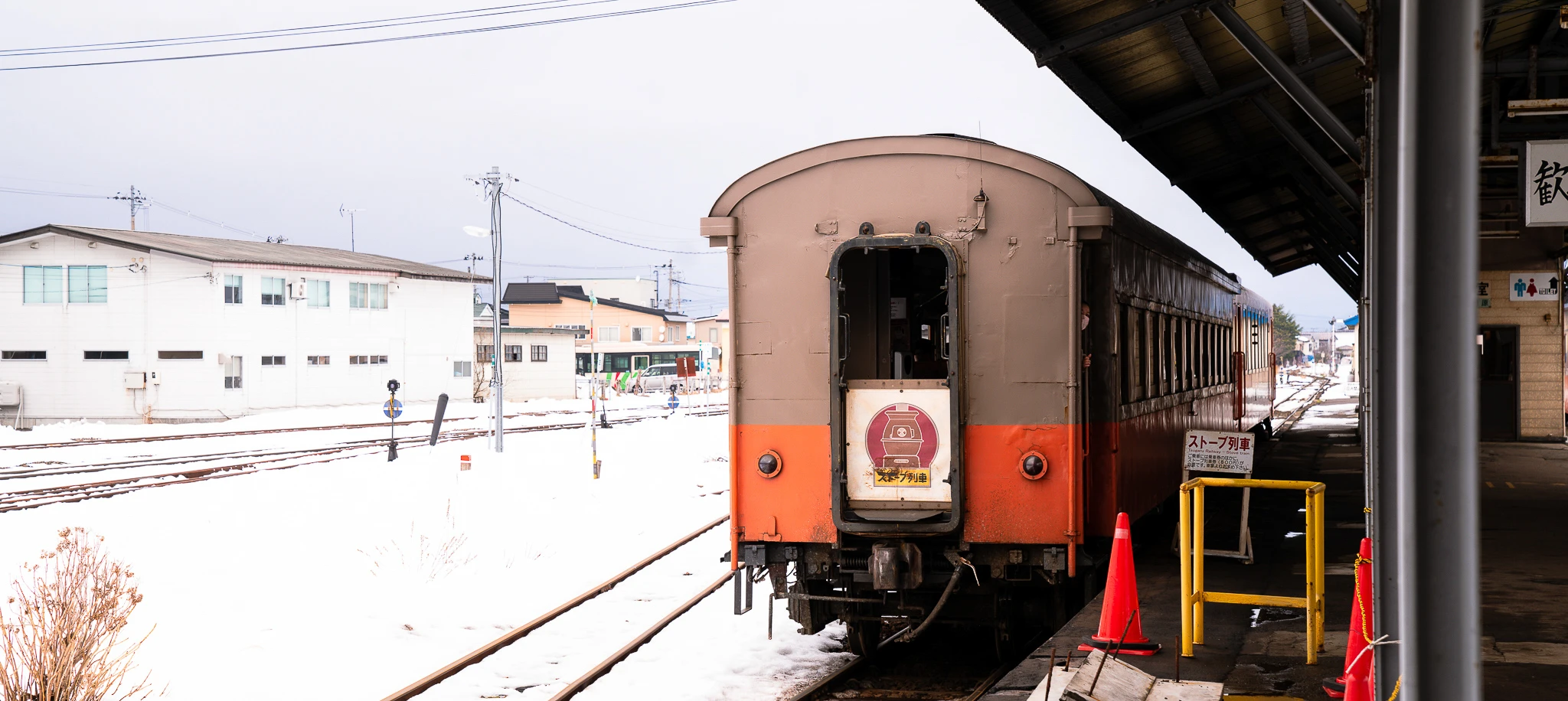
Another frame shows the brown and orange train beside a platform, with snow across the tracks and surrounding ground. The end of the carriage, the platform roof and nearby railway fixtures are kept in view. The interior scenes now have a visible winter setting beyond the windows.
Snow is a condition recorded in this photograph, not a report on every day along the route. The exterior gives the first two images a place and season. It need not stand in for a timetable or tell us how cold each passenger felt.
Edit the act of travelling, not only the destination
Together, the three frames answer different questions. The carriage shows the space people occupy. The stove gives it a particular feature. The platform connects both to the conditions outside. This is an editorial order for the photographs, not a reconstruction of the train’s movement or the order in which the images were made.
When selecting railway travel photographs, ask whether the journey would still be recognisable without a famous view beyond the window. Objects inside, the positions of people and the conditions at the station can give the time on board its own identity. The train becomes part of the travel story rather than a means of reaching its next scene.