Architecture holds ritual.
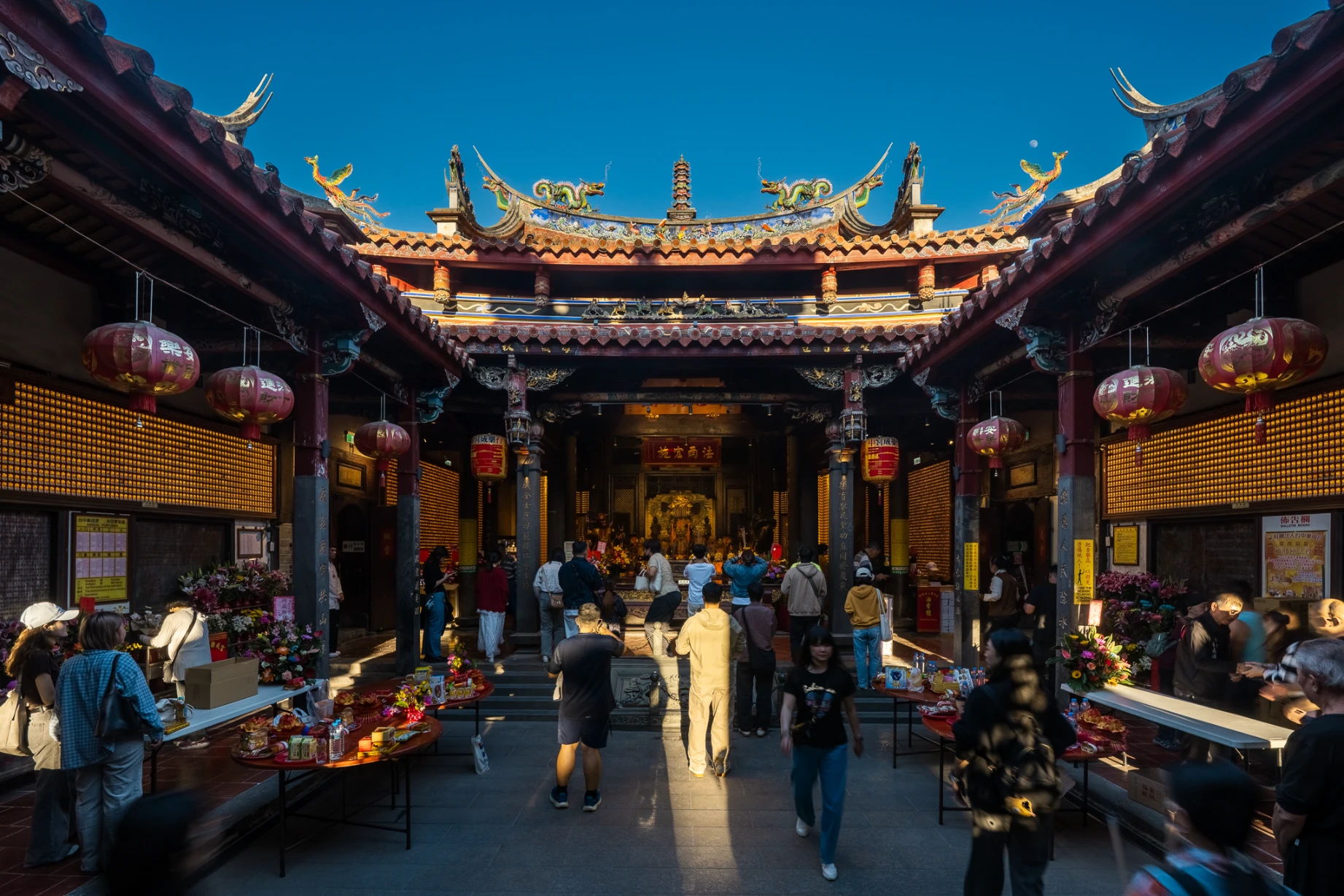
The lead photograph of Lecheng Temple holds the roofline, flanking corridors and people in the courtyard together. Architectural lines lead towards the central entrance; the people standing and moving below give the courtyard a human scale. The order of the frame comes from the building and its occupants together.
A closer photograph brings the roof ornaments into view. Dragons, human figures and a bird-shaped decoration sit at different heights, their silhouettes separated by the blue sky. The portrait frame retains the relationship between the upper and lower eaves instead of isolating an ornament as a pattern.
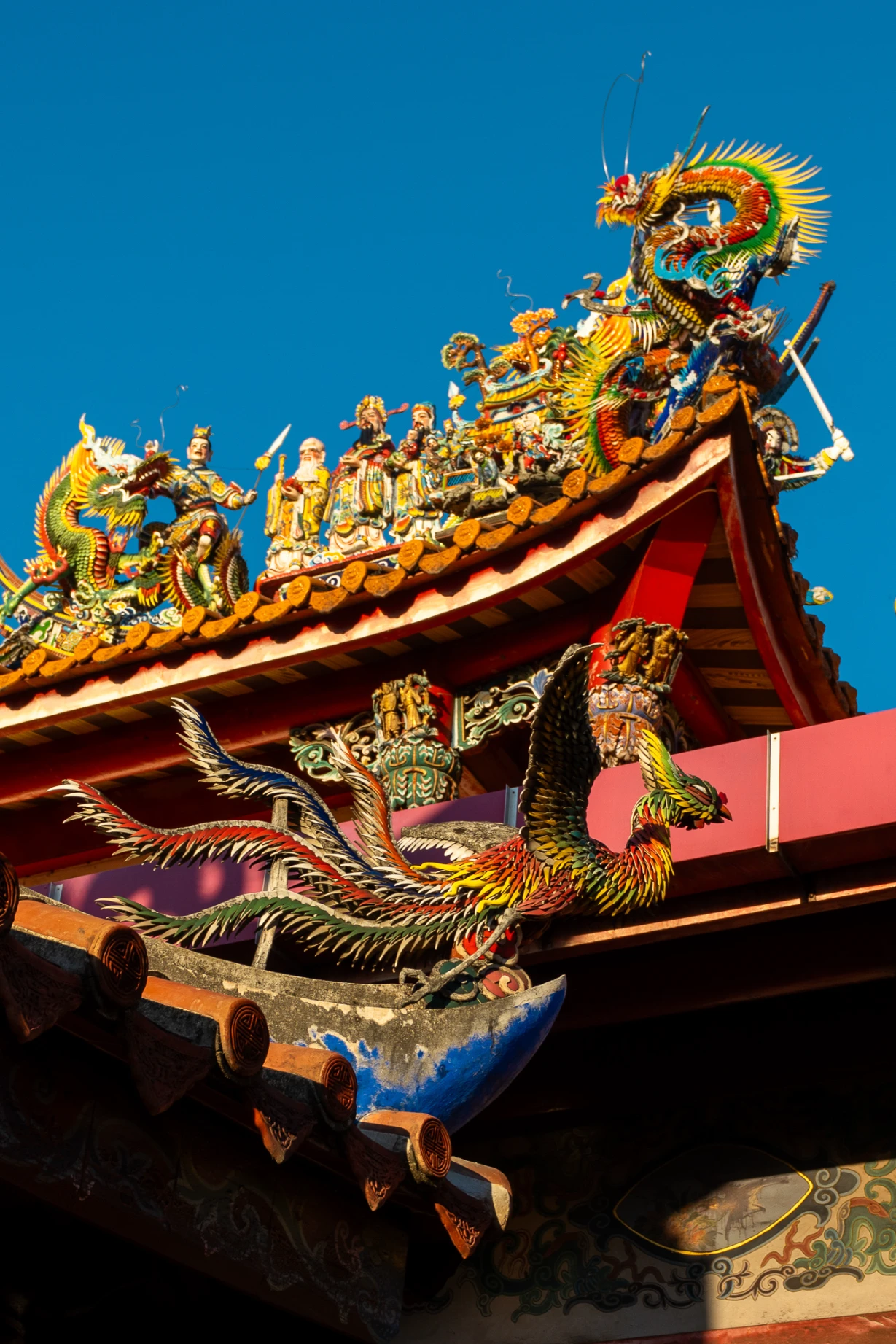
The photographs answer different questions. The courtyard view describes people and architecture sharing a space; the detail shows how smaller forms build the roofline. A visible gesture does not, by itself, establish a person’s beliefs, wishes or the sequence of a ritual.
When planning photographs of a cultural place, separate three questions: where does the building’s visual order come from, where do people pause or move, and which details need a closer view? Giving each photograph a clear question is more precise than asking one wide view to speak for the entire place.
Selection need not mean choosing between context and detail. Keeping both distances allows the reader to place the ornament back within an occupied building, giving the story a specific spatial beginning.
View the complete Lecheng Temple, Taichung project.