A bridge, tied together.
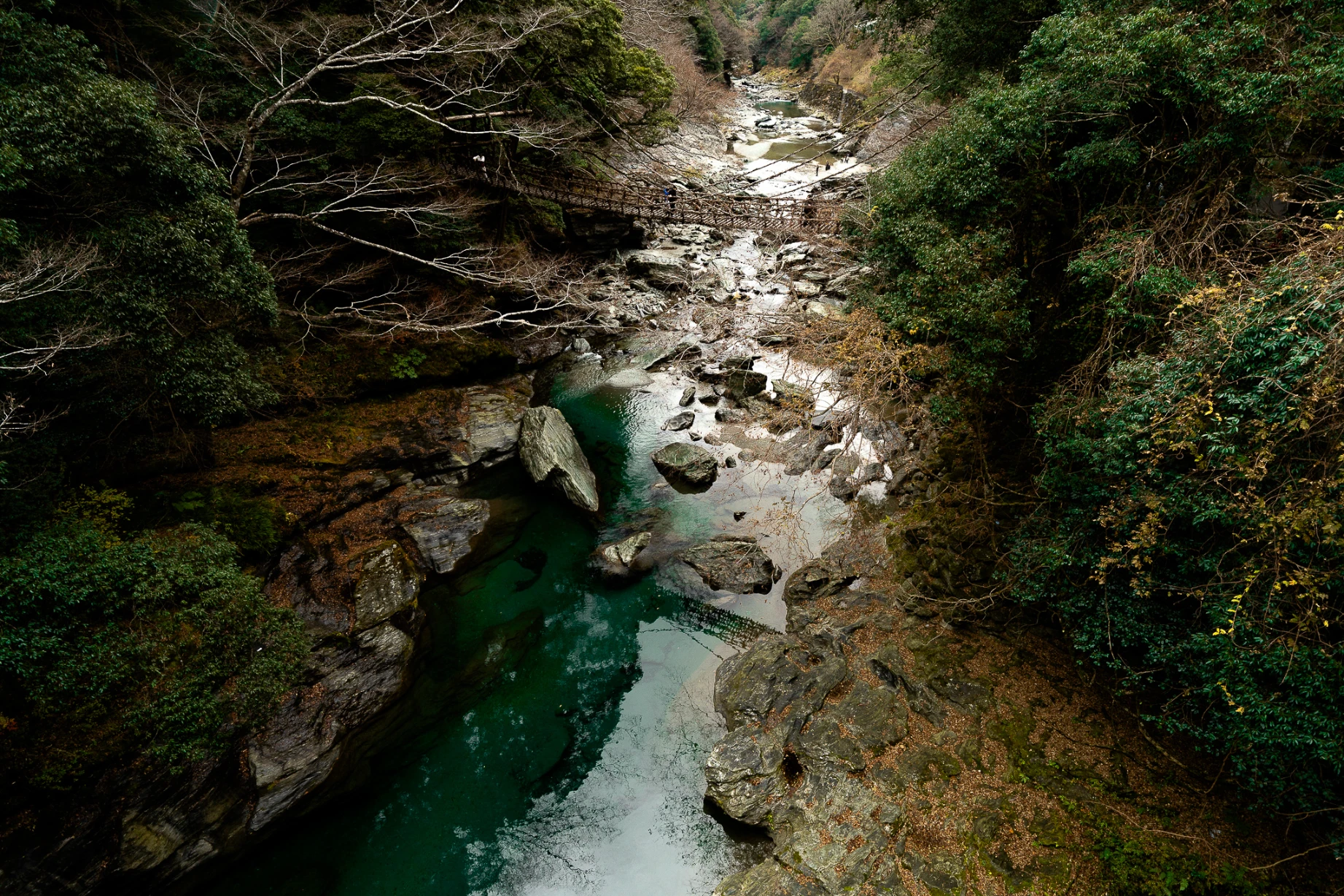
At Iya Kazurabashi in Shikoku, the meeting points between timber and braided bindings hold the eye more readily than a distant view. This photograph takes us inside the structure. Rails, ties and the narrow walkway form a sequence of visual clues, leading towards the people further along the bridge.
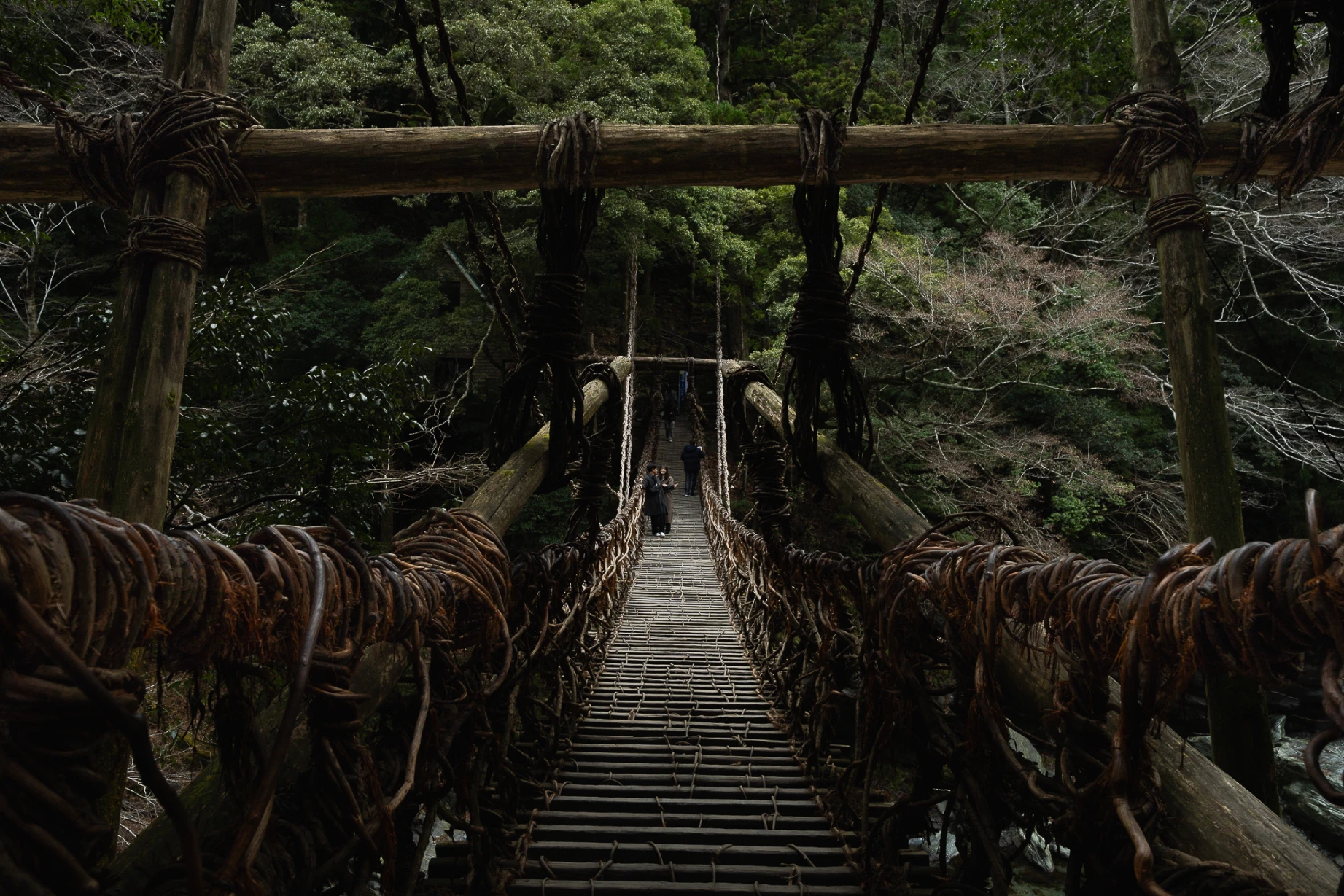
The forest remains around it. It gives the bridge scale and keeps it connected to its setting. Cropping away the surroundings might emphasise texture, but it would also remove information about distance and size.
The useful distinction here is between a surface and a connection. An isolated piece of timber can show grain. Including the neighbouring material makes its arrangement, binding and use easier to read. These are visible clues, rather than a complete explanation of the bridge’s engineering.
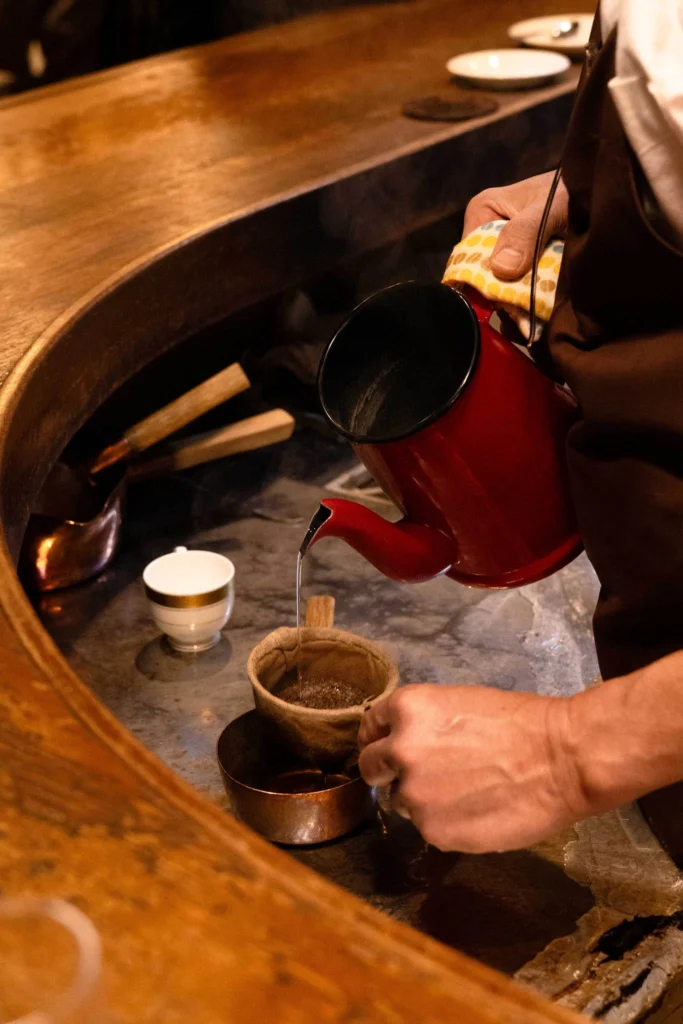
The same distinction can guide photographs of craft and interiors. A tool can remain connected to the work surface beneath it. A counter can include the space where someone would stand. A detail does not need to be isolated to become the subject.
When choosing a photograph, ask whether it shows only what a surface looks like, or also how the object relates to its surroundings. In this image, the ties, walkway, people and forest can still be read together. That relationship gives the detail its purpose.
View the complete Iya Kazurabashi Vine Bridge project.