Experience begins at the counter.
Durian Heng in Melaka offers a direct view of local food culture through service, choice, and exchange.
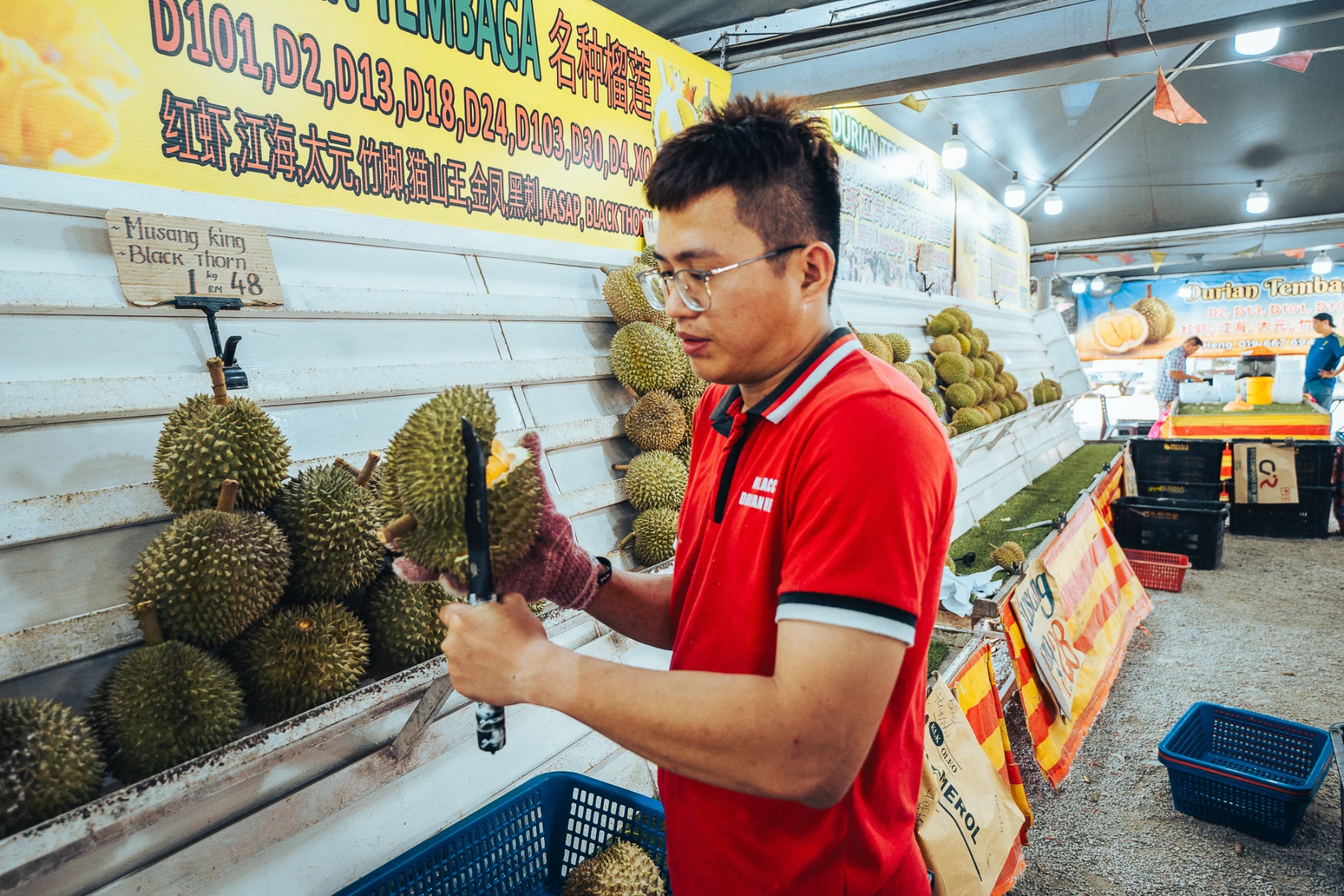
The photograph does not isolate the durian as a product. It keeps the fruit, workers, customers, signs, and market environment in one frame.
Food is often photographed as an object: arranged, lit, and separated from the conditions in which it is actually experienced. This image takes a different position. The fruit remains central, but the experience is formed through the activity around it. People are choosing, observing, waiting, and sharing the same small space.
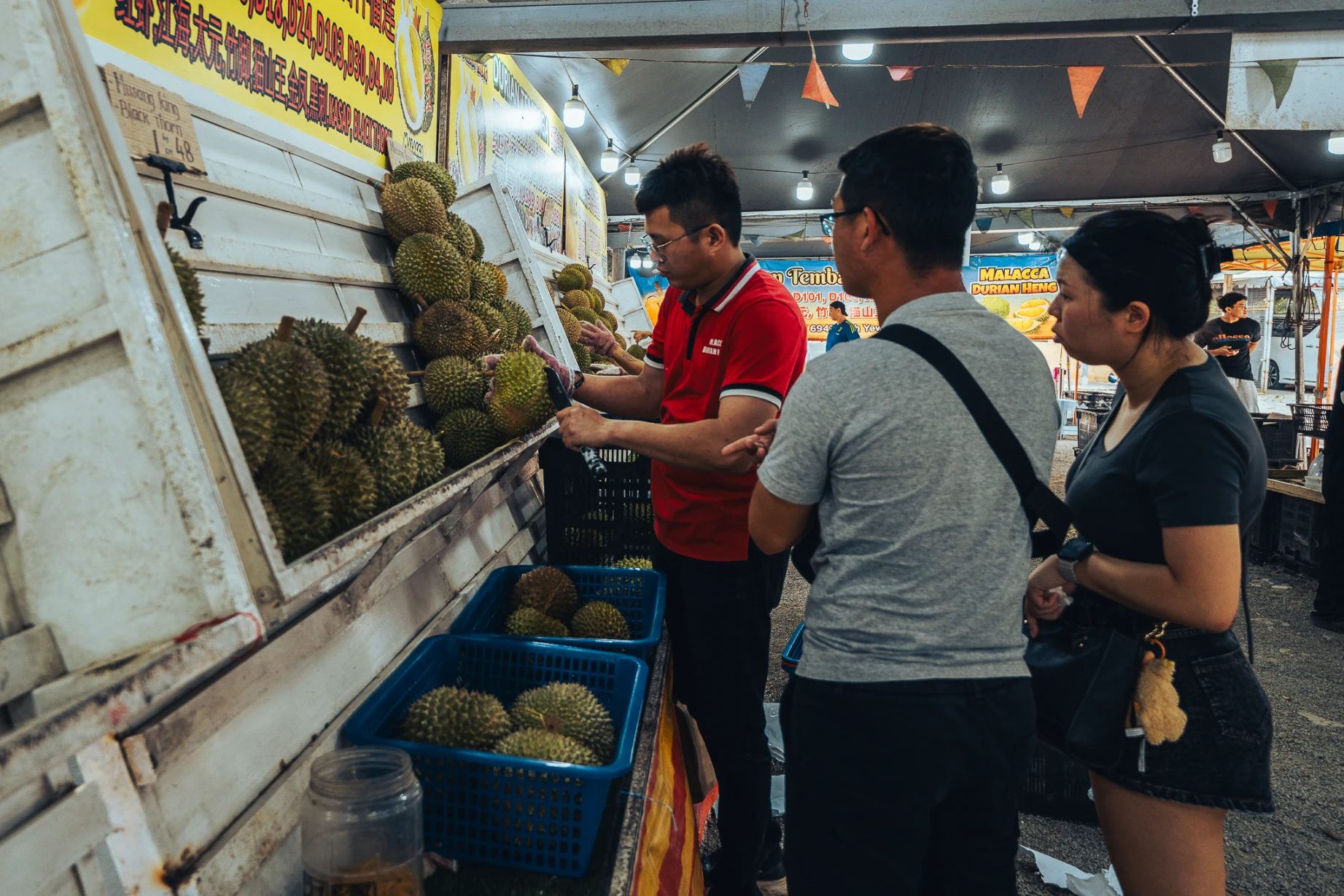
The counter becomes more than a point of sale. It is where product knowledge, preference, service, and conversation meet.
For food and hospitality brands, this distinction is useful. Customers do not remember a product in isolation. They remember the pace of the visit, the person who introduced it, the atmosphere around the counter, and the specific details that made the encounter feel rooted in a place.
A product image can create appetite. An image that includes people and context can create recognition.
The photograph also resists unnecessary polish. The lights, stacked fruit, clothing, and surrounding structure stay in the frame. They are not distractions from the subject; they are part of what gives the encounter its character. The image does not need to claim that one food stall represents an entire city. It simply observes that local food culture is shaped by transactions, habits, and relationships happening in public.
This is a useful principle for long-term hospitality content. Instead of always producing a new hero image, one existing photograph can be revisited through several questions: What does service look like? Where does choice happen? What makes a product feel specific to its setting? How do people and place change the meaning of what is being sold?