Space sets the terms.
Dib Bangkok is approached here as both a contemporary art museum and a study of spatial character, material detail, and atmosphere.
The museum experience begins outside the gallery, in the entrance plaza.
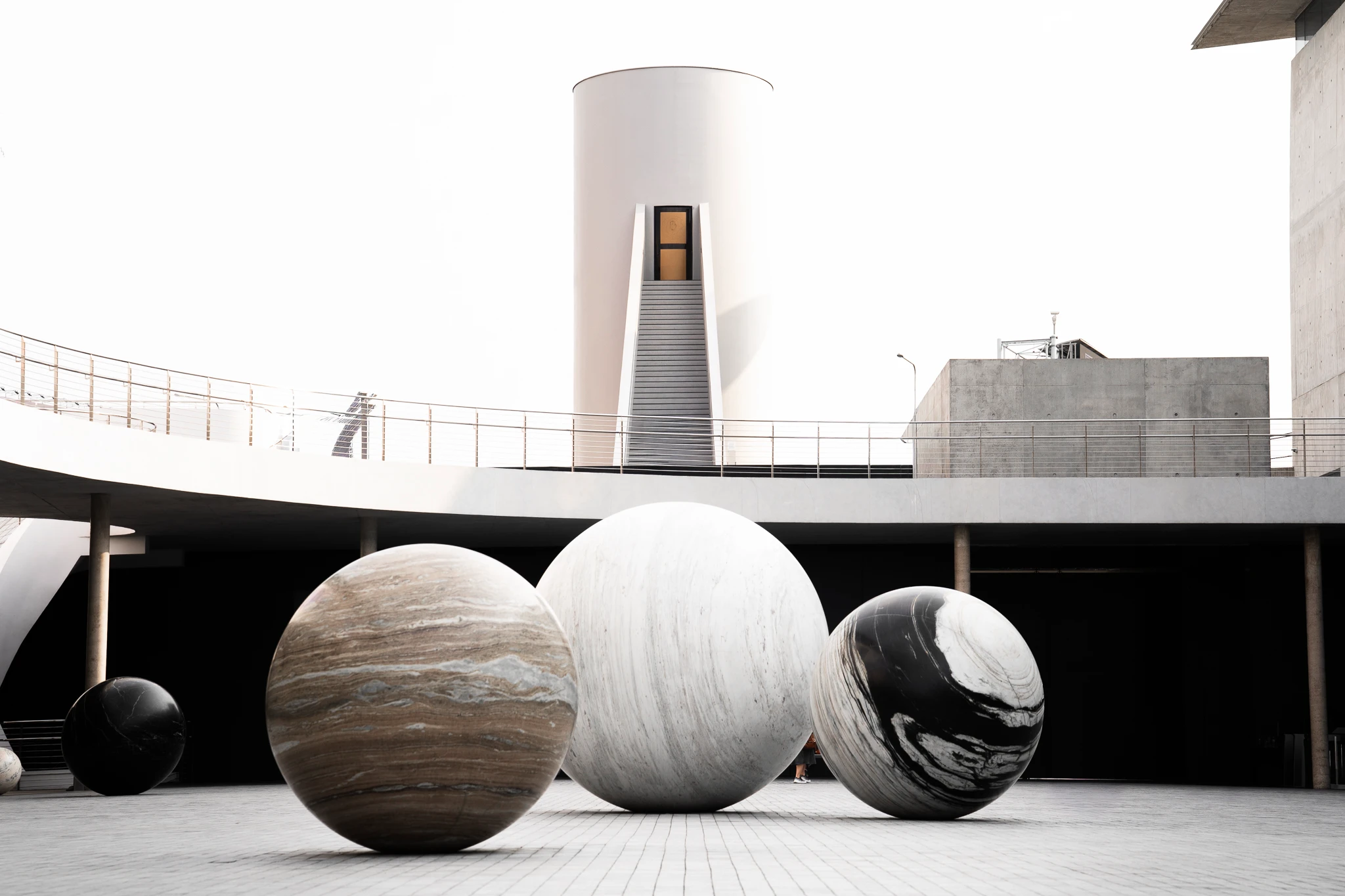
A group of large sculptural spheres occupies the entrance plaza. Behind them, a stair rises into a pale cylindrical volume. Concrete, railings, openings, and a broad horizontal plane establish the setting. The image does not explain the museum through signage or a wide city view. It begins with the threshold.
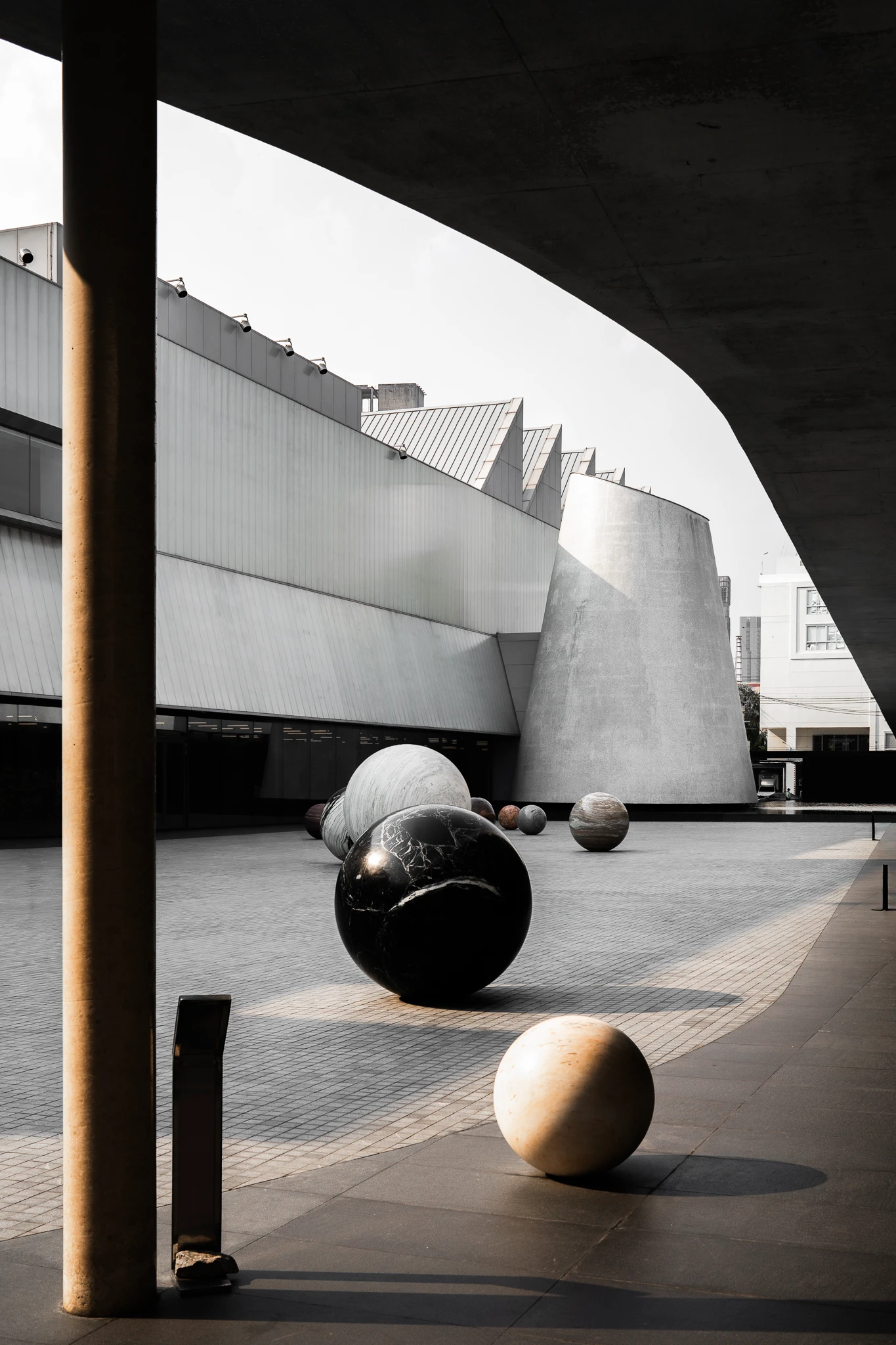
Before a visitor encounters an exhibition, they already read the organisation through movement, scale, light, and material. An entrance can signal whether a space is formal or open, quiet or active, monumental or approachable. Photography can make those cues visible without reducing the building to a single architectural gesture.
In this image, the sculpture and architecture remain in conversation. Neither is treated as background. The spheres interrupt the open ground; the stair pulls attention upward; the surrounding structure holds both within a measured frame. The composition gives the viewer time to understand where they are before asking them to interpret what they are seeing.
For museums, galleries, and public institutions, this is a valuable content approach. A visual system should not only document finished exhibitions or headline events. It can also show how the institution prepares an encounter: the route in, the room before the room, the objects that set a pace, and the materials that shape attention.
At Moss & Grain, we approach institutional photography as a way of making an experience legible. The goal is not to make a space appear louder than it is. It is to show how a place directs attention, and why that direction matters.
To view the complete photographic project, visit Dib Bangkok — Contemporary Art Museum.