
When choosing lifestyle photographs for clothing, we often remember an expression, the light in a room, or what someone is doing. These are valuable parts of the image. A separate question deserves attention: after looking, which feature of the garment could a reader describe?
This does not require every photograph to explain everything. It gives each image a clear role. By recognising what is visible and what still needs another view, a brand can keep the character of its pictures while making more useful choices about the next one.
The bedroom scene keeps the straps and upper silhouette visible; the area covered by the blanket needs another view.
Find the garment before describing the feeling
In this bedroom photograph from the 24hrs series, the straps and upper silhouette remain near the centre of the frame. The person, patterned blanket, and yellow cushion establish a domestic setting. The blanket also covers part of the clothing. Both observations matter: we can recognise a situation in which the garment is worn, but cannot judge its full length from this angle.
When selecting an image, trace the visible edge of the clothing with a finger. Where do hair, an arm, a prop, or the edge of the frame interrupt it? Is that interruption exactly where the page needs to explain a feature? A visible neckline helps a page discussing the neckline. A page about the hem needs a supporting view.
This is not a score for how good the photograph is. It identifies the question that an engaging image can answer.
A pose offers clues; specifications need their own evidence
Sitting, bending the knees, or raising an arm changes the folds and the areas of clothing we can see. Such poses describe a particular state of wear and can be useful alongside a standing view.
A relaxed gesture does not, by itself, establish breathability, freedom from pressure over a long day, or suitability for every body shape. Those statements need product information or relevant testing. Let the photograph describe visible form, and let verified text explain materials, measurements, and functions.
For example, the next photographic requirement might be a natural standing view that keeps the garment’s edges visible, accompanied by confirmed size information. That is a selection or production request. It does not mean the image already exists in the collection, nor should the model’s height or garment size be inferred from appearance.
Choose the next picture for what it adds
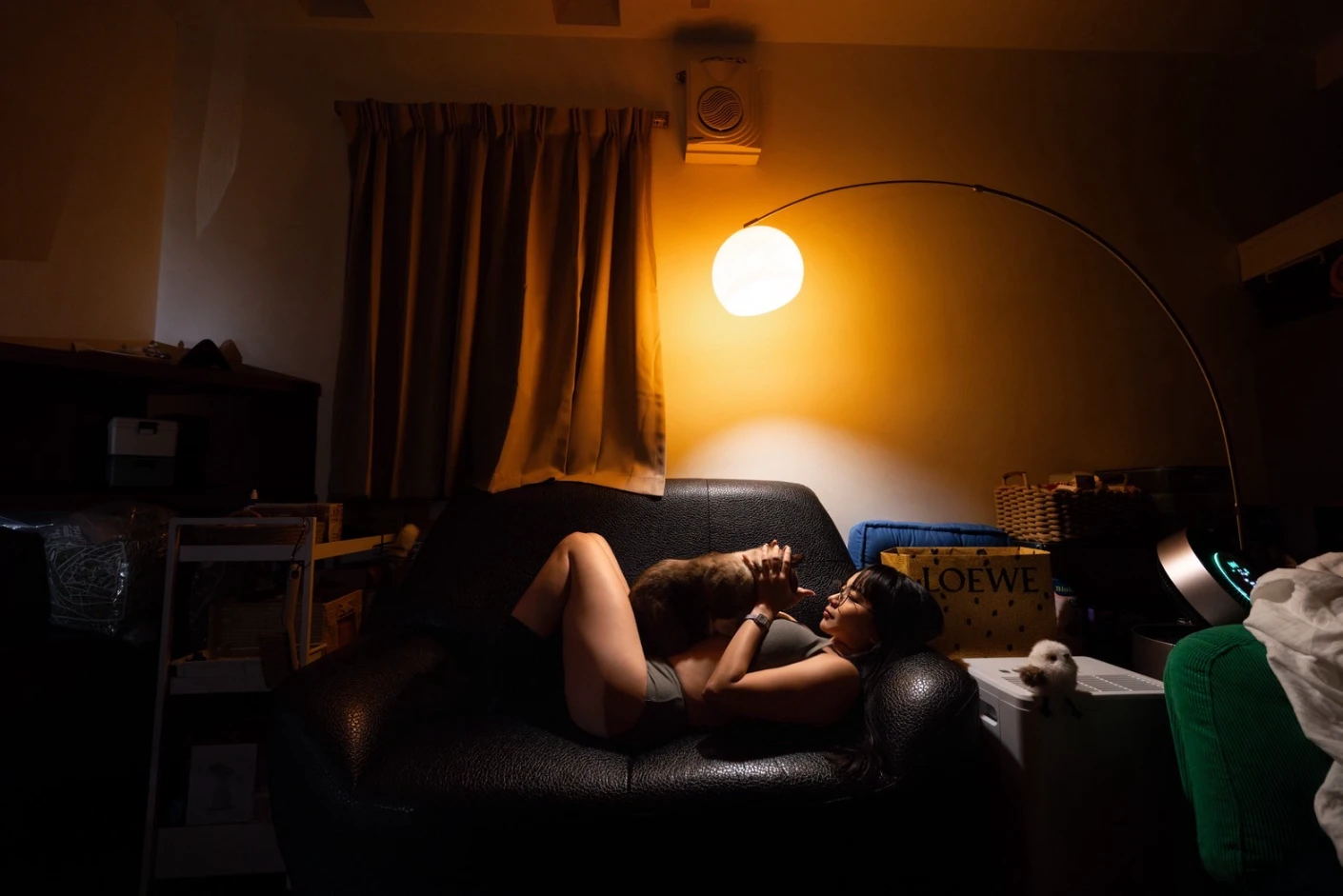
The sofa photograph places an interaction with a cat beneath warm light. Attention readily settles on that relationship, while the clothing remains part of an everyday activity. For the opening of a brand story, the setting and companionship offer a way into the image.
If the series is then used on a product page, check whether the back, seams, or another important area remains unexplained. The next image need not carry more atmosphere. A direct view might make a useful distinction visible. Equally, once the garment’s appearance is clear, a lifestyle photograph can give readers room to imagine where it belongs.
Place two candidates side by side and ask what new judgement the second allows. If it offers only a similar expression in a slightly different position, keep looking. A previously hidden construction detail, another posture, or the full outline gives the change a clearer purpose.
Three short notes for a useful selection
There is no need for another elaborate spreadsheet. Beside each thumbnail, write three notes: visible, unexplained, and next view. For the bedroom photograph, the straps and upper silhouette are visible. The area beneath the blanket is not explained. The next view should address the particular feature the product page needs to describe.
Finally, look at the image at its intended reading size. A detail visible in the original may become difficult to distinguish on a phone. If a feature needs substantial enlargement, give it a dedicated close view rather than asking a long paragraph to direct the reader towards it.
Our existing 24hrs case study considers the relationship between the product and daily life. This selection method asks a further question: once the setting makes sense, what else would help someone understand the clothing? The complete 24hrs series offers different everyday contexts. Each new edit can begin with that small, practical question.