Coming home can begin with an encounter with greenery. At Urban15, the relationship between residence and nature extends across terraces, windows, and views at different heights. The idea is to make returning home feel like entering a park, with staggered “islands” bringing trees into the experience of the building.
These residential photographs follow that continuity. Architecture keeps its clear outline, and greenery its own shape. Holding both within the frame makes their relationship visible.
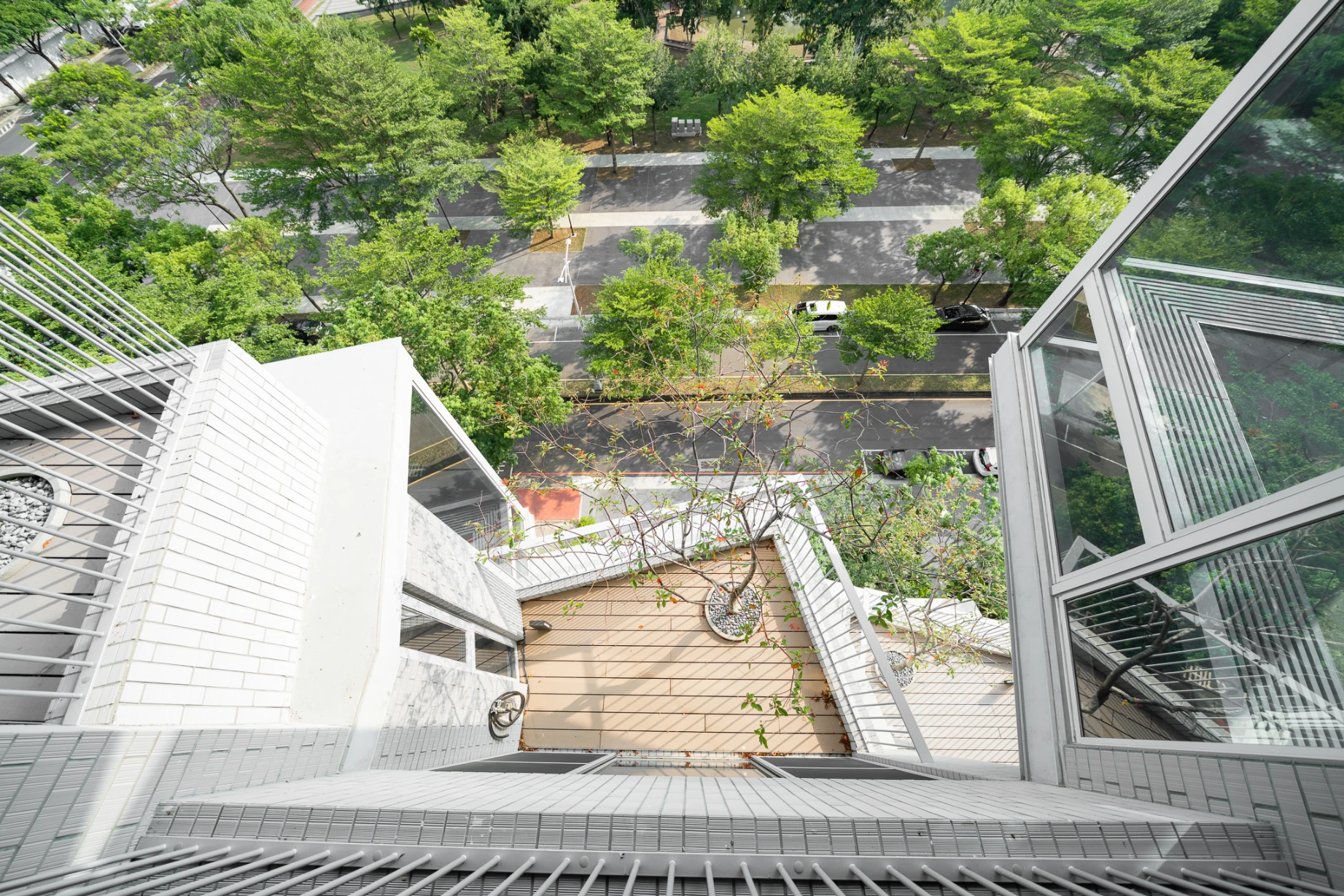
Look down to see the islands unfold
From above, terraces that might overlap at eye level separate into different depths and heights. White walls and fine railings describe their edges. A tree rises from a timber-coloured deck towards the centre of the image; further below, street trees form a broader canopy. Glazing on the right reflects lines and branches, extending the view in another direction.
The sense of island-hopping is a visual rhythm. The eye moves from one terrace to another before reaching the greenery below. Each projection and recess has a distinct place, yet the levels do not read as isolated pieces. Platforms give the eye somewhere to pause; trees carry it towards another layer.
This viewpoint holds the building’s form together with the nature it approaches. A crop concerned only with geometry would lose the continuation into greenery. Keeping only the canopy would conceal the staggered spaces that give the image its island-like character.
Bring greenery into the building’s layers
From the side, projecting and recessed balconies become easier to distinguish. Trees appear along the building’s edge, while the greenery, street, and neighbouring towers remain visible to the left. Nearby branches and more distant canopies occupy the same frame, connecting ground-level greenery with views from different heights.
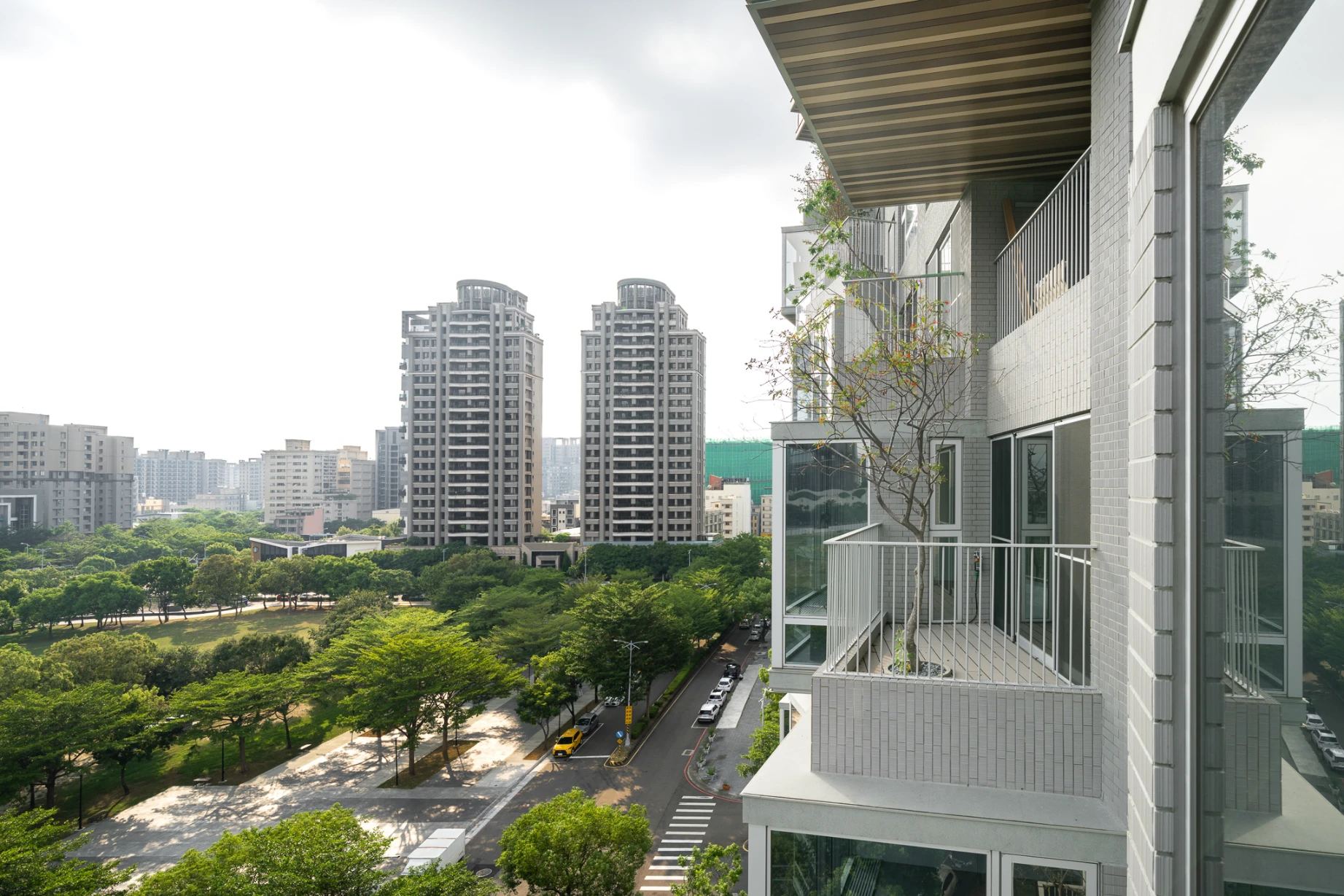
This gives the idea of coming home through a park something specific to rest on. A park-like feeling depends on more than how much green appears in a photograph. It also concerns proximity: where can someone stand in relation to the branches, and does greenery remain in view as the height changes?
The photograph holds those relationships together without hiding the city. Roads, vehicles, and neighbouring buildings remain present. Closeness to nature takes shape within urban life.
Carry the relationship back inside
The corner-window photograph returns us to the scale of one person. The seated figure, foreground floor, and window frames establish a view from inside. Tree canopies and towers remain visible together, allowing the surroundings to stay part of the room’s experience.
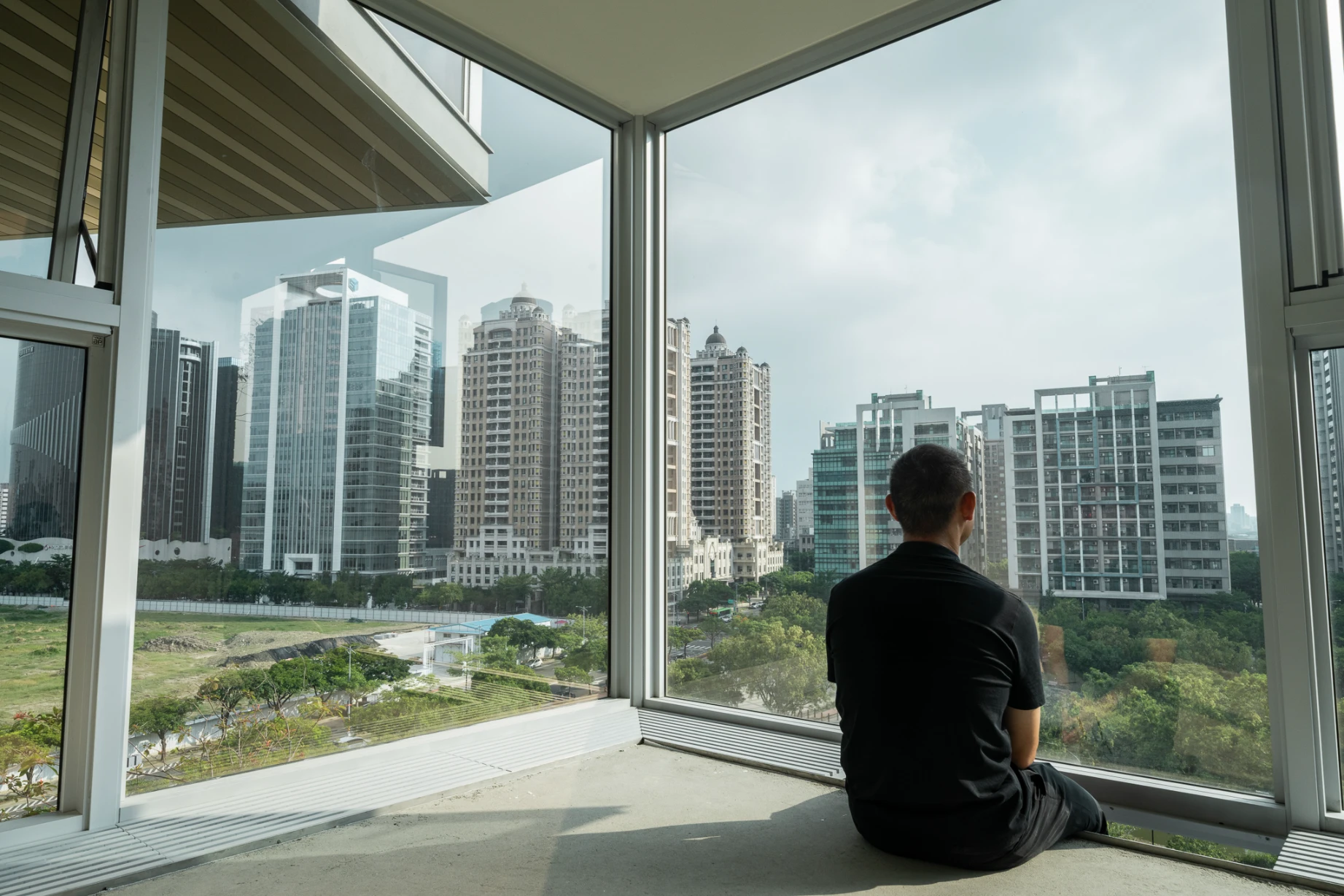
Beside the island-like layers of the downward view, this photograph feels quieter. The eye no longer follows a succession of terraces. It pauses beside a window, where the relationship between architecture and nature becomes closer and more everyday.
The idea of no distance between nature and architecture can be understood through this visual continuity. Greenery does not disappear from the story at the façade, and the window does not turn the city into an unrelated backdrop. This describes a feeling of proximity, while retaining the physical boundaries that make the space readable.
Photograph the connections that make the idea tangible
The complete Urban15 project brings architecture, greenery, and daily life into the same account. These three viewpoints reveal the staggered terraces, their relationship with trees, and the way the interior receives the surrounding environment.
When photographing or selecting images of such a residence, follow one question: where do greenery and everyday life meet? A useful detail might be a terrace edge, a tree extending beyond a railing, or a strip of floor beside a window. Such details turn “close to nature” into a relationship that can be seen.
As the eye moves from one architectural level towards branches at another, then returns inside, the idea of coming home into a park takes visible form.